Seoul should keep ASEAN informed of its peace efforts, given bloc’s potential role as bridge between two Koreas, observers say
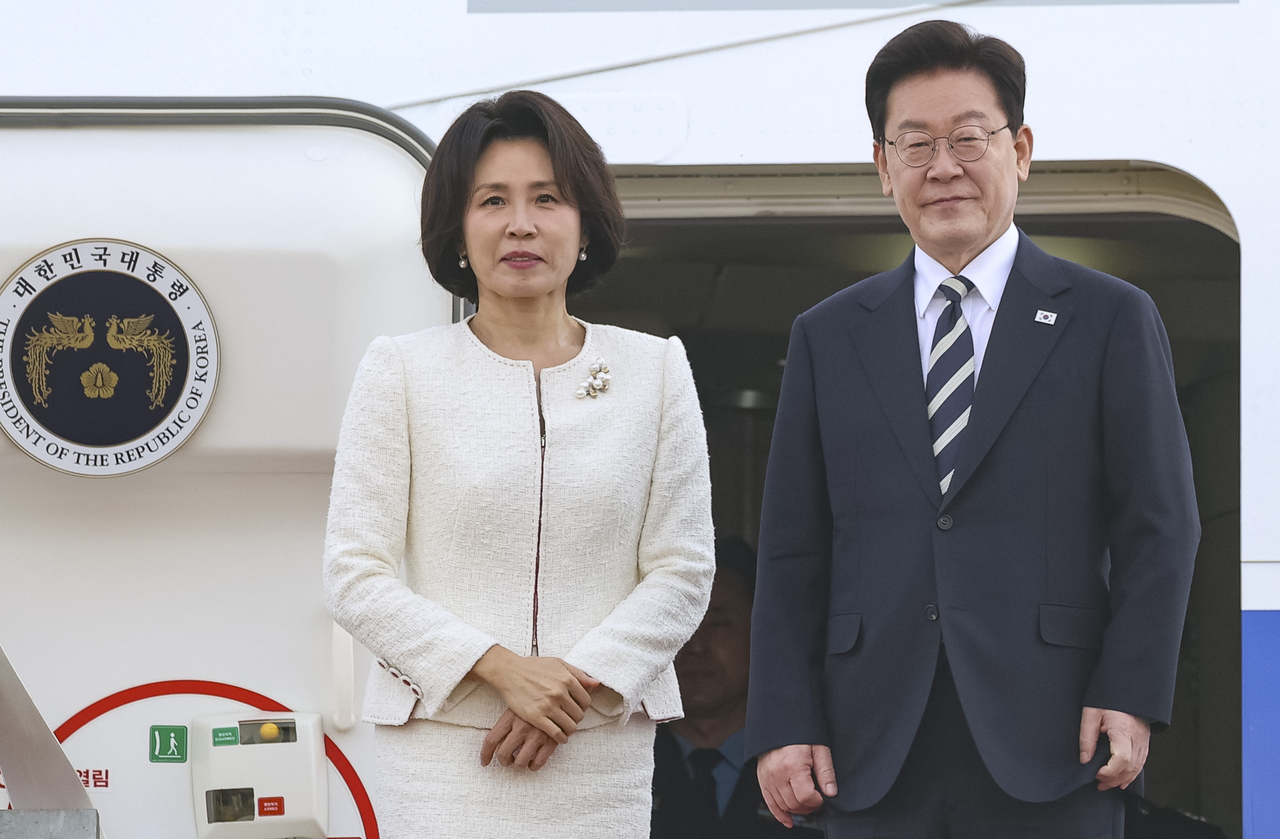
President Lee Jae Myung's attendance at a series of ASEAN-related summits comes at a time when the US-Iran war has exposed a shared vulnerability across South Korea and Southeast Asia: their reliance on the Middle East for energy supplies.
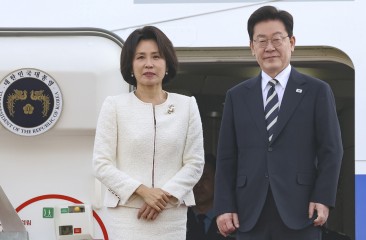
Lee is set to arrive in Manila, the Philippines, on Monday for the South Korea-ASEAN and South Korea-Mekong summits, followed by the ASEAN Plus Three summit and his first East Asia Summit on Tuesday.
Lee stressed the importance of deepening South Korea's ties with the 11-member Southeast Asian bloc in a written interview with The Philippine STAR published early Monday.
“ASEAN has played an important role in helping Korea realize its potential and expand its engagement with the world,” he said. “ASEAN is Korea’s second-largest trade and investment partner, with our people-to-people exchanges reaching 12 million annually.”
But the Middle East energy crisis has underscored the growing strategic importance of the Korea-ASEAN partnership, long driven by trade and investment, particularly in energy security and critical mineral supply chains.
The disruption of energy supplies exported through the Strait of Hormuz has driven up fuel and transportation costs across Asia, and higher fertilizer prices have raised concerns about food security.
Even energy-producing countries such as Indonesia and Malaysia remain vulnerable to supply disruptions, underscoring how few economies in the region can fully insulate themselves from shocks originating in the Middle East.
The crisis has also reinforced the importance of diversifying supply chains.
ASEAN's critical mineral resources offer South Korea opportunities to reduce its dependence on concentrated sources of materials essential to its battery and advanced manufacturing industries. Indonesia and the Philippines are major nickel producers, while Malaysia has emerged as a rare earth processing hub.
“ASEAN is an important partner in securing stable supply chains, including critical minerals, amid continuing and intensifying geopolitical crises,” Lee Jang-keun, a former South Korean ambassador to ASEAN, told The Korea Herald.
Lee Jae-hyon, a principal fellow at the Asan Institute for Policy Studies in Seoul, said the crisis had made closer regional cooperation particularly urgent.
“Southeast Asian countries, like South Korea, are facing a very serious energy crisis because of the situation in the Strait of Hormuz,” he told The Korea Herald.
Energy shocks, regional solutions
The shared vulnerability has brought renewed attention to collective measures that could help the region cope with future energy supply disruptions.
At a summit in Cebu in May, ASEAN leaders discussed establishing a regional emergency fuel reserve, an idea Philippine President Ferdinand Marcos Jr. compared to the ASEAN Plus Three Emergency Rice Reserve.
Under the APTERR mechanism, ASEAN countries and South Korea, China and Japan maintain emergency rice reserves to assist member states facing food shortages.
The comparison points to the potential for existing regional cooperation mechanisms to serve as models for addressing energy security challenges.
ASEAN Plus Three, which brings together the Southeast Asian bloc and South Korea, China and Japan, has long provided a platform for such cooperation.
Established in the wake of the 1997 Asian financial crisis, the framework has developed practical mechanisms for regional financial and food security cooperation, offering lessons for tackling new economic shocks.
“A great deal of practical cooperation is already taking place behind the scenes within ASEAN Plus Three, including the Chiang Mai Initiative and the emergency rice reserve system,” ASEAN's Lee said. “But it has so far received relatively little attention.”
He argued that these frameworks demonstrate the value of practical regional cooperation in the face of mounting geopolitical and economic uncertainty.
“Sustained practical cooperation between Northeast and Southeast Asia is essential to ensuring that countries share the benefits, particularly amid energy and food security crises, supply chain disruptions and US-China competition,” he said.
“Rather than grand discussions about which direction we should take amid US-China competition, ASEAN Plus Three is where concrete cooperation that delivers tangible benefits takes place.”
That experience is expected to inform discussions at the ASEAN Plus Three summit, where Lee is expected to present proposals for future cooperation ahead of the grouping's 30th anniversary in 2027.
“Compared with 30 years ago, the global geopolitical environment has changed significantly, and we now face new crises,” Lee Jang-keun said.
“Against this backdrop, a range of proposals is expected to be put forward to strengthen cooperation among countries in the region in jointly responding to complex geopolitical shocks, as well as to explore avenues for future cooperation.”
The former ambassador said discussions could cover medium- to long-term cooperation on energy and food security, supply chain resilience, critical minerals, the digital economy and demographic challenges such as aging, alongside efforts to strengthen traditional financial cooperation.
From partnership pledges to action
Seoul's broader ASEAN agenda centers on translating its commitments to the bloc into concrete results.
A year ago, Lee unveiled his “CSP Vision” — Contributor, Springboard and Partner — to deepen the Comprehensive Strategic Partnership established between South Korea and ASEAN in 2024. The vision sets targets of $300 billion in annual bilateral trade and 15 million people-to-people exchanges by 2029.
“This summit is expected to focus on demonstrating that the South Korea-ASEAN Comprehensive Strategic Partnership vision is being put into practice rather than remaining merely a declaration, and that relations between the two sides are advancing to the highest level across all areas,” Lee Jang-keun said.
One area where cooperation has begun to take concrete shape is the fight against transnational crime, which has become a pressing concern for Seoul following a series of online scam and kidnapping cases involving South Koreans in Cambodia, including the death of a South Korean university student.
“Combating transnational crime is also a high priority for South Korea in strengthening cooperation with ASEAN, and an issue on which it should focus its efforts and play an active role,” the former ambassador said.
At last year's South Korea-ASEAN summit, Lee proposed closer cooperation between the Korean National Police Agency and ASEANAPOL, the regional association of police forces. The proposal has since taken shape as the Korea-ASEAN Response and Enforcement against Scam-Related Crime or KARE project.
In his interview with The Philippine STAR, Lee suggested the initiative could eventually provide a foundation for wider regional security cooperation.
“Over the mid- to long-term, it could evolve into a broader platform for public safety and security cooperation, bringing together other dialogue partners of ASEAN as well,” he said.
Why Seoul must keep ASEAN onside over N. Korea
ASEAN's strategic relevance to Seoul also extends to the Korean Peninsula, although its ability to help ease tensions between the two Koreas remains constrained.
“ASEAN's role and contribution are also very important in improving inter-Korean relations and advancing denuclearization,” Lee Jang-keun said.
But Lee Jae-hyon cautioned that Southeast Asian countries are unlikely to help break the current inter-Korean deadlock, given their limited influence and the diplomatic risks of becoming entangled in a standoff involving the two Koreas and the strategic interests of the US and China.
“Even if Southeast Asian countries cannot do much to help right now, we should continue using these summits to ask them to maintain their interest and convey the message that peace and security on the Korean Peninsula are closely linked to those in Southeast Asia,” he said.
Maintaining that engagement could lay the groundwork for ASEAN to play a diplomatic role if inter-Korean dialogue resumes.
“If an atmosphere conducive to dialogue between the two Koreas emerges again, Southeast Asian countries could convey messages from North Korea and help build bridges between the two sides,” he said. “They would be willing and able to play such a role.”
dagyumji@heraldcorp.com