Pancreatic cancer mortality surges as stomach cancer deaths decline, while gender and regional disparities persist
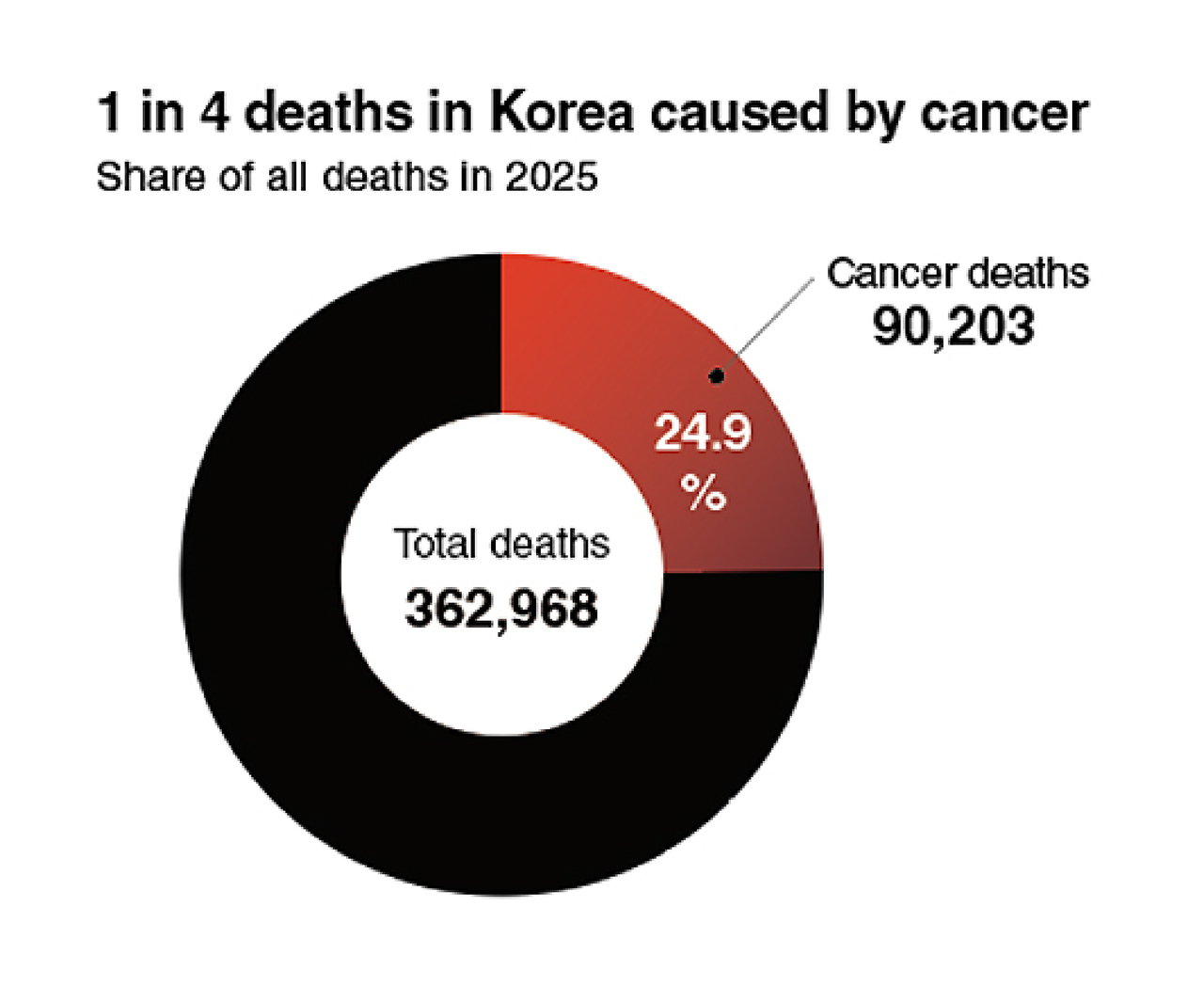
About 1 in 4 deaths in South Korea last year was attributed to cancer, which remains the country's leading cause of death, ahead of heart disease, cerebrovascular disease, pneumonia and suicide.
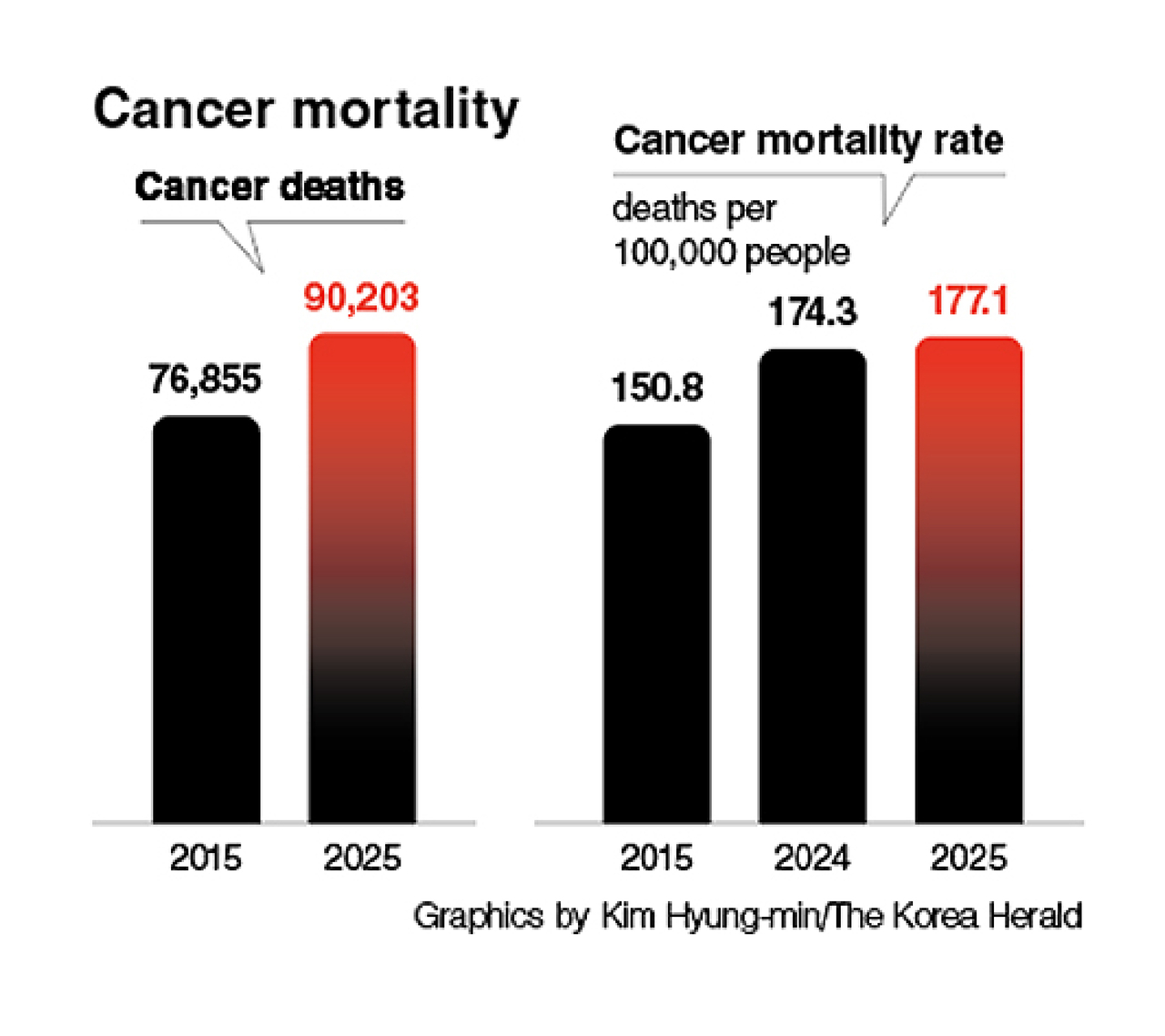
The number of cancer deaths has risen 17.4 percent over the past decade, from 76,855 in 2015 to 90,203 last year, according to cause-of-death statistics released by Statistics Korea on Sept. 22.
Over the same period, cancer mortality rate climbed from 150.8 to 177.1 deaths per 100,000 people, compared with 174.3 in 2024.
A closer look, however, reveals a more complicated picture: The fight against cancer is unfolding on multiple fronts, with death rates rising for some types of cancer while declining for others.
Stomach cancer falls, pancreatic cancer climbs
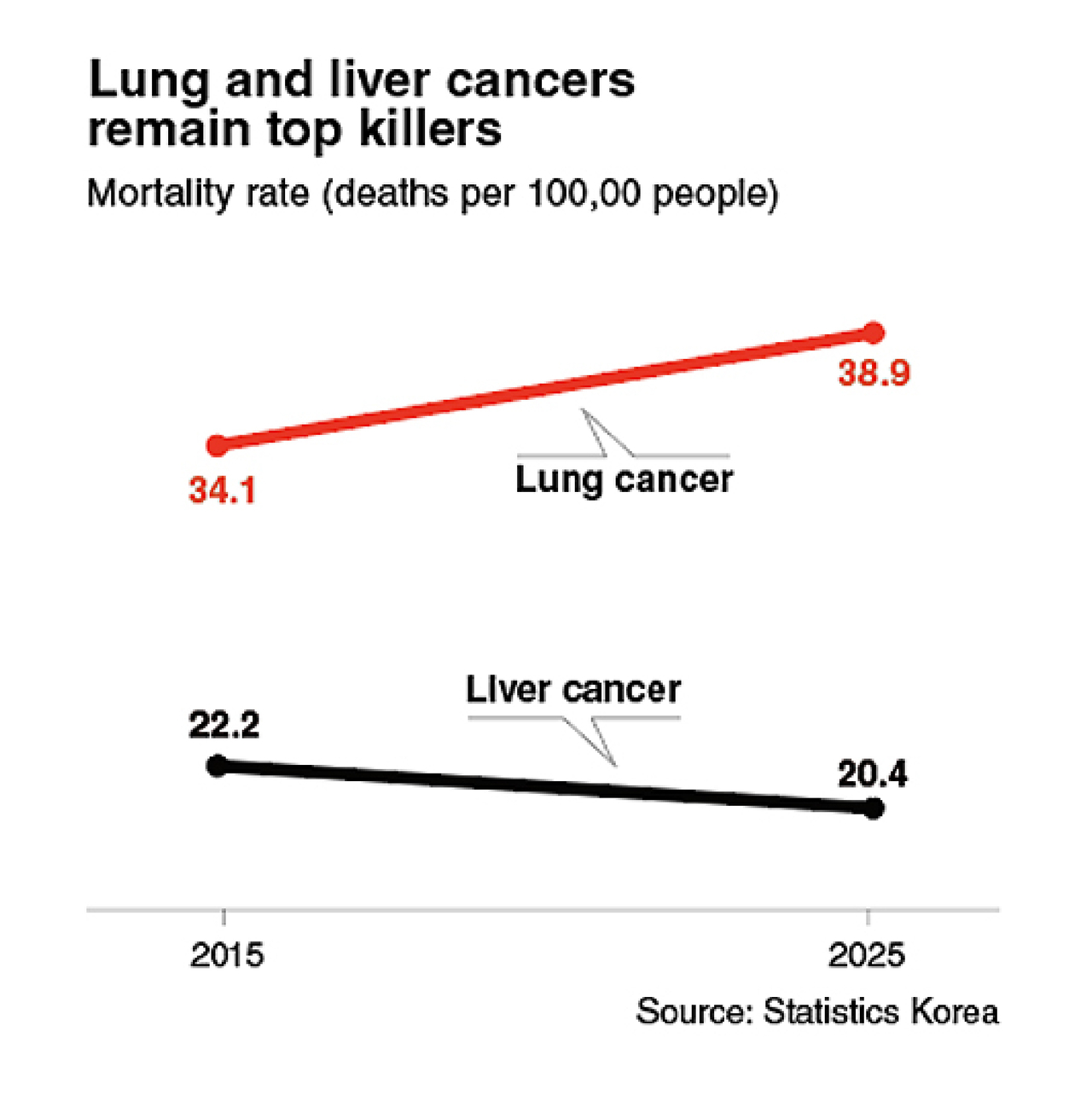
Lung and liver cancers have remained the country's two leading causes of death from cancer over the past decade.
Last year, lung cancer recorded the highest mortality rate at 38.9 deaths per 100,000 people, followed by liver cancer at 20.4. Their positions were unchanged from 2015, when the corresponding rates stood at 34.1 and 22.2, respectively.
Colorectal cancer has generally ranked third, with stomach cancer following close behind.
Pancreatic cancer, however, has climbed sharply in the mortality rankings in recent years, overtaking stomach cancer in 2022, when their respective death rates stood at 14.3 and 13.9 per 100,000 people.
The shift reflects a broader divergence in mortality trends over the past decade.
While pancreatic cancer mortality surged from 10.7 deaths per 100,000 people in 2015 to 17.0 last year, mortality from stomach cancer fell from 16.7 to 13.7 over the same period.
Gaps in early detection
Some experts point to differences in prevention and early detection as one of the key factors behind the contrasting mortality trends in stomach and pancreatic cancers.
South Korea introduced its National Cancer Screening Program in 1999, initially targeting low-income groups before gradually expanding its coverage. The program now covers six types of cancer: stomach, colorectal, liver, breast, cervical and lung cancers.
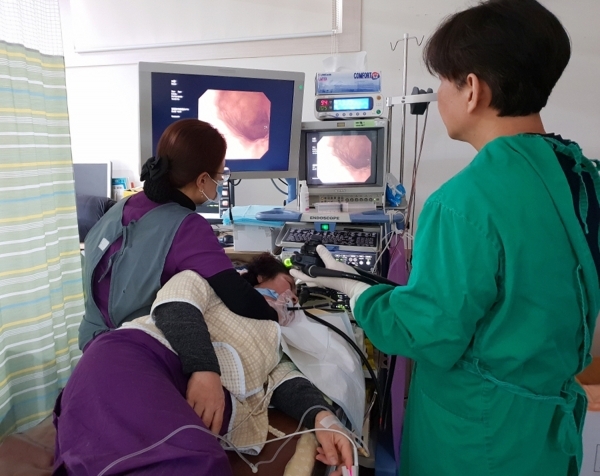
Under the program, adults aged 40 and older are eligible for stomach cancer screening every two years, primarily through upper gastrointestinal endoscopy.
Pancreatic cancer, however, is not included in the program, as no screening method has been proven effective in reducing deaths among the general population.
A recent study linked South Korea's national cancer screening program to long-term declines in the incidence and mortality of certain cancers.
According to researchers at Korea University College of Medicine, stomach cancer incidence fell 28.1 percent and mortality 24.1 percent between 2012 and 2021. Colorectal cancer recorded respective declines of 22.4 percent and 28.6 percent, while liver cancer mortality dropped 38.2 percent.
Published in April, the research examined nationwide cancer data from 1999 to 2021, comparing trends before and after the program's introduction, with particular attention to the period when screening had become more widespread.
By 2012, the rate of adherence to national cancer screening recommendations had reached 63.4 percent, up 24.6 percentage points from 2004, when the survey began, government data showed.
Pancreatic cancer, however, showed no statistically significant decline in either incidence or mortality.
"The success of the NCSP underscores the importance of evidence-based, organised screening programmes in reducing cancer-related mortality. Strengthening follow-up testing and care is crucial to improve post-screening outcomes," the report said.
Why cancer kills more men
Beyond differences among cancer types, a stark gap between the sexes also persists.
In 2025, men recorded 219.9 cancer deaths per 100,000 people, compared to 134.7 among women. The gap has remained largely the same proportion over the past decade, though overall rated have increased, with the corresponding figures standing at 187.3 and 114.4 in 2015.
A similar divide is evident in colorectal cancer, which is diagnosed more frequently in men.
According to a report released last November by the Dongnam Institute of Radiological and Medical Sciences, 40.1 new colorectal cancer cases were recorded per 100,000 Korean men in 2022, compared with 35.1 in the United Kingdom and 30.1 in the United States.
Among women, the rate stood at 24.2 per 100,000 in South Korea, matching that of the US and coming below the UK's 27.1.
The figures the Dongnam Institute report used were based on cancer registry data and international estimates, adjusted for differences in age distribution to allow fair comparisons across countries.
The report cited lifestyle factors, including heavy alcohol consumption, obesity and physical inactivity, as possible contributors to the elevated risk.
Biological differences may also play a role.
"Epidemiological studies suggest estrogen may help protect against colorectal cancer by strengthening antitumor immune responses and influencing the gut microbiome," Son Dae-kyung, head of the colorectal cancer center at the National Cancer Center, said in a report.
Regional gaps persist in cancer mortality
One of the key challenges in South Korea's fight against cancer remains the wide variation in mortality rates across regions.
Gwangju recorded the highest age-standardized cancer mortality rate among the country's 17 major cities and provinces last year, at 86.5 deaths per 100,000 people, roughly 22 percent higher than Seoul's 70.7, the lowest nationwide.
These figures are adjusted for differences in population age structures, which allows for more accurate comparisons across regions, but differs from the figures for different sexes.
Busan and North Chungcheong Province followed at 86.0 each, while South Chungcheong Province recorded 84.1 and South Gyeongsang Province 82.1.
Seoul recorded the lowest rate for the second consecutive year. In 2024, South Gyeongsang Province had the highest rate at 88.8 deaths per 100,000 people, about 21 percent higher than the capital's 73.6.
The gap between regions with the highest and lowest cancer mortality rates has widened compared with a decade ago.
In 2015, the disparity stood at 13.3 percent, with Daejeon recording the highest rate at 108.8 deaths per 100,000 people and Seoul the lowest at 96.0.
But the gap had exceeded 20 percent in 2020, reaching 21.2 percent, with Busan recording 96.1 and Sejong 79.3, and has shown an overall upward trend since then.
Experts have stressed the need to improve regional cancer centers' treatment and research capabilities.
"Outside the capital region, there are not enough facilities to accommodate patients undergoing chemotherapy, and there is a severe shortage of specialists who can monitor their conditions and respond to emergencies," said Kim Heon, a professor at Chungbuk National University College of Medicine.
"As a result, many cancer patients undergo surgery in Seoul before returning to their home regions. Regional cancer centers need greater support for independent research to improve patients' access to new treatments, along with stronger coordination among hospitals to ensure timely, high-quality care closer to home."
cjh@heraldcorp.com