IPark Hyundai Development is expanding its artificial intelligence-based residential services by integrating digital healthcare, smart home systems and automated security features into its housing developments, the company said.
In June, the developer introduced Park Roche Seoul One, a 768-unit private rental housing complex comprising two buildings in Wolgye-dong, Nowon-gu, northern Seoul. Owned and operated directly by the firm, the development combines medical, dining and community services with digital health monitoring, with no age restrictions on residency.
Residents will have access to a health screening center operated by Asan Medical Center within the Seoul One development, along with follow-up clinical services. Wearable devices will track heart rate, physical activity and sleep patterns, while contactless in-home sensors will monitor potential health abnormalities, including falls and cardiovascular warning signs.
The system will connect emergency alerts to a 24-hour monitoring center, supported by on-site nurses and wellness specialists. An AI-powered home assistant will also manage indoor settings, service requests and community facility reservations through a conversational wall pad.
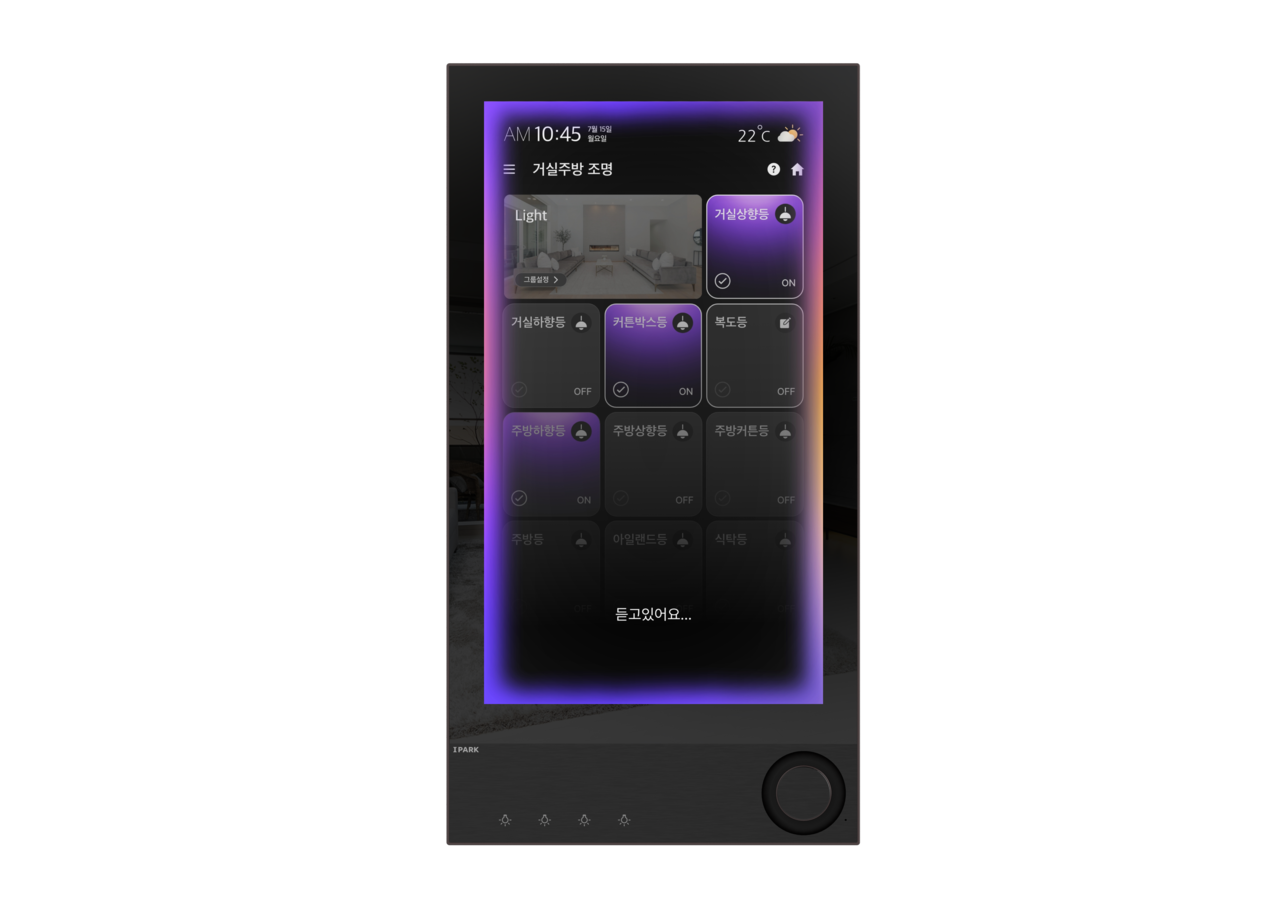
Meanwhile, Cheonan IPark City complexes 3 and 4, introduced in September, will feature large language model-based home automation and facial recognition systems.
The living room wall pads will use a hybrid system combining local and cloud-based AI to control lighting, heating, cooling and household appliances through voice commands. Residents will also be able to check family schedules, delivery notifications and community announcements.
A continuous conversation function will allow users to issue consecutive instructions without restarting each interaction. Facial recognition technology will support access from communal entrances to individual units, alongside fingerprint-enabled digital door locks.
The company said it plans to continue developing AI-powered housing services focused on residents' safety and everyday convenience.
yejinlim@heraldcorp.com