First Korean retrospective of the American master opens at DDP with 105 works spanning seven decades
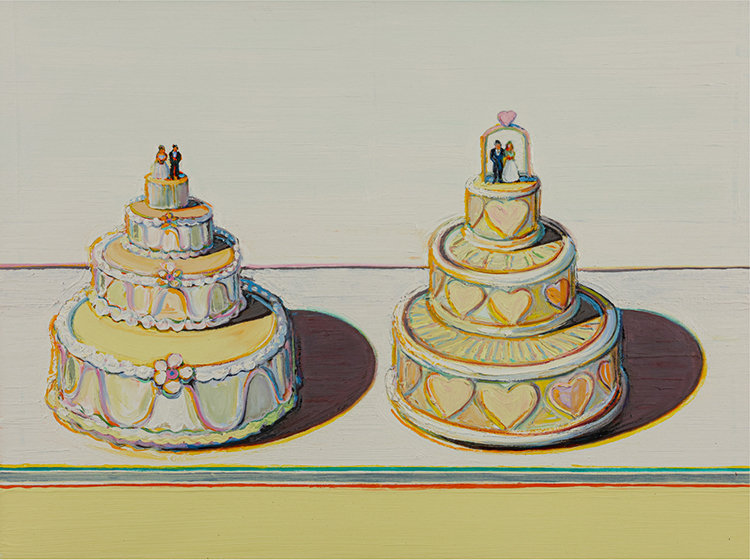
What most of us know about Wayne Thiebaud, the American master who died in 2021 at 101, boils down to the handful of pictures you've likely come across in a coffee-table book: This is the man who dedicated his whole career to painting cakes and slices of pie, lined up like goods in a shop window and painted to look good enough to take a bite.
Those who have read past the captions might add he is a figure of the early '60s pop art moment, that loose bunch that begins with Andy Warhol and runs through Lichtenstein, Oldenburg and Wesselmann, men who put soup cans and comic-strip panels on gallery walls.
"Wayne Thiebaud: The Order of Things," which opened Saturday at Dongdaemun Design Plaza as part of Hyundai Card's Culture Project, will show you there is much more to the artist than any of that. Yes, there are the famous cakes and the deli counters and the gumball machines, quite a few of them, but they make up only a slice of the 105 works in this first full-scale retrospective of Thiebaud in Korea.
The show lays out a far more expansive world of his making, which opens itself to any number of readings and understandings.
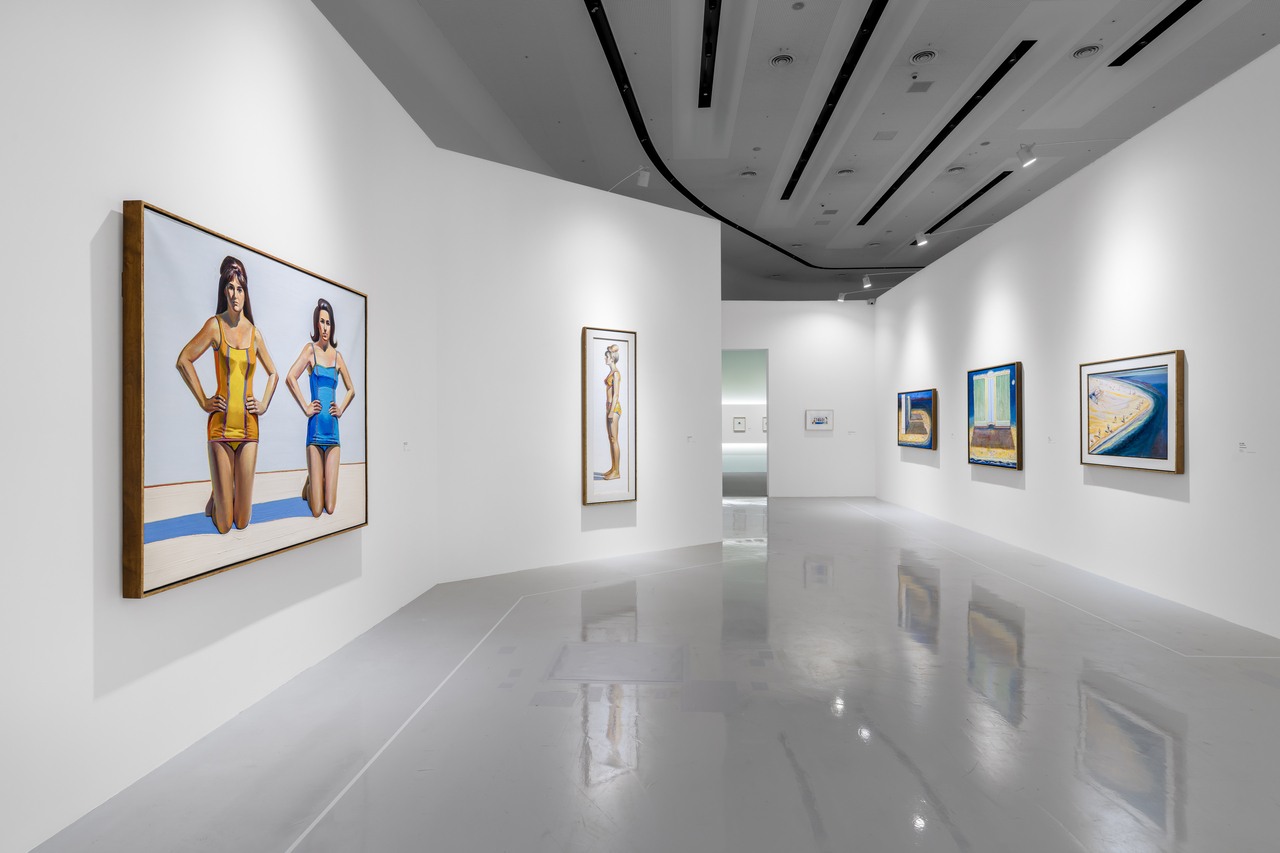
What becomes clear, walking from one section to the next, is how little any single label does justice to the artist's wide-ranging sensibilities. Thiebaud's subjects are America at its most mundane — the diner and the arcade and the boardwalk and all — but there is something in his paintings that pulls us toward the abstract and primal.
Part of it is geometry: a slice of pie is a triangle, a cake a cylinder, which means the eye responds to the shapes before it gets around to any culturally specific associations. There's also a certain stillness in the way things sit apart from one another, each sealed in its own patch of space, that speaks straight to the human condition itself. Thiebaud had a phrase for it, "lonely togetherness."
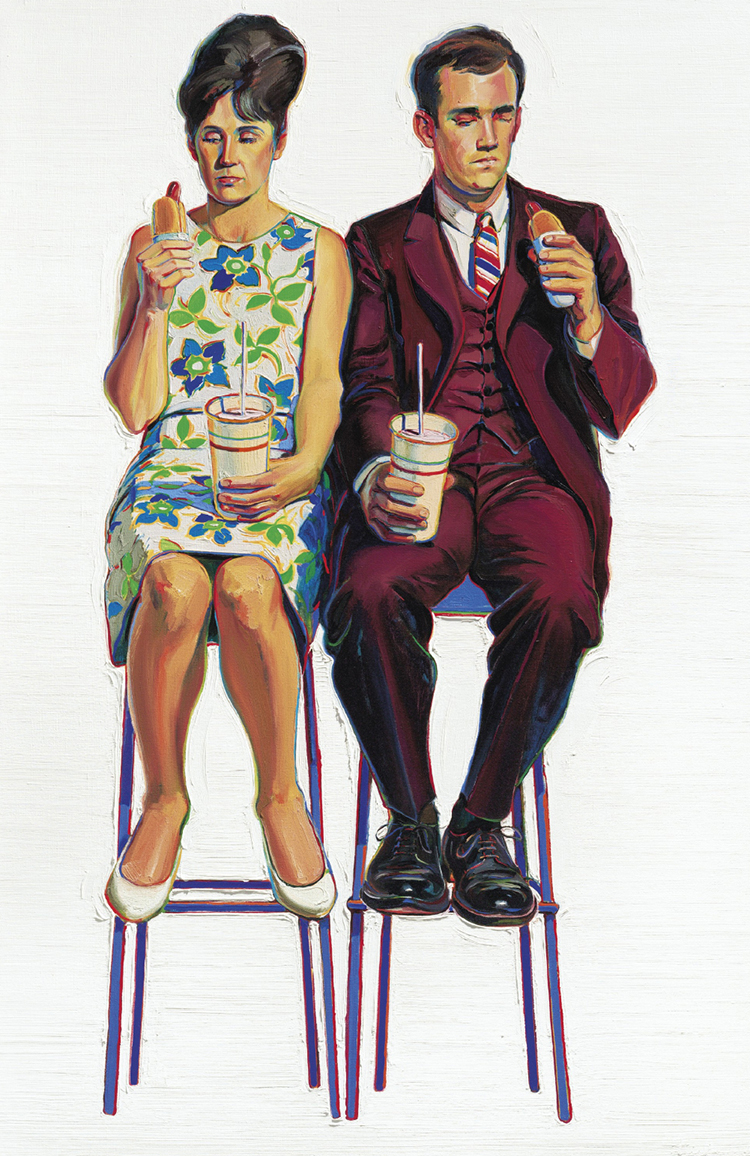
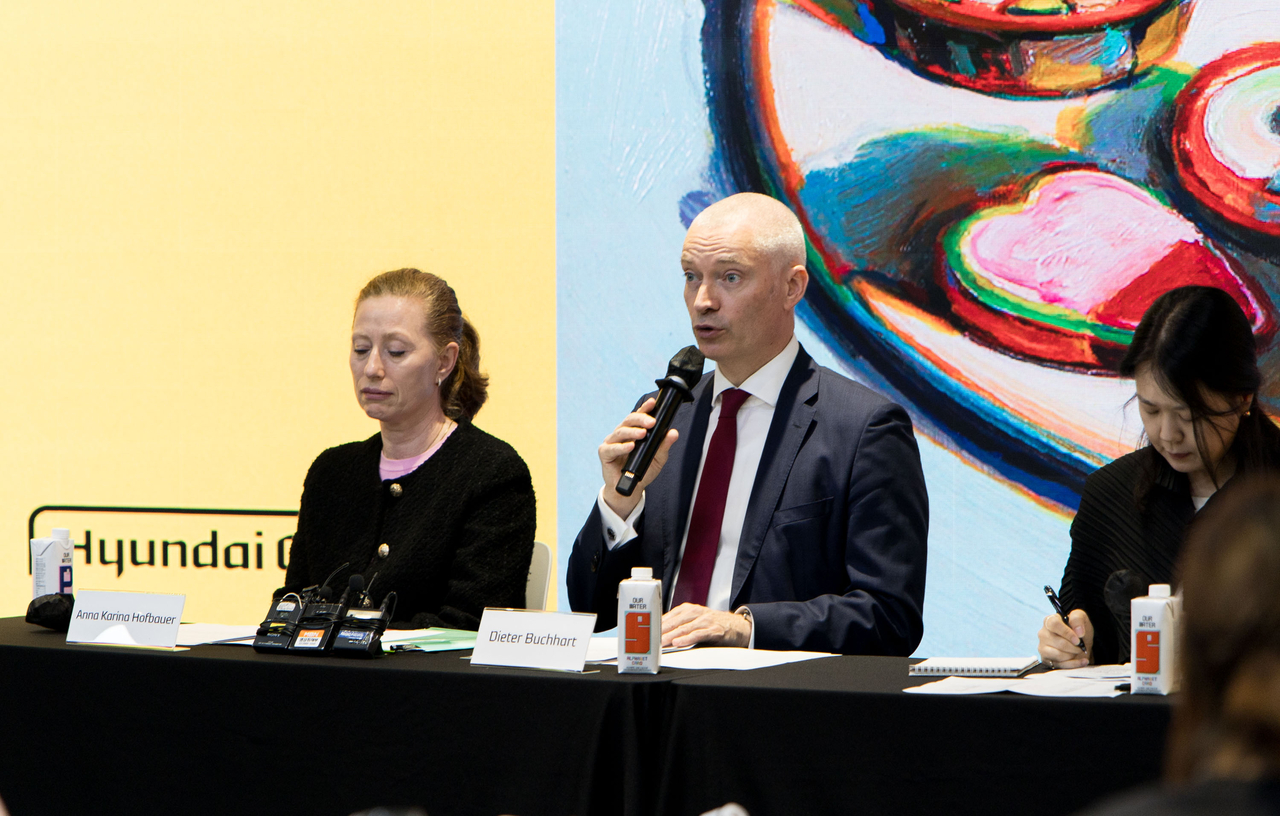
It also informs the premise curators Dieter Buchhart and Anna Karina Hofbauer built the show around; it's also their answer to why a painter so rooted in California can feel just as much at home in Seoul.
"Seoul was not an obvious destination for this exhibition. It was the right one," Buchhart said at Friday's press preview. "Korea has long understood something that Thiebaud understood too, that the objects of everyday life, the things we eat, the spaces we inhabit, the rituals we repeat, carry within them the deepest codes of a culture."
He referred to Korea's own everyday objects, from the rice cakes stacked for an ancestral rite to the porcelain bowl placed on squarely on the table. "These are not decorations. These are orders," he said. "Thiebaud, painting his pies and cakes and candy counters in California, was doing something remarkably kindred," revealing what he called "the hidden architecture beneath the surface of the ordinary."
That shared sense of order, according to Hofbauer, is what lets Thiebaud's work travel far abroad: "The feeling crosses every border, every language, every culture. It is why these paintings made in California feel so immediate here today in Seoul."
Hence the subtitle, "The Order of Things," borrowed from Michel Foucault's 1966 treatise on the invisible codes by which a culture dictates what can be seen and known — though one suspects the cakes would have done fine without it. No grasp of French poststructuralist obscurantism is needed to enjoy what's on the walls, which cast their spell the moment you walk in.
Thiebaud himself had a much simpler account of what he was up to: "I started painting these triangles," he once said, "and turning them into pies."
The show follows how he got there, more or less chronologically. The opening section shows a painter still figuring out what he wanted to be, with 1940s and '50s canvases like "Cigar Counter" (1955) done in the thick, gestural manner of Willem de Kooning, whom Thiebaud got to know in New York in 1956.
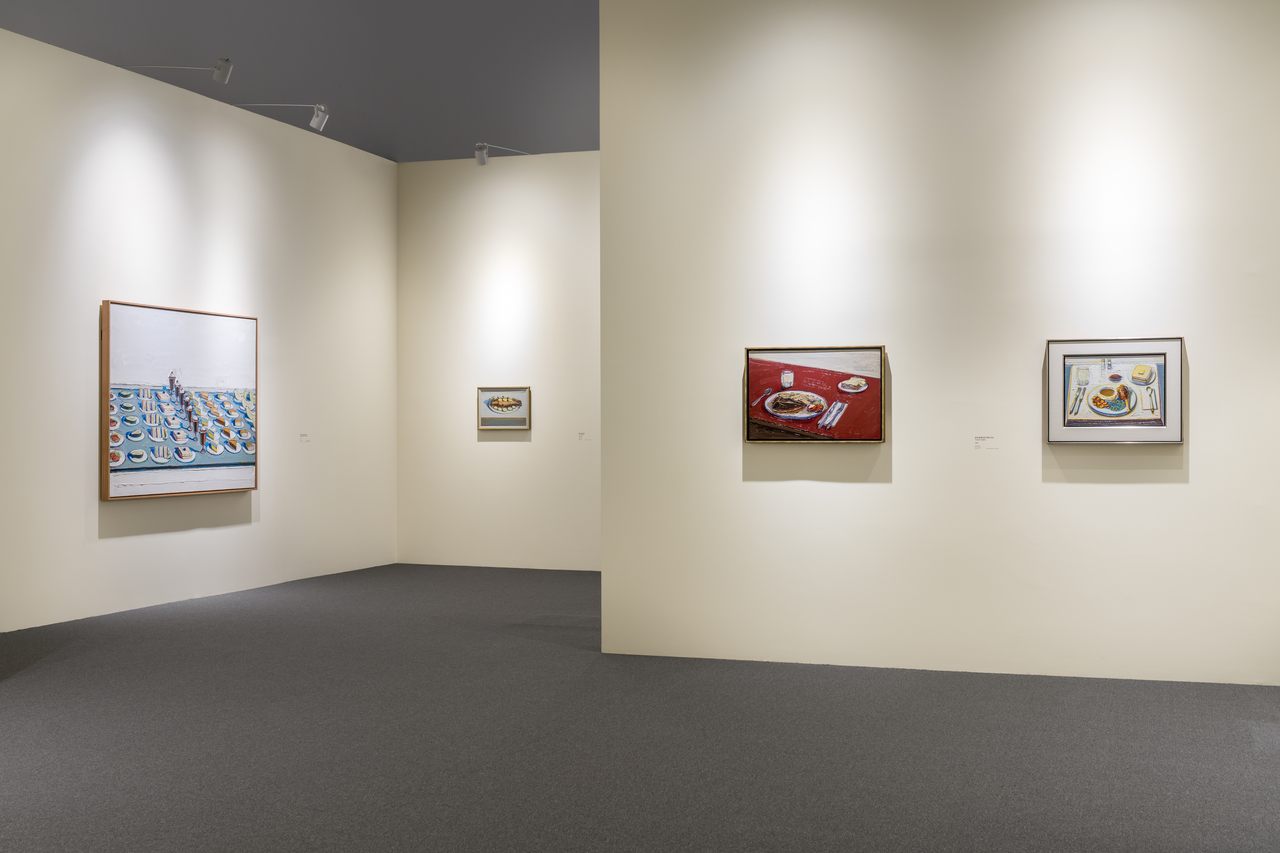
By "Nickel Pinball" (1962-63) and "Salads, Sandwiches, and Desserts" (1962), it is Thiebaud as everyone knows him, and the show moves on through portraits, cityscapes and beach scenes to a final wall where "One-Hundred-Year-Old Clown" (2020) hangs on its own. Painted a year before he died, it shows the artist in white makeup and a red nose, stepping slightly out of the frame. It is at once a self-deprecating joke and a curtain call from a man at peace with the end — the show is over, and the clown is headed for the exit.
"Wayne Thiebaud: The Order of Things" is at Dongdaemun Design Plaza, Seoul, from Sept. 19 through Feb. 21, 2027.
moonkihoon@heraldcorp.com