Agreements with Uzbekistan and Tajikistan widen education cooperation into AI, teacher training and higher education
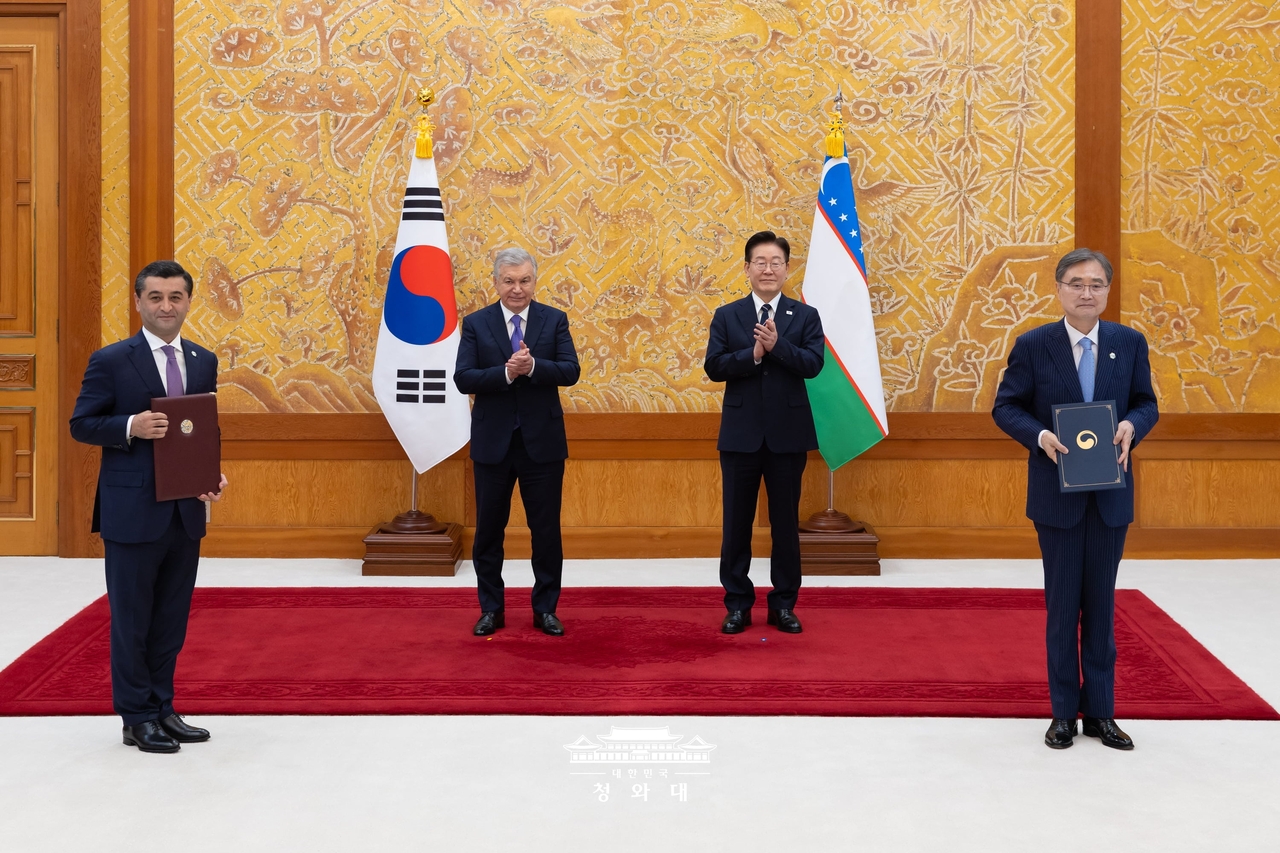
Uzbekistan will add Korean language as an official category in its national academic competition under a new set of agreements that broaden education cooperation with South Korea into artificial intelligence, teacher training and higher education.
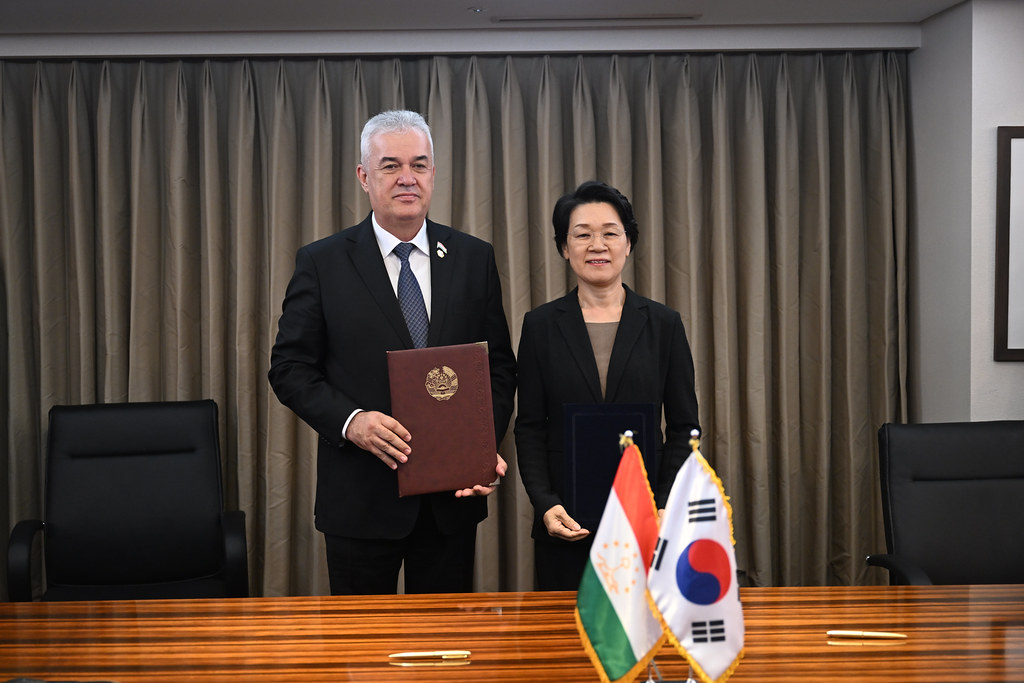
South Korea signed three memorandums of understanding with Uzbekistan and Tajikistan on Wednesday on the sidelines of the inaugural Korea-Central Asia summit in Seoul, the Education Ministry said Thursday.
Under the agreements with Uzbekistan, the two countries will expand cooperation in early childhood and general education, digital and AI education, and science, technology, engineering and mathematics.
They will also promote teacher and student exchanges and jointly organize a Korean-language competition after Korean is formally added to Uzbekistan’s national academic competition.
Cooperation in higher education will include exchanges of students and researchers, joint seminars and training programs, and efforts toward the mutual recognition of academic degrees.
The two countries also agreed to support Korean-language education in Uzbekistan and Uzbek-language education in Korea, while expanding undergraduate and graduate exchanges through government scholarship programs.
Separately, South Korea and Tajikistan agreed to promote exchanges among teachers, professors, experts and students, as well as joint academic conferences and university exchange programs.
The agreement calls for wider Korean-language education in Tajik primary and secondary schools and stronger instruction in the Korean and Tajik languages and cultures at universities in both countries.
“The agreements are meaningful because they will expand cooperation with Central Asia beyond student and teacher exchanges and Korean-language education into areas including AI, early childhood education and higher education,” Education Minister Choi Kyo-jin said.
The ministry said it would develop follow-up projects tailored to each country’s educational needs and continue expanding educational and people-to-people exchanges with Central Asian nations.
seungku99@heraldcorp.com

![[Survive&Thrive] Tips for getting around Seoul by subway (2)](https://wimg.heraldcorp.com/news/cms/2026/10/08/news-p.v1.20261006.1e7dee51d7f64cdba1a20b897d88cee6_T1.jpg?type=h&h=800)