Foreign Minister Cho Hyun on Tuesday called for deeper cooperation with Central Asia, highlighting the potential to build a stronger partnership in strategic resources, supply chains, artificial intelligence and other future-oriented fields.
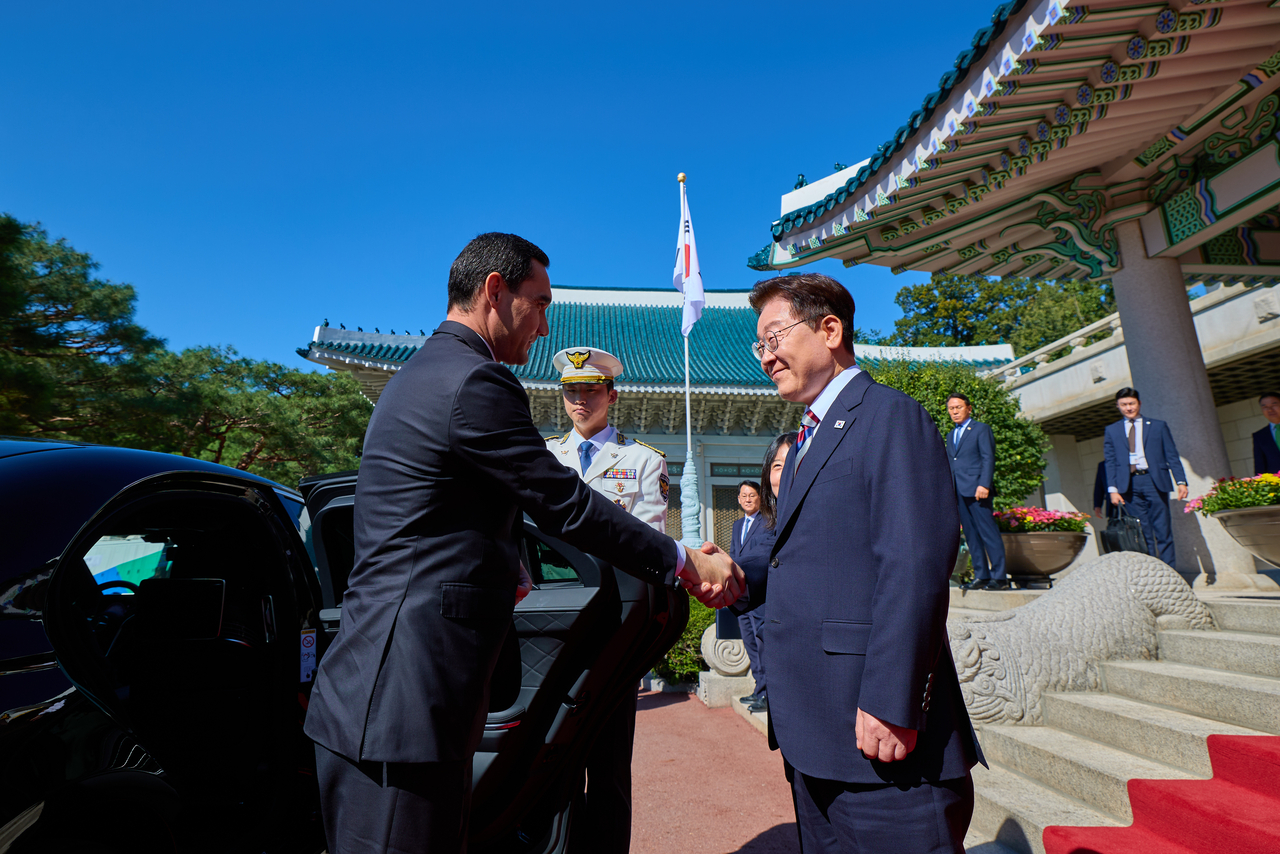
Cho made the call in a contribution to Yonhap News Agency ahead of the first Korea-Central Asia summit set for Wednesday, where leaders from South Korea and the five Central Asian countries -- Uzbekistan, Kazakhstan, Turkmenistan, Kyrgyzstan and Tajikistan -- will discuss ways to enhance partnership for shared prosperity.
"The Korea-Central Asia Summit, the first such leaders meeting to take place, is expected to serve as a valuable foundation for the next thirty years ahead with the accumulated reciprocal trust and combined efforts of the past three decades as a firm basis," Cho wrote.
South Korea established diplomatic relations with the five Central Asian countries in 1992. It launched the Korea-Central Asia Cooperation Forum in 2007, before such major nations as the United States and China, as well as the European Union, stepped up regional cooperation with Central Asia, and elevated the forum to the ministerial level in 2019.
Trade between South Korea and the five Central Asian countries exceeded US$10 billion for the first time last year and has expanded beyond consumer goods into supply chains and high-tech industries, Cho said.
"With the Republic of Korea having a tremendous manufacturing industry and technological capability, and Central Asian countries having bountiful resources and growing markets, they will be able to emerge as optimum partners in terms of meeting each other's needs," Cho wrote.
"At this Summit, through an established cooperative framework in various fields such as critical minerals, supply chains, and AI, the diversification of the Korea-Central Asia teamwork will gain momentum," Cho wrote, stressing the importance of such cooperation amid a fast-changing global security environment.
The minister also called for expanding cooperation into other future-oriented areas, including digital transformation and climate change response, saying the two sides could create new opportunities for shared growth by combining their strengths in digital technology and green industries.
Cho also highlighted the strategic importance of ties with Central Asia for peace and stability on the Korean Peninsula, saying the five countries have supported the denuclearization of the peninsula and South Korea's position on peace and stability.
"Considering that the peace and stability of the Korean Peninsula and Central Asia are the very basis for the co-prosperity of Eurasia, South Korea is sincerely striving to continue this cooperative approach," he wrote.
People-to-people ties are another important pillar of cooperation, with some 310,000 Koryo-saram, or ethnic Koreans, living in Central Asia, about 5,000 Korean businesspeople and overseas Koreans in the region, and approximately 150,000 Central Asian students and industrial workers in South Korea.
"When people connect and cultures interact, the ties can transform from ones that were ad-hoc into lasting bonds that are truly enduring," Cho said.
Invoking the history of the Silk Road, the minister said South Korea and Central Asia are now forging a new path based on "affinity and technology, people and culture, and the vision embraced for a shared future."
"The Republic of Korea and Central Asia are once again traveling a path, going beyond the Silk Road and stepping forward to embrace the promise of the future together," he wrote. (Yonhap)










