Fifth flight will deploy five Neonsats and 10 CubeSats in rocket’s most complex mission yet
South Korea’s space rocket is set to carry five primary satellites in October, marking the country’s first major step toward deploying an operational satellite constellation in a single launch.
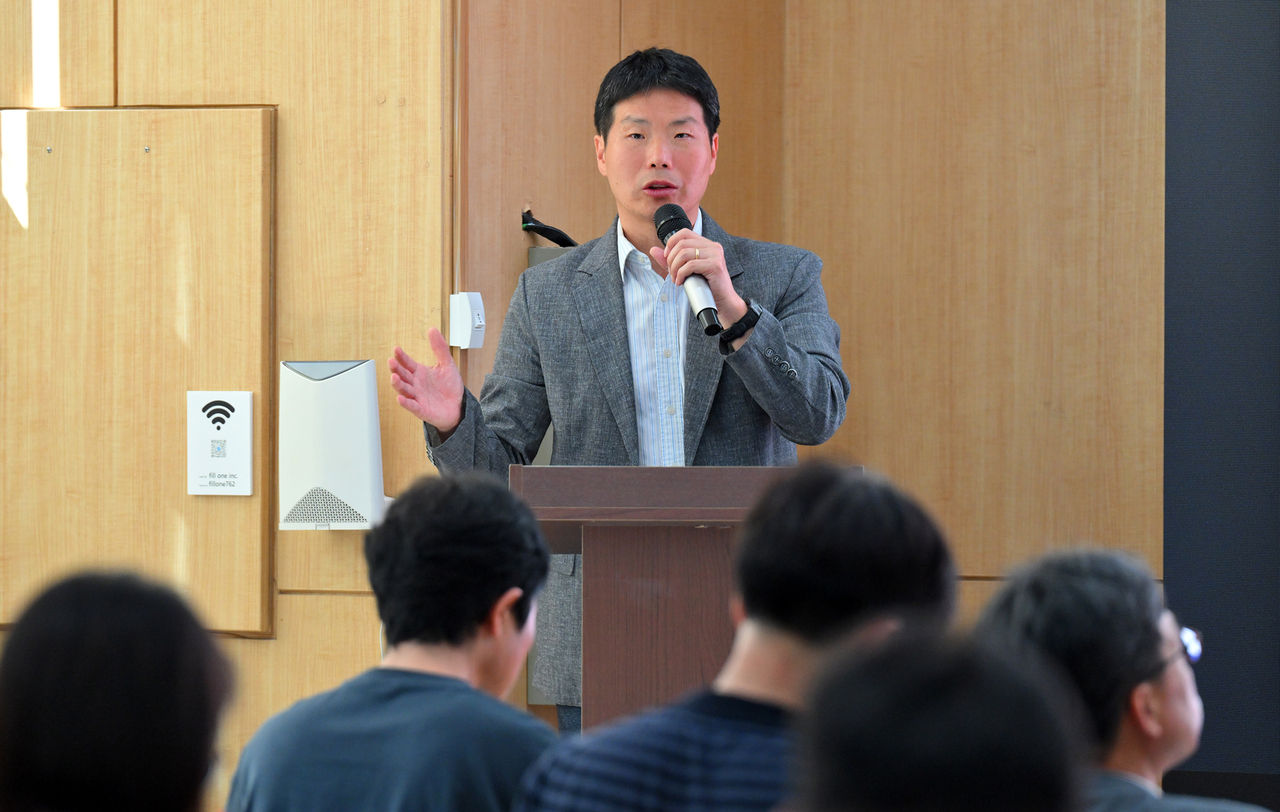
“The fifth launch has two key features: it is the first time we are carrying multiple primary satellites, and it will carry the largest number of satellites in Nuri’s history,” Park Jong-chan, director of the Korean Launch Vehicle Enhancement Program at Korea Aerospace Research Institute, said Tuesday at a media briefing in Seoul.
The launch, scheduled for Oct. 7 between 12:23 p.m. and 1:23 p.m., will carry 15 satellites into orbit. The payload includes five Neonsat satellites and 10 CubeSats. The former, developed by the KAIST Satellite Technology Research Center, are designed to work together as an Earth-observation constellation. The latter are small standardized satellites commonly used for research and technology demonstrations, and were developed by domestic companies, universities and research institutions.
Unlike previous Nuri missions, the fifth launch will deploy five primary satellites in sequence while maintaining precise attitude control — the rocket’s ability to maintain its orientation. The mission is designed to demonstrate Nuri’s ability to support satellite constellation deployment operations.
“The most technically important part of this launch is the rocket’s precise attitude control during the separation of the primary satellites,” Park said. “It is important to ensure that the satellites and the rocket do not collide after separation and that the satellites enter their intended orbits in a stable condition.”
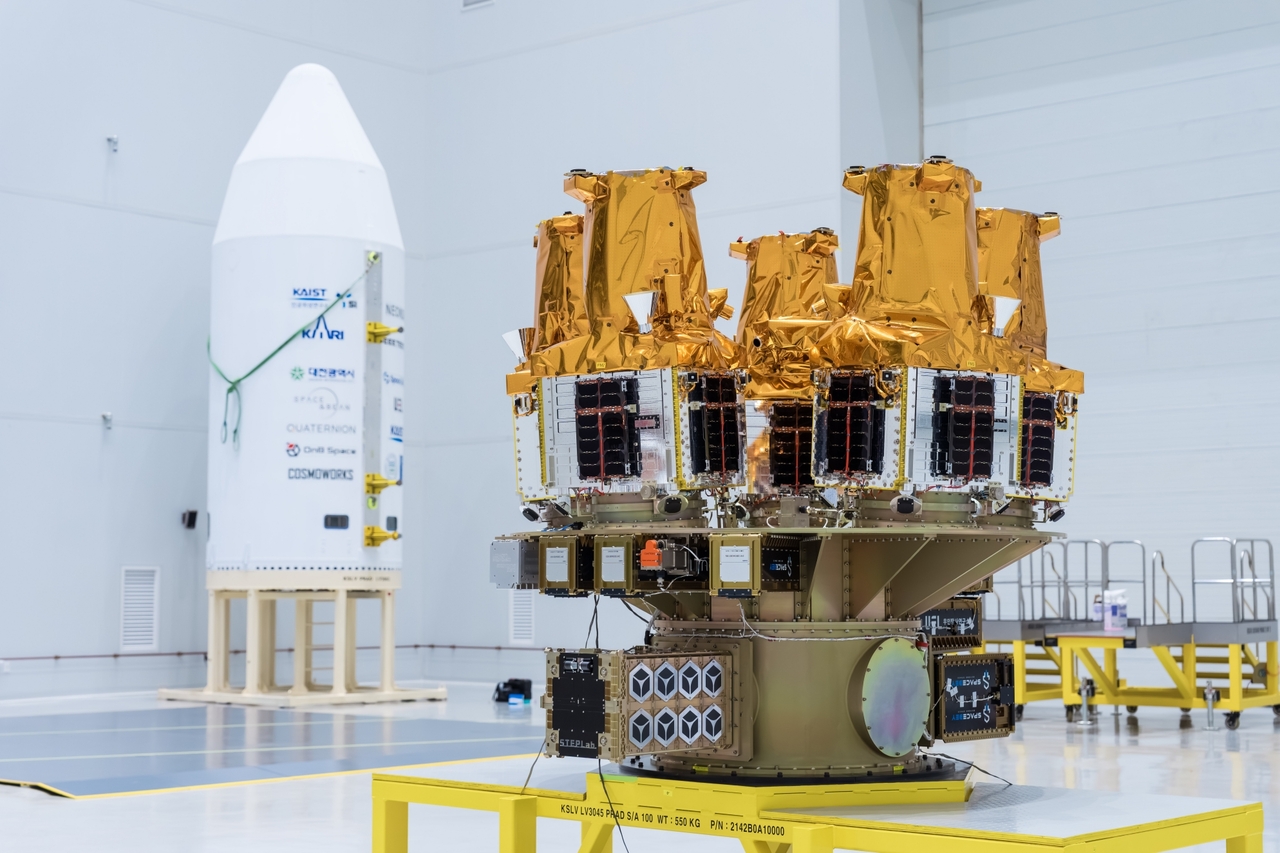
The rocket will also use a newly developed low-shock separation system designed to protect satellites during deployment. Park said the system reduces the shock measured by the shock response spectrum, a standard used to evaluate separation impacts, from about 2,000G — where G refers to gravitational acceleration — to about 1,000G, or roughly half the previous level.
The fifth launch comes after a series of missions that have strengthened Nuri’s reliability. The rocket’s first test flight in October 2021 failed to place its payload into orbit despite a successful launch, but the second launch in June 2022 demonstrated Korea’s ability to develop and launch a space launch vehicle. The third and fourth launches in 2023 and 2025 were also successful.
The latest mission also required changes to Nuri’s satellite mounting system to carry multiple payloads. Park said the increase in the payload section weight compared with the fourth launch was due to the addition of an evolved secondary payload adapter, which allows multiple satellites to be mounted on the rocket, rather than heavier satellites themselves.
The fifth launch will also expand the role of private companies in Nuri operations. Hanwha Aerospace, designated as the system integration company for the program, will participate in a broader range of launch preparations and operations as Korea continues efforts to build a private-sector space launch ecosystem.
yeeun@heraldcorp.com