Longer hours ease time-zone hurdles for foreign investors, while broader stock access intensifies competition with NXT.
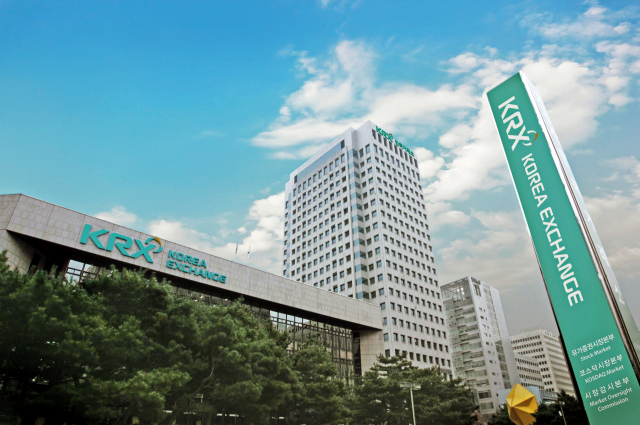
The Korea Exchange, South Korea's main bourse operator, will launch a real-time after hours market Monday, extending trading until 8 p.m. and opening most Kospi and Kosdaq stocks to evening trading in a move aimed at widening investor access.
Under the new system, investors will be able to trade until 8 p.m., following the regular trading session from 9 a.m. to 3:30 p.m. With Korea's alternative stock trading platform Nextrade's 8 a.m. premarket included, the trading hours will extend to 12 hours total.
The move comes as demand for after-hours trading has grown since NXT's launch. NXT's market share has averaged 10 percent this year and reached 15.91 percent in June, when the Kospi topped 9,000 points. The 15 percent legal cap on alternative trading system's trading volume has also limited NXT's growth.
The biggest change will be the number of stocks available for after-hours trading.
NXT currently allows trading in about 610 stocks. The KRX after-market will cover most stocks listed on the Kospi and Kosdaq, excluding some securities. As of Sept. 11, 831 stocks were listed on the Kospi and 1,811 on the Kosdaq.
The broader range of stocks will give investors more choices when trading the same stock. They can compare prices, trading costs and execution conditions between the two markets.
Brokerages must also route orders to the market offering the best conditions for investors under best-execution rules. Greater competition could lead to lower fees and better execution.
The extended hours are also expected to make the Korean market more accessible to overseas investors by reducing time-zone constraints.
NXT has already seen a sharp increase in foreign participation. Global brokerages including Macquarie, Morgan Stanley and Merrill Lynch, later joined by Goldman Sachs and CLSA, have helped increase NXT's member firms to 38 from 28 at its 2025 launch.
Foreign investors' share of NXT's trading value has also risen significanty, from 0.4 percent at launch to about 14 percent in July. Foreign participation could rise further with the launch of the KRX after-market, which offers a broader range of stocks.
The two markets are also expected to compete on trading fees. The KRX charges about 0.23 basis points, compared with 0.15 basis points at NXT.
"At a time like this, expected returns are playing a bigger role, but for investors who mainly engage in short-term trading, the fee gap is not insignificant," a capital market industry official said. "It will be a factor worth considering when making investment decisions."
Smart order routing systems could also influence competition. They automatically route orders based on factors such as price, trading costs and execution probability. All else being equal, NXT could have an advantage because of its lower fees.
The KRX's move reflects a broader global trend toward longer trading hours. Major exchanges in the US and Europe are expanding after-hours trading, while the New York Stock Exchange and Nasdaq are moving toward 24-hour trading.
Korea Exchange Chairman Jeong Eun-bo previously pledged to extend trading hours, saying the exchange would "proactively respond to the transition to a multiple-exchange system and competition for liquidity among global exchanges" and "change the structure of our stock market." The exchange said it would monitor global trends and consider further extensions of trading hours in stages.
ch0221@heraldcorp.com