Alexander Treves calls for stronger governance, tangible shareholder returns, gains beyond chips
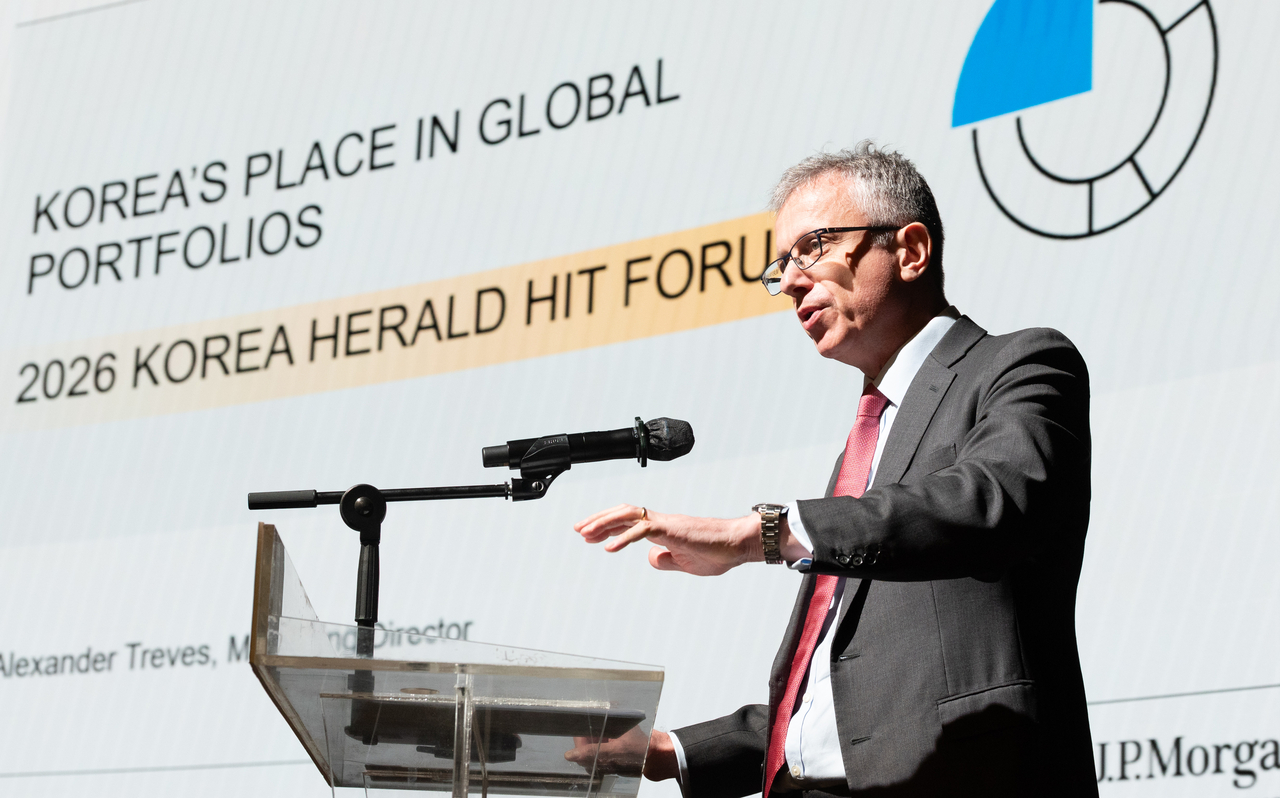
South Korea’s capital market must evolve from a “nice-to-have” option into a “must-have” destination for global investors, with faster progress on corporate governance and shareholder returns needed to narrow the Korea discount, according to Alexander Treves, managing director at JPMorgan Asset Management.
“If Korea does not continue to improve, in particular in terms of corporate governance, it risks being just a nice-to-have investment destination for global investors,” Treves said at The Korea Herald’s 2026 HIT Forum on Tuesday.
“But if it continues to innovate and reform and makes the necessary changes, then it will be a ‘must-have’ investment destination.”
Reaching that point will require Korean companies to demonstrate not only growth, but also that the value they create reaches shareholders, he said.
Treves said global long-term investors assess companies based on more than just revenue growth and operational efficiency.
“Associated with that is how the balance sheet is used. We also need the willingness to share returns with minority equity investors, which is to say, responsible corporate governance.”
Korean management teams generally understand the importance of growing their businesses, Treves said, but their record on returning capital and improving governance remains less convincing.
For Korea’s Value-Up initiative to change how global investors value the market, companies must move beyond pledges and show consistent execution, he stressed.
“Credibility relies on delivery, and our view is that we’re just starting this journey,” he said.
“Korea’s rerating case will become more convincing when returns show in outcomes rather than headlines, which means executed buybacks, executed treasury share cancellations and sustained dividend growth. Execution matters more than announcements.”
Treves also warned that Korea’s equity market remains heavily dependent on a small number of megacap companies, limiting the ability of active fund managers to invest.
“When index returns are dominated by a narrow set of megacaps, global active managers run into concentration limits and risk-budget constraints,” he said.
Kospi returns have largely been driven by one sector, Treves said, adding that Korea needs to be valued for the broader strength of its market rather than primarily for high-bandwidth memory and conventional memory chips.
Broader earnings and share-price gains across nonmemory technology, industrials, financials and consumer companies would give overseas investors more ways to participate in Korea’s growth and provide a more durable catalyst for foreign inflows, he said.
ch0221@heraldcorp.com