12th festival to bring Indian classical dance and cinema to cities across South Korea

The Indian embassy in Korea will take its flagship cultural festival to cities across South Korea this fall, seeking to deepen people-to-people ties as Seoul and New Delhi expand cooperation across economic and strategic sectors.
The 12th edition of “Sarang — The Festival of India in Korea” will feature performances and workshops from Sept. 15-22 in Seoul, Busan, Gwangju, as well as Gimhae and Miryang in South Gyeongsang Province and Nami Island in Chuncheong, Gangwon Province, the Indian Embassy in Seoul said Monday.
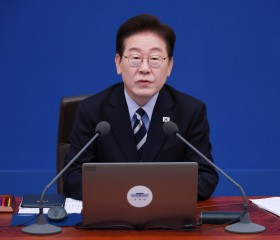
Indian Ambassador to Korea Gourangalal Das said this year's edition aims to broaden the festival's reach by taking Indian cultural programs to audiences beyond Seoul.
This year's centerpiece will be Odissi, one of India's major classical dance traditions, performed by a visiting troupe led by dancer Madhulita Mohapatra.
The tour will open at Ewha Womans University's Samsung Hall in Seoul on Sept. 15 before traveling across the country, including to Miryang, which has sought to develop its identity around yoga.
Originating in the eastern Indian state of Odisha, Odissi traces its traditions to the region's temples and is distinguished by graceful movements, sculptural poses, rhythmic patterns, expressive hand gestures and facial expressions.
The cultural program will continue in November with an Indian film festival featuring six films with Korean subtitles.
The films, produced over the past 10 to 15 years, share a theme of ordinary people overcoming challenges, with stories touching on family, politics, entrepreneurship, remote communities and patriotism.
“These are themes that resonate very well among the people of India and Korea,” Das said.
The ambassador said Korean films and other content are already popular in India, particularly among younger audiences, with the growing availability of Korean content on streaming platforms also contributing to interest in learning the Korean language.
But despite the popularity of Korean culture in India, and decades of diplomatic and economic ties, Das pointed to greater room for improvement in people-to-people exchanges.
He called for more Indian students and researchers to study in Korea, particularly in manufacturing and technology, pointing to close links between Korean universities and industry.
Das also highlighted opportunities to expand skill exchanges and called for better conditions for Indian professionals and their families seeking to make Korea a long-term home.
The cultural push comes as India and South Korea seek to broaden their relationship in areas ranging from trade and technology to defense and supply-chain resilience.
Bilateral ties have gained momentum following recent summit-level exchanges, with the two countries pursuing cooperation in areas including economic security, advanced technologies, shipbuilding, semiconductors and critical minerals.
The two sides are also seeking to accelerate negotiations to upgrade their Comprehensive Economic Partnership Agreement, which took effect in 2010.
Das said India wants to modernize the pact to reflect changes in the global economy, including greater emphasis on supply-chain resilience and cooperation in strategic industries.
“We see Korea as very critical to some of our national policies,” Das said.
For New Delhi, Sarang is part of an effort to ensure that growing economic and strategic cooperation is matched by deeper ties between Indians and Koreans.
sanjaykumar@heraldcorp.com