Shin Hyun-song says central bank will not mechanically follow Fed rate moves
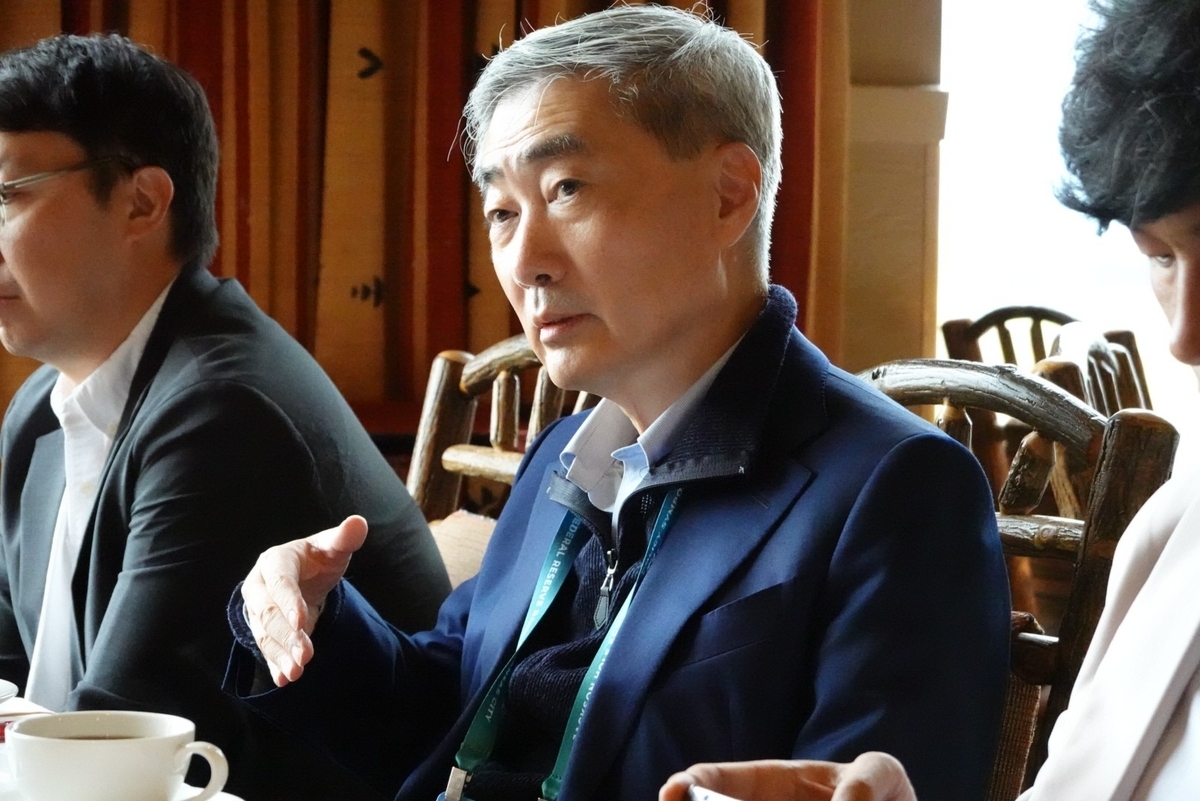
Bank of Korea Gov. Shin Hyun-song said the won had become more resilient to external shocks and that South Korea’s planned investment in the United States should have a manageable impact on the currency.
“We have gained some control over the exchange rate and are well prepared for whatever shocks may come,” Shin told reporters Friday after attending the Jackson Hole Economic Policy Symposium in Wyoming for the first time as BOK governor.
He cited the BOK’s recent preemptive rate increase and pointed to the fall in the won-dollar exchange rate despite a stronger dollar index as evidence of the currency’s resilience.
The won closed at 1,372.5 per dollar Friday, its strongest level since July 24, 2025.
Shin said the exchange rate had become a broader gauge of confidence in Korea’s monetary system, particularly given the country’s past foreign exchange crises. He attributed the won’s recent strength partly to dollar inflows from SK hynix’s US listing and increased dollar-selling by exporters.
Asked whether Korea’s commitment to invest up to $20 billion annually in the US could weaken the won, Shin said the amount was manageable. Korea could invest less or nothing depending on circumstances, while returns on its $427 billion in foreign exchange reserves would be sufficient to cover the outflow, he added.
Shin also said US Federal Reserve Chair Kevin Warsh’s Jackson Hole address had “significant implications” for the September Federal Open Market Committee meeting. He attributed Warsh’s limited public communication to concerns that excessive central bank guidance could distort market price discovery.
Unlike Warsh, who opposes the Fed’s dot plot, Shin said he was not particularly skeptical of the BOK’s newly introduced “K-dot plot.” The central bank will review the system with Monetary Policy Board members after its first year.
Shin stressed that the BOK could set policy independently of the Fed. “A US rate increase does not mean we must raise ours,” he said. “We do not mechanically follow the Fed simply to match the interest-rate differential.”
This year’s symposium, held under the theme “Financial Innovation: Implications for Payments and Policy,” featured the BOK’s digital currency experiment, Project Hangang, as a case study.
ch0221@heraldcorp.com