Under the theme 'Dissident Chorus,' the citywide exhibition brings 46 artists and collectives from 22 countries to three seaside venues through Nov. 1
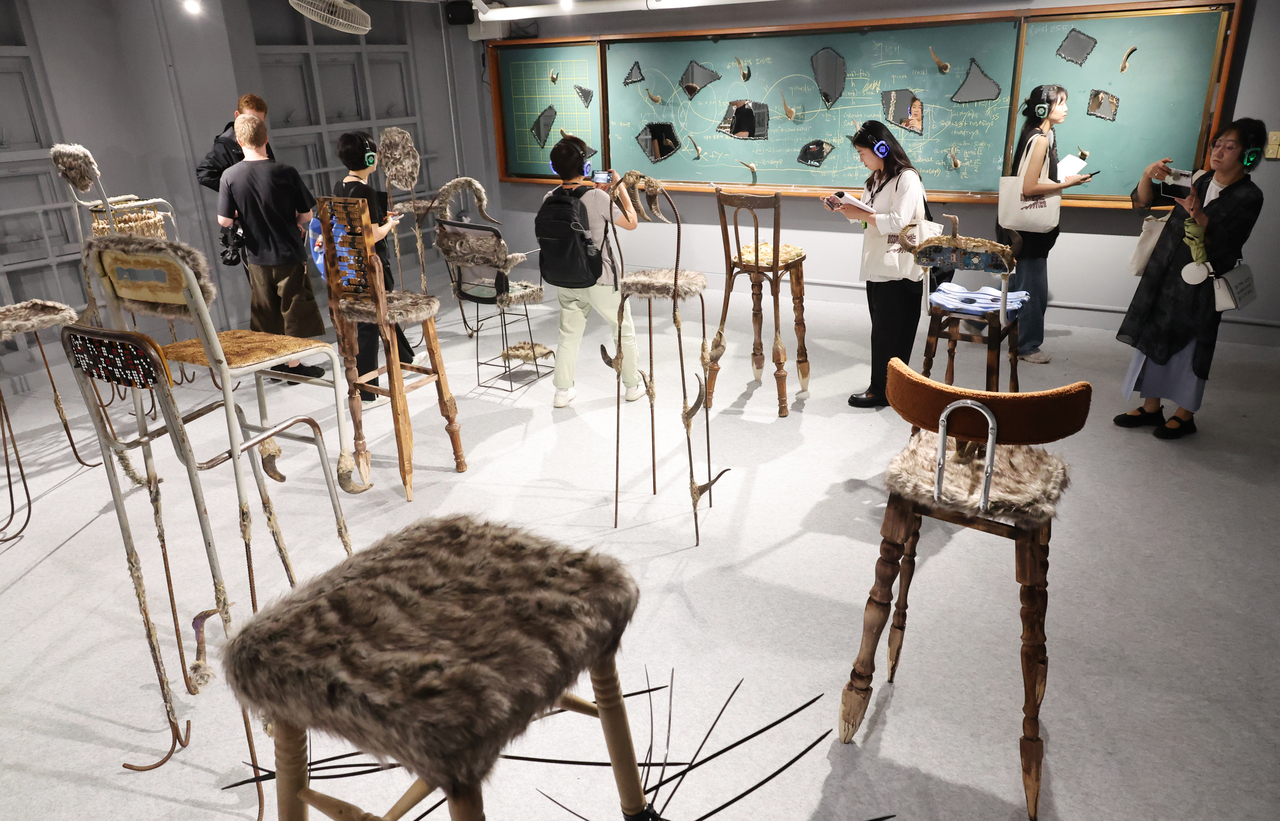
The Busan Biennale launched its 2026 edition Friday with an opening ceremony at a shuttered high school in Yeongdo, kicking off a 65-day run through Nov. 1.
Featuring 46 artists and collectives from 22 countries, the exhibition opened to the public Saturday.
Led by co-artistic directors Evelyn Simons and Amal Khalaf, this year's edition treats rhythm, voice and assembly as means of communication and resistance — a tribute to the city's long tradition of labor activism and pro-democracy protest. Khalaf described the show as a "polyphony of many voices of many artists held together in tension" at a press preview Friday.
The lineup includes Joshua Serafin, who appeared in the main exhibition of the 2024 Venice Biennale and premieres a new work co-produced with Kanal-Centre Pompidou; Julien Creuzet, who represented France in Venice that same year; and 2019 Turner Prize winner Tai Shani. Homegrown participants include Suki Seokyeong Kang, Lim Min-ouk, Ryu Sung-sil and Dew Kim.
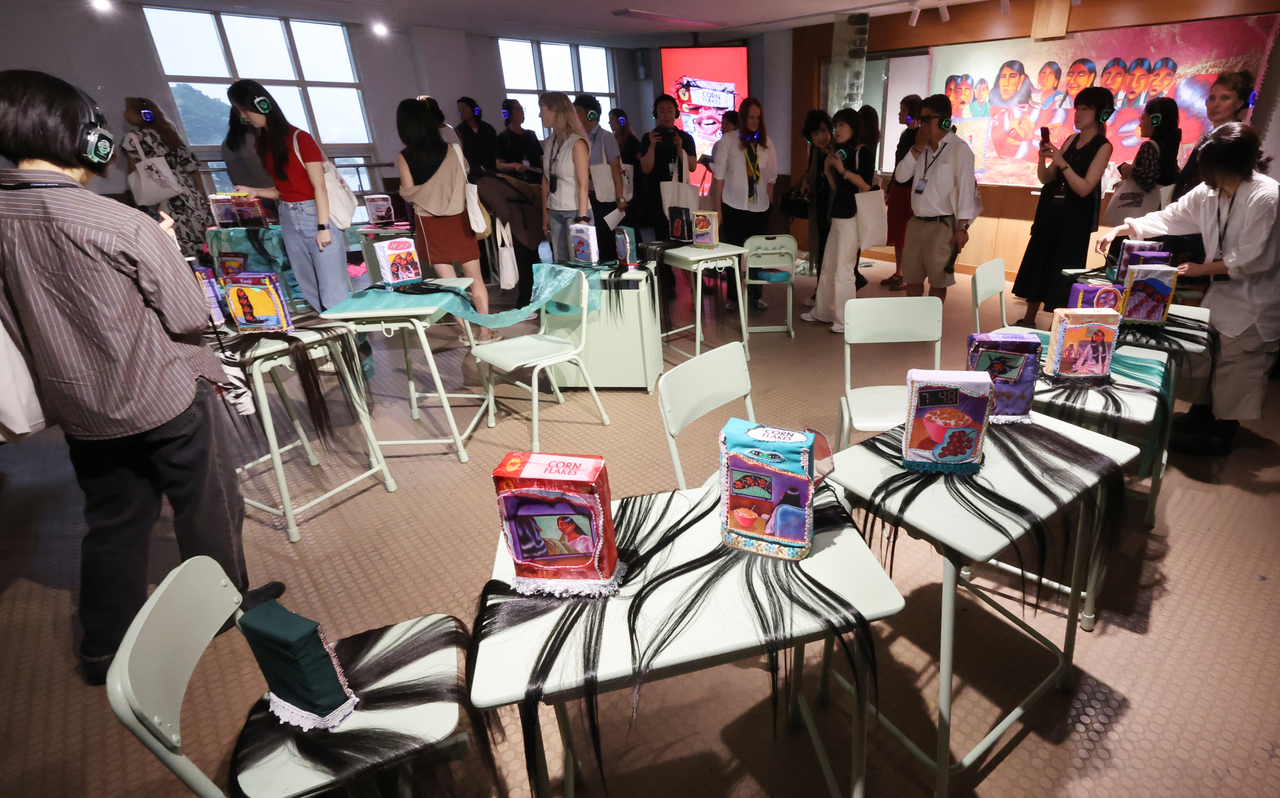
A mix of installation, sound, performance, video and sculpture unfolds across three waterfront venues. The Busan Museum of Contemporary Art on Eulsukdo Island serves as the main stage, featuring 28 artists and teams.
The other two venues are located in Yeongdo: Space OneZ, a century-old marine warehouse, has been converted into an exhibition space; the former Busan Nam High School, left empty since the school relocated earlier this year, now hosts artworks in its classrooms and on its playground.
Beyond the exhibition, the biennale presents a slate of public programs, including performances, workshops, talks and a radio broadcast. A film program curated by the two directors screens Tuesday through Saturday at SongEun, an art space in southern Seoul, timed to Frieze Seoul week.
Busan Biennale 2026 is open 10 a.m. to 6 p.m., closed Mondays. Admission to the Busan Museum of Contemporary Art costs 16,000 won for adults, 8,000 won for teenagers and 5,000 won for children; the other two venues are free. A free shuttle bus connects the three sites.
moonkihoon@heraldcorp.com