Heat dome over Korean Peninsula keeps typhoons at bay, but fall could shift their path

More than 20 typhoons have formed in the western Pacific this year, but none have directly affected the Korean Peninsula.
According to the Korea Meteorological Administration and weather analysts, two high-pressure systems — the Tibetan high and the North Pacific high — have blocked typhoons from moving north toward the peninsula, steering them instead toward Japan, China and Taiwan.
Three typhoons are currently active in the region, after one of four that briefly coexisted weakened into a tropical depression. Typhoon Saudel, the strongest of the three, is expected to follow the pattern of recent storms, skirting the edge of the high-pressure systems rather than turning north toward Korea. It is forecast to pass near Okinawa, move toward Taiwan and eventually make landfall in southern China.
The number of typhoons formed so far this year stands at 21, about 80 percent of the long-term annual average of 25.1, according to the KMA.
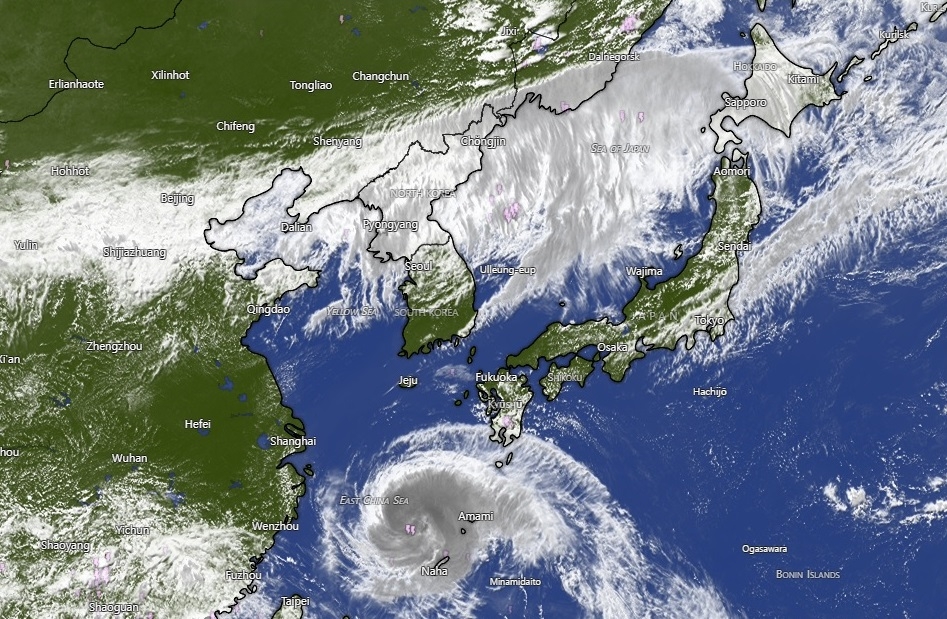
Several recent storms have taken similar paths.
Typhoon Dolphin, the season’s 13th, made landfall in China’s Zhejiang Province on Aug. 9, prompting more than 1 million people to evacuate and contributing to Shanghai’s first red rain warning in 13 years. Although Dolphin did not directly hit Korea, its remnants were linked to record rainfall in the southern coastal cities of Geoje and Tongyeong.
Typhoon Chan-hom, the season’s 15th, made landfall in Japan’s Ibaraki Prefecture on Aug. 11 before crossing the Japanese archipelago from east to west in a rare reverse track. It was the first typhoon to make landfall in the prefecture since records began in 1951. The storm passed east of the Korean Peninsula, bringing rain mainly to parts of the country’s east coast.
This pattern, however, may not last, weather experts warned.
The North Pacific high could weaken and shift, potentially opening a path for typhoons to move farther north toward the peninsula.
Sea surface temperatures in the main typhoon-forming region also remain around 30 degrees Celsius, providing favorable conditions for more storms to develop in the coming months, they noted.
limdoyun0603@heraldcorp.com