Wider design and clever pricing make Fold8 surprise star of record launch
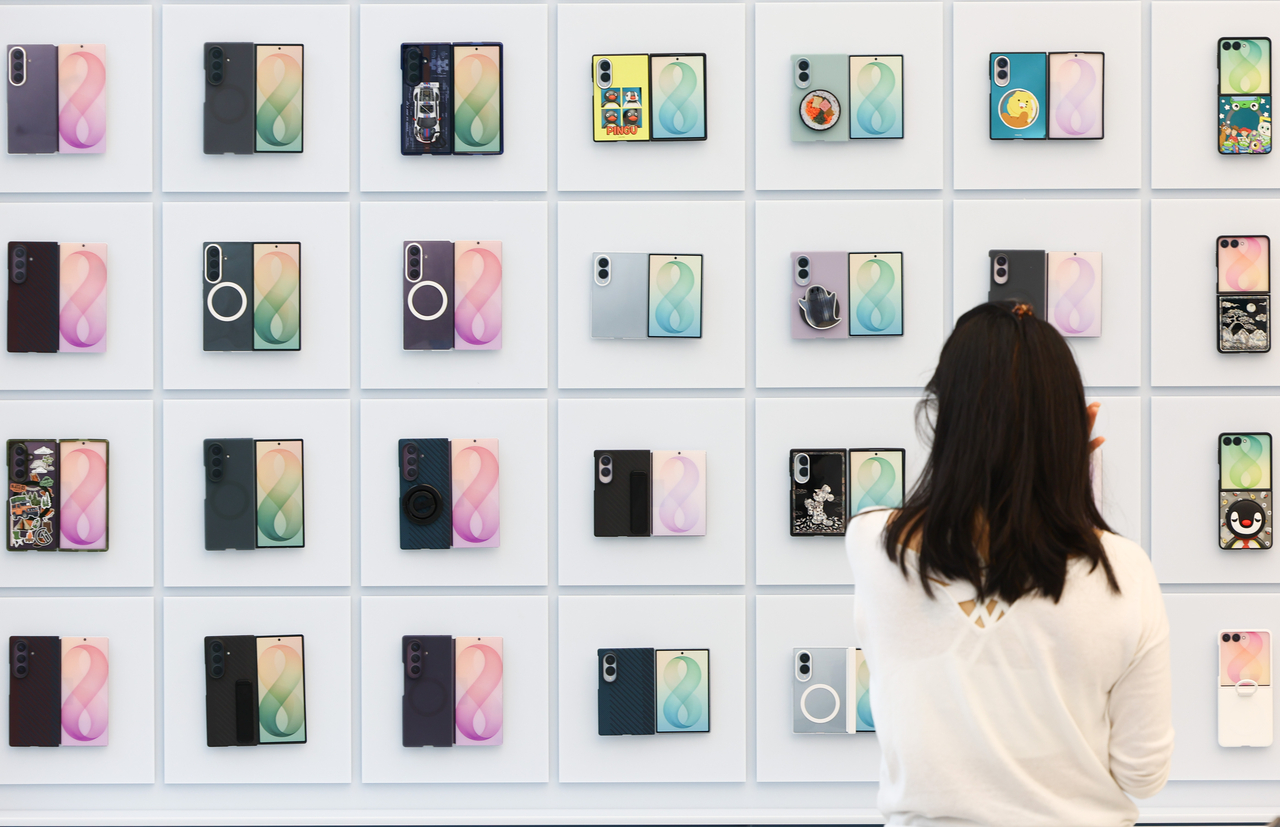
“I thought it would feel awkward because it looked so short and wide in photos,” said Kwon Ji-hyun, a 35-year-old woman who had bought every Galaxy Z Flip before switching last week to Samsung’s new, wider Fold8.
“Just a few days later, I felt the opposite. My husband’s larger, more traditional Fold8 Ultra started to seem like the unusual one.”
Kwon is exactly the kind of buyer Samsung’s book-style Fold rarely won over before. She was far from alone. Female Fold buyers in their teens through 30s more than doubled on Samsung.com in South Korea from the previous generation, the company said.
The broader launch was even more striking. The Galaxy Z8 series drew 1.44 million preorders in Korea, a Galaxy smartphone record and nearly 39 percent above the previous generation. About 70 percent went to the new wide-format Fold8, not to the flagship Ultra.
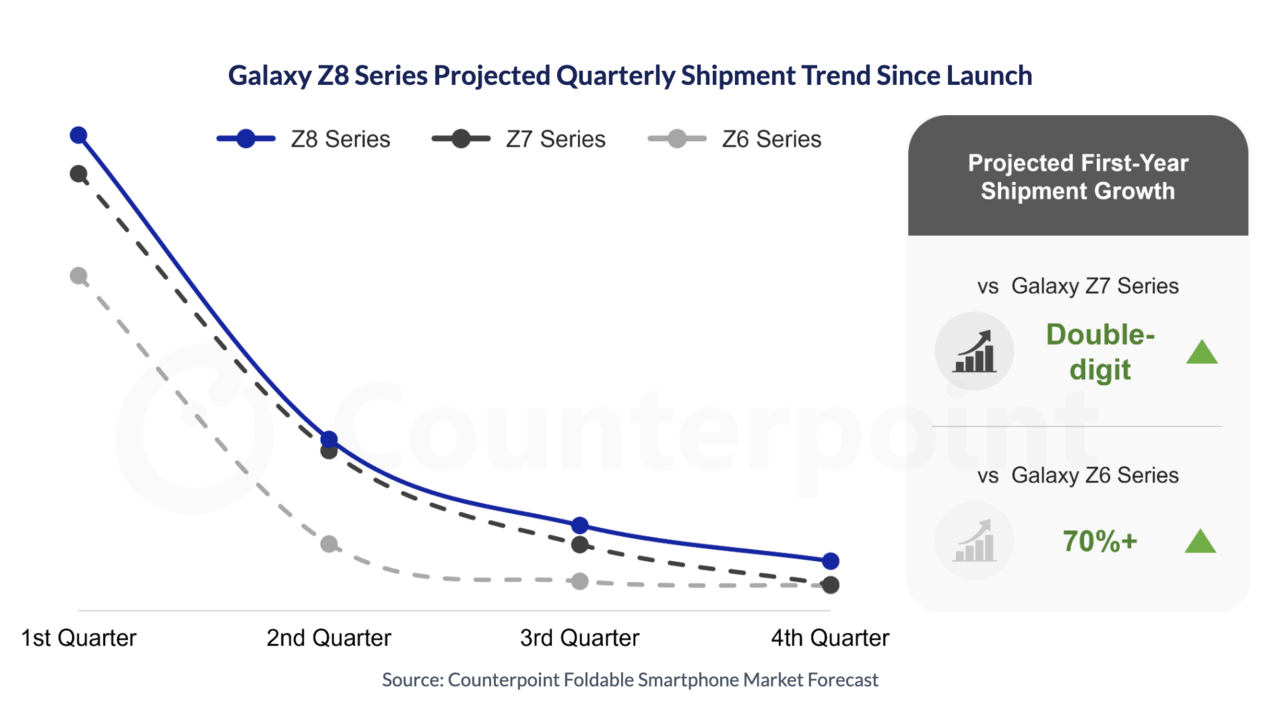
Counterpoint Research said global Galaxy Z8 preorders also rose more than 30 percent from the previous generation, with the standard Fold8 leading demand in most markets, including nearly half of US Fold preorders.
Samsung had already allocated 2.8 million Fold8 units for the year, more than any other Z8 model. After preorders surged, local industry reports said it moved to add roughly 1 million more.
The timing is notable. Samsung’s MX and Networks businesses posted a combined 700 billion won ($496 million) in operating loss in the second quarter as rising component costs, including memory, squeezed profitability.
So why did a 2.28 million won phone, priced at $1,899 in the US, outperform even Samsung’s own bullish expectations?
Why less became more
On paper, the Fold8 is not an obvious upgrade.
Its 7.6-inch main screen is smaller than the Fold7’s 8-inch display. Its main camera drops from 200 megapixels to 50 megapixels, and the dedicated telephoto camera is gone.
Yet the new model, not the better-specced Fold8 Ultra, has taken most of the early demand.
“This Fold8 actually loses some things if you look only at the spec sheet,” a local telecom industry official told The Korea Herald. “But in actual use, what it gains can feel much bigger. That is the strange thing about this product, and probably one of the reasons it is succeeding.”
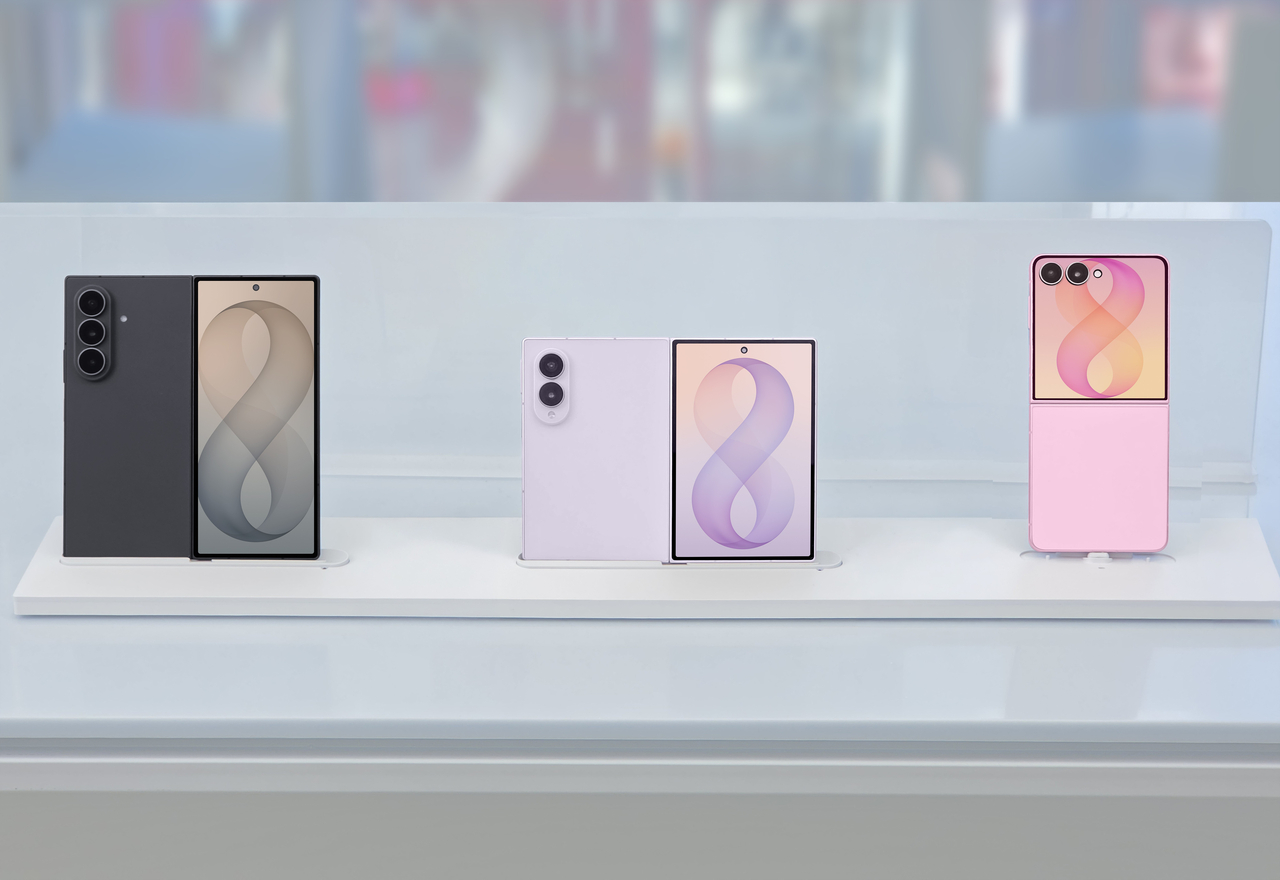
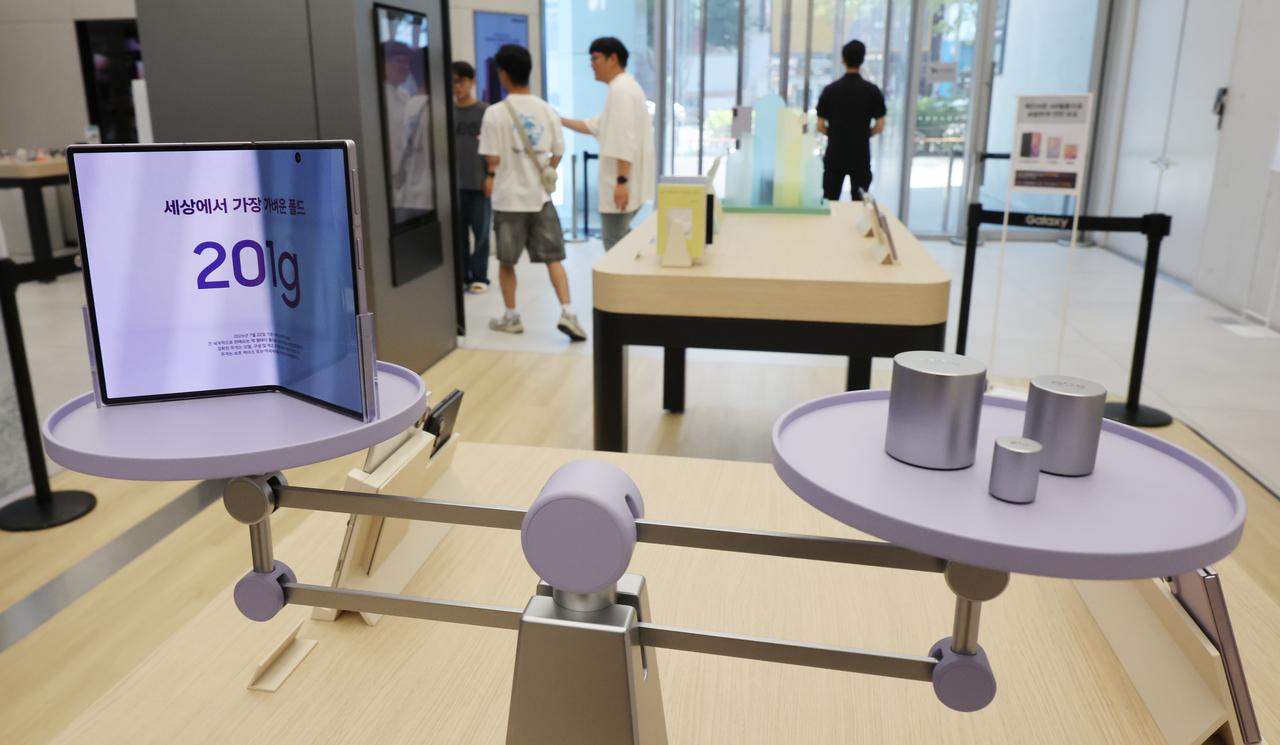
The key change is the shape. The Fold8 is shorter and wider, with a 5.5-inch cover display and a 7.6-inch inner screen that opens to a 4:3 ratio. At 201 grams, it is Samsung’s lightest book-style foldable.
For Kwon, that changed how she used it.
“With the old Fold, there were times when you had to find a reason to open it,” she said. “With the Fold8, I just open it. Even when I’m reading a webpage or watching something, opening it feels natural.”
“The Fold is getting closer to an ordinary premium smartphone that people can want for its shape and everyday experience,” a smartphone industry official said.
Linda Sui, founder and principal of Smart Analytics Global and former head of mobile device markets at TechInsights, sees the Fold8’s early sales as evidence that wide-fold models may be moving beyond a niche. Smart Analytics Global expects them to account for 44 percent of global foldable shipments this year and 65 percent in 2027.
How Samsung redefined the Fold
Part of why the new design landed may be that Samsung never presented it as an experimental variant.
“Samsung could have called it Fold8 Wide, FE or something else,” the telecom official said. “Instead, it moved the traditional Fold successor up to Ultra and gave the new shape the basic Fold name.”
That naming choice also changed the price comparison.
Last year’s Fold7 started at 2,379,300 won in Korea and $1,999.99 in the US. The Fold8 starts lower, at 2,278,100 won and $1,899.99.
By name, the Fold got cheaper.
But Samsung’s US website says its “original Z Fold model has advanced to become Galaxy Z Fold8 Ultra.” That model, with the Fold7-like 8-inch display and 200-megapixel main camera, starts at 2,577,300 won and $2,099.99.
In other words, Samsung lowered the Fold’s starting price while moving the actual flagship successor to the Fold7 into a more expensive Ultra tier.
Samsung sweetened the lower starting price further in Korea by offering preorder buyers a free upgrade from 256GB to 512GB, worth about 253,000 won on the Fold8.
A win for Samsung — and Apple?
The irony is that the Fold8's initial success may also have validated the basic product idea behind its biggest potential competitor.
Apple is expected to unveil its first foldable iPhone in September with a similarly short, wide design.
“We still don’t know whether this is a Samsung success or the answer for the foldable market as a whole,” the telecom industry official said. “Apple’s entry will tell us more.”
Price remains the bigger uncertainty. Apple has so far avoided raising iPhone prices despite broader memory-cost pressure, but its first foldable is widely expected to cost more than $2,000, with some analysts putting it closer to $2,500.
Just last month, it launched Apple Upgrade, a leasing program currently available only in the US, effectively giving Apple a new way to present expensive hardware before its foldable debut.
Under the new program, the top-tier $1,999 2TB iPhone 17 Pro Max costs about $58.34 a month over 24 months. The US remains one of the largest markets for premium smartphones and foldables outside China.
“For a first-generation foldable from Apple, financing could be as important as the product itself,” the smartphone industry official said.
mjh@heraldcorp.com


![[Legal updates in Korea] New insurance mandate protects firefighters on the job](https://wimg.heraldcorp.com/news/cms/2026/10/01/news-p.v1.20261001.76835f19eb424f18814ac3bb65d896a9_T1.jpg?type=h&h=800)