Canada has selected German shipbuilder Thyssenkrupp Marine Systems as the preferred bidder for its multibillion-dollar submarine project, dealing a major setback to South Korea’s Hanwha Ocean in one of the world’s most closely watched naval procurement contests.
Canadian Prime Minister Mark Carney made the announcement Monday (local time) at a naval base in Halifax, Nova Scotia, before traveling to Turkey for a North Atlantic Treaty Organization leaders’ summit, dashing hopes that the Hanwha Ocean-led Korean consortium would secure the deal.


“As part of our commitments to defend Canada and support our allies, I am pleased to announce that Canada has selected TKMS as the preferred supplier for Canada’s Patrol Submarine Project,” Carney said.
The CPSP aims to acquire up to 12 diesel-electric submarines for the Royal Canadian Navy to replace its aging fleet, which operates across the Arctic, Atlantic and Pacific oceans. The project is estimated in South Korea to be worth as much as 60 trillion won ($39.24 billion) when construction costs and about three decades of maintenance, repair and overhaul are included.
Carney said Canada would begin negotiations with TKMS, but added that the government retains the right to open talks with Hanwha Ocean if negotiations with the German shipbuilder fail.

“This was a difficult, close decision between two highly qualified suppliers,” he said. “Both the TKMS and the Hanwha platforms met the very high capabilities required by the Royal Canadian Navy, and both of them put forward strong proposals to maximize the benefits for Canadian workers and businesses.”
Carney said the decision ultimately came down to selecting the platform and partnership that best met Canada’s strategic, security and economic interests.
He said the TKMS platform offers advanced stealth and endurance, with fuel cell air-independent propulsion enabling more than 40 days of near-silent submerged operation, along with lithium-ion batteries for speed, rapid recharging and under-ice capability.
“The TKMS platform is optimized for Arctic waters and it is fully NATO interoperable, allowing it to communicate seamlessly, share intelligence and carry out joint missions,” he said, noting that TKMS provides submarines to more than one-third of the NATO alliance.
The decision deals a blow to South Korea, which had made an all-out effort to win what could become Canada’s largest-ever defense procurement project. A successful bid also could have marked Seoul’s largest defense export. but observers say the outcome highlighted the limits Seoul faces in breaking into NATO-centered defense procurement networks.
The South Korean government had mobilized a public-private campaign to support Hanwha Ocean’s bid, with a delegation led by Presidential Chief of Staff Kang Hoon-sik visiting Canada twice this year, in January and June, to press the case for deeper defense industrial cooperation.
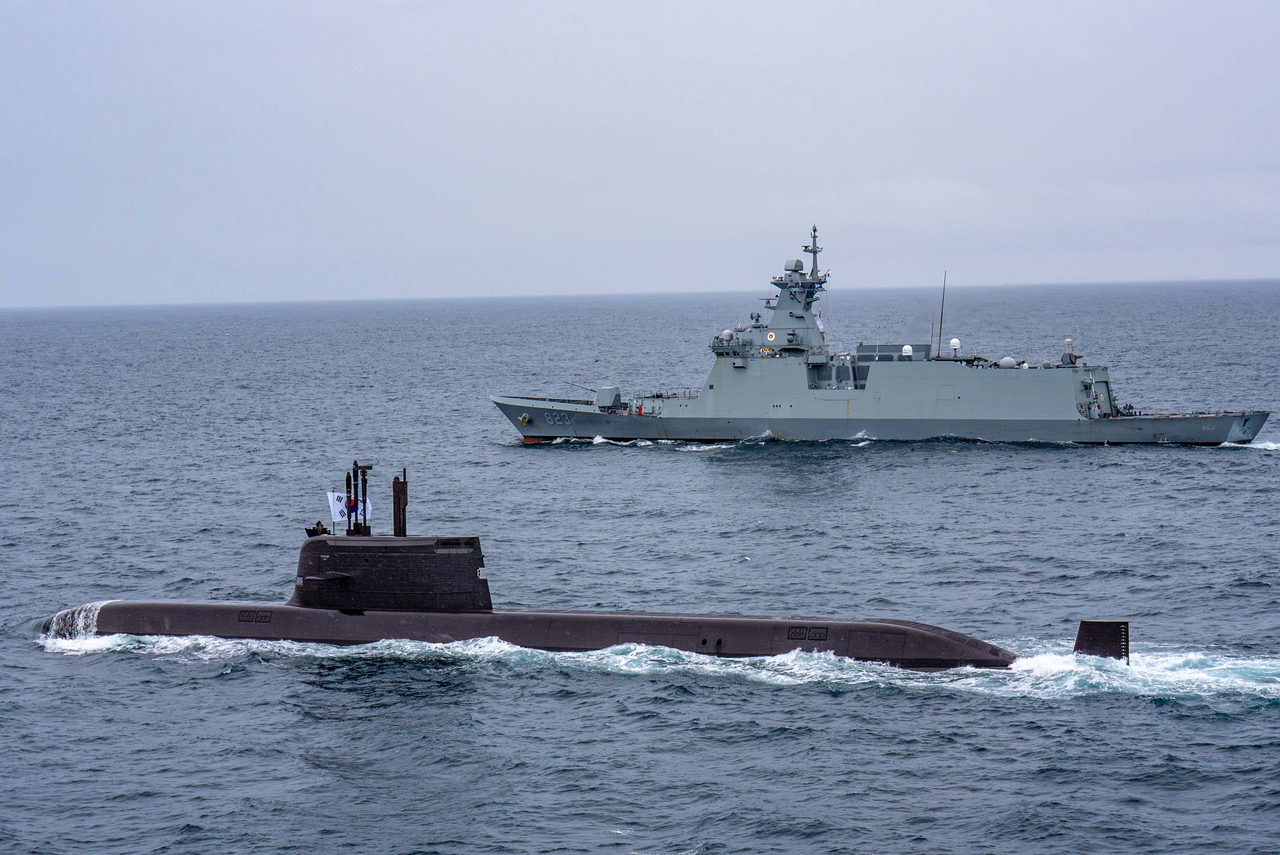
Hanwha Ocean had promoted its KSS-III-based proposal as a ready and proven platform already operated by the South Korean Navy. The company also emphasized fast delivery, life-cycle support and cooperation with Canadian industry as key strengths.
In a statement Tuesday, Hanwha Ocean said it had made every effort to win the submarine project but failed to achieve the result it had hoped for.
“Despite the government’s full support, the strong performance of our submarine and the South Korean Navy’s successful experience operating submarines, we were unable to overcome the wall of the NATO alliance,” the company said. “Although we approached the competition with the resolve to do everything within our power, the result leaves us with deep regret. We believe the outcome is entirely due to Hanwha Ocean’s own shortcomings.”
Hanwha Ocean said it would closely analyze the lessons from the competition and come up with clear alternatives to help Korea’s naval defense industry make further inroads into the global market.
sahn@heraldcorp.com