Court mandates normal operations for critical chip production facilities during strike
A South Korean court on Monday partially approved Samsung Electronics’ request for an injunction against labor actions planned by its unions, imposing legal limits on a looming strike involving tens of thousands of workers.
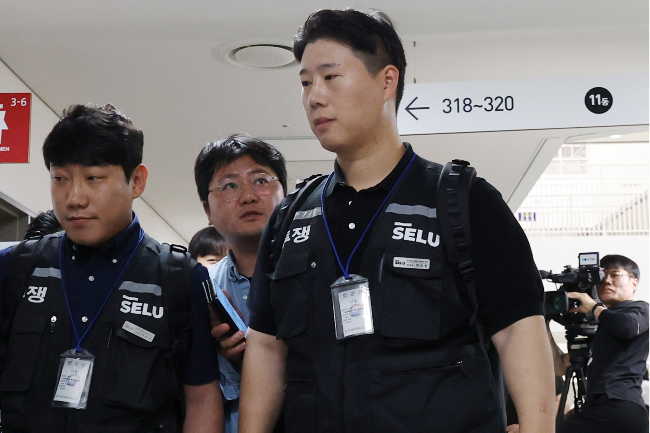
The Suwon District Court ruled that union members must maintain normal staffing and operations at safety- and security-related facilities during any strike, including work to prevent damage to manufacturing equipment and contamination of semiconductor wafers.
The court also barred the chip giant’s largest union and its leader, Choi Seung-ho, from occupying company facilities, installing locks or obstructing workers from entering workplaces.
The decision largely accepted management’s argument that disruptions to critical facilities could threaten safety and semiconductor production. The ruling is expected to constrain union tactics ahead of a planned walkout to begin Thursday.
Union leaders have said about 50,000 workers could participate in an 18-day strike from May 21 through June 7 over a dispute involving bonuses and compensation.
Samsung and union representatives were holding what was expected to be their final round of negotiations Monday at the National Labor Relations Commission in Sejong under government mediation.
The union has demanded the removal of a performance bonus cap currently set at 50 percent of annual salary and called for 15 percent of operating profit to be allocated as a bonus pool. Samsung has said it is willing to offer industry-leading special rewards if the company achieves top market performance, but opposes permanently removing the bonus ceiling.
This article was written with the assistance of AI — Ed.
milaya@heraldcorp.com

![[Graphic News] Korea’s marine waste up 20% in 4 years](https://wimg.heraldcorp.com/news/cms/2026/10/27/news-p.v1.20261027.091c35e4ae1a4bb2a598a9138e673a7b_T1.gif?type=h&h=800)