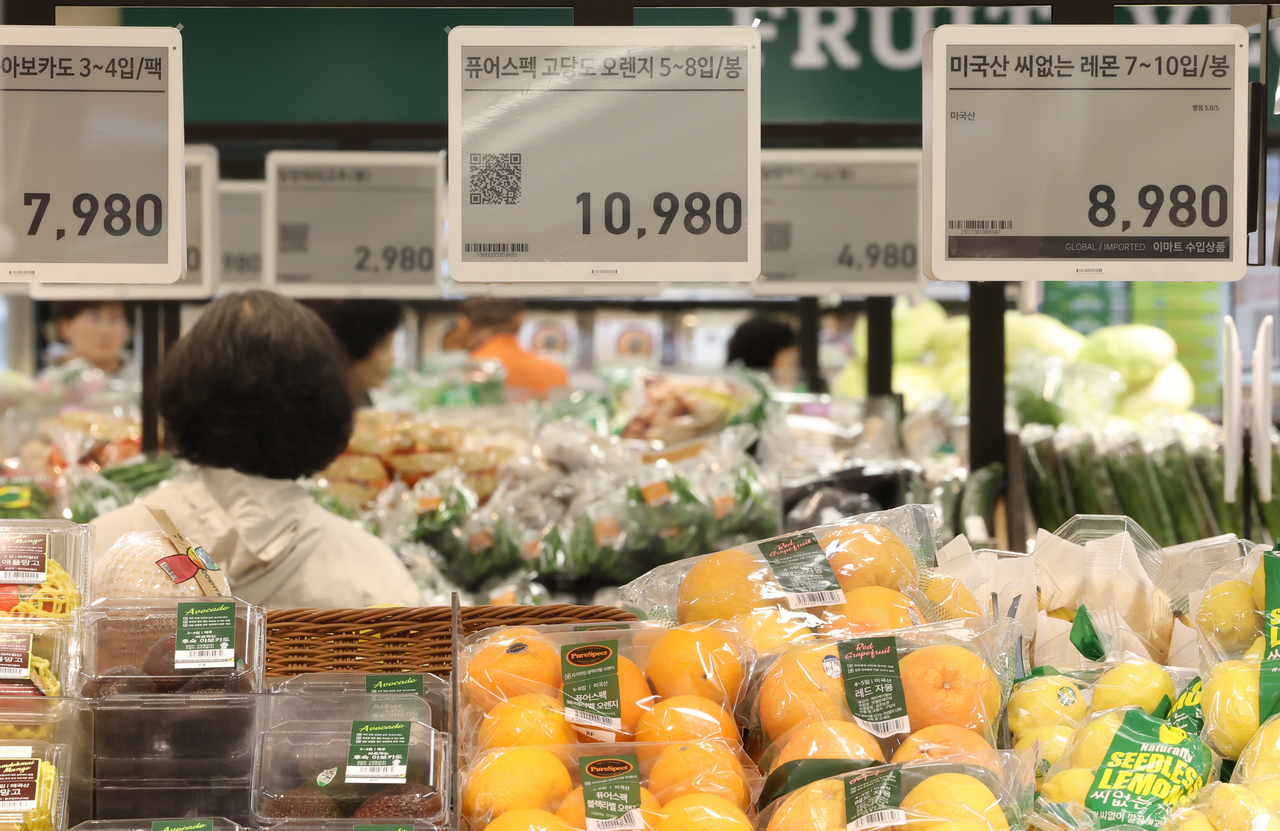
The government plans to introduce emergency tariff-rate quota programs and release government stockpiles as part of its all-out efforts to address growing concerns over consumer price hikes stemming from the Middle East crisis, the finance ministry said Thursday.
The Ministry of Finance and Economy announced a plan at an inter-ministerial meeting to discuss ways to stabilize consumer prices, as Asia's fourth-largest economy gradually feels the impact of supply chain disruptions caused by the Middle East crisis.
South Korea's consumer prices rose 2.6 percent from a year earlier in April, the fastest pace in 21 months, driven by soaring fuel costs following the war between the United States and Iran.
"South Korea has shown relatively modest inflation compared with major countries thanks to the public's support and various policy measures," First Vice Finance Minister Lee Hyoung-il said.
"However, upward pressure on consumer prices remains due to uncertainties stemming from the Middle East war and base effects, and we urge relevant ministries to join forces to stabilize prices of various products," Lee added.
During the meeting, the agriculture ministry said it plans to offer 22 billion won ($14.7 million) worth of discounts on seafood products through June while releasing 8,000 tons of government stockpiles of widely consumed seafood items this month, including mackerel and squid.
The government will also seek to introduce emergency tariff-rate quota programs for 30,000 tons of chicken and 12,000 tons of pork through the end of this year, it added.
The first vice finance minister said the government will take stern action against unfair practices, including hoarding, and called on ministries to devise effective measures to eradicate such activities. (Yonhap)










