From Coachella to campus festivals, K-pop idols reshape live promotion strategies beyond fandom-centered concerts

K-pop idols are increasingly broadening the scope of their live stages, moving beyond traditional music shows and stand-alone concerts to actively appearing on domestic, international and university festivals.
With many of these events drawing tens of thousands of attendees, festival stages have become valuable opportunities for idols to connect directly with the public and expand their fan bases.
As music consumption continues to center on social media platforms, performances filmed by audience members — often referred to as “fancams” — can also generate significant buzz online, further increasing the value of festival appearances.
One of the most noticeable shifts in the festival scene is the growing presence of idol acts in lineups traditionally dominated by genre-based musicians such as rock, indie and hip-hop artists.
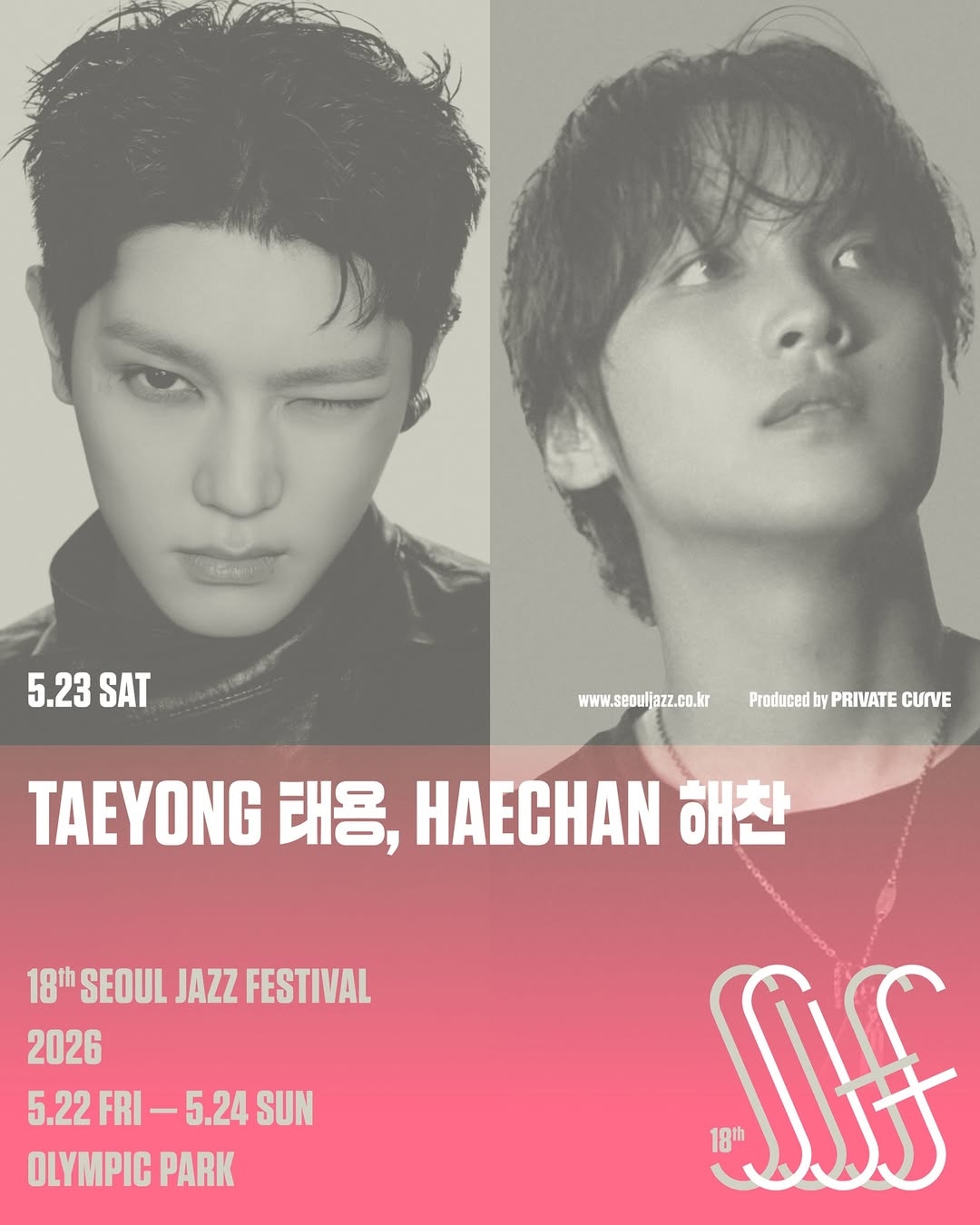
This year’s major music festivals in Korea reflect this shift. At the upcoming Seoul Jazz Festival, scheduled for May 22-24, Seventeen members DK and Seungkwan and NCT members Taeyong and Haechan are set to perform, while Monsta X will take the stage at Seoul Park Music Festival on June 21.
At Waterbomb Seoul, taking place July 24-26, more than half of the announced lineup consists of idols, including Taemin of Shinee, Karina of Aespa, Dayoung of WJSN, Riize and Alpha Drive One.
Industry officials say such appearances are increasingly viewed as strategic opportunities to secure both mainstream visibility and online attention beyond core fandoms. For festival organizers, booking idol acts can boost ticket sales.
“Festival stages help idols establish themselves as performance-driven artists capable of delivering strong live vocals and stage presence rather than relying solely on fandom support,” said an industry official. “Such music festivals have become important stepping stones for idols looking to expand into broader activities and those who are looking to broaden their fanbase, as it helps prove their explosive stage presence live.”
The trend is equally visible overseas, where K-pop idols continue to appear at major global festivals such as Coachella and Lollapalooza. At this year’s Lollapalooza Chicago in July, Jennie of Blackpink is scheduled to perform as a headliner, while Aespa, I-dle and Cortis are also part of the lineup. Big Bang previously kicked off its 20th anniversary activities with a Coachella performance in April, while Taemin drew explosive reactions from the crowd at the same festival.

“From a commercial standpoint, K-pop idols have become important players as it attracts a newer audience to attend the festivals overseas,” music critic Kim Heon-sik told The Korea Herald. “For artists themselves, simply being positioned alongside globally recognized acts can also create a positive boost to their image.”
University festivals have also become an important stage for idols.
Once dominated by solo singers or hip-hop artists, recent university festival lineups are seeing an increase in top-tier K-pop groups. This spring’s university festival season includes acts such as NCT Wish at Seoul National University, Riize at Sogang University, Cortis at Hongik University and Le Sserafim at Soongsil University. Other groups, including BoyNextDoor, Illit and KiiiKiii, are also scheduled to perform at multiple campuses.

Industry officials say university festivals align closely with idols’ core demographic, which largely consists of people in their early 20s.
With most of the audience also active on social media, the events generate heightened engagement on such platforms.
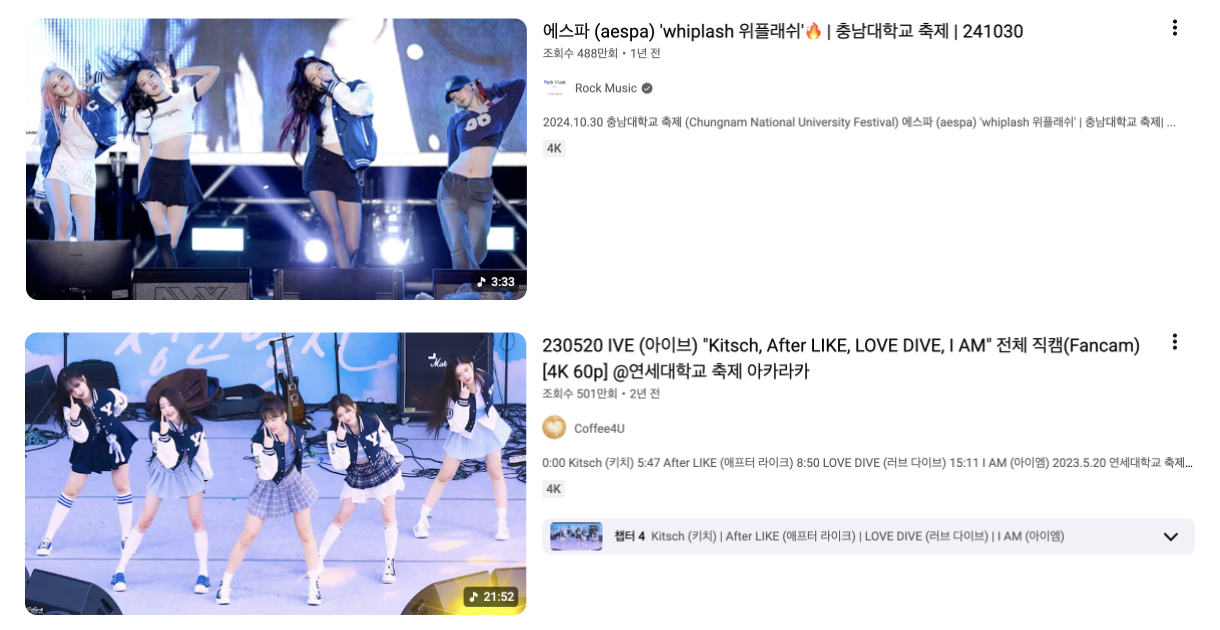
For example, a performance video of Aespa at Yonsei University’s “Akaraka” festival in 2024 drew 1.29 million views on the university’s cheering squad YouTube channel, more than 40 times its subscriber count.
Fancam footage uploaded separately by audience members also generates high numbers, with a video of Aespa performing “Whiplash” at Chungnam National University in 2024 surpassing 4.88 million views and a video of Ive’s performance at Yonsei University in 2023 surpassing 5 million views.
“The youthful image and symbolism associated with universities can become attached to idols through such footage taken by fans, which becomes one of the biggest promotional effects of appearing at university festivals,” explained music critic Lim Hee-yun.
According to industry officials, some idols even lower their appearance fees in exchange for the promotional benefits. University festival appearance fees are reportedly lower than those for corporate or commercial events, averaging around 20 million won to 30 million won ($13,580-$20,364) for top-tier acts, while the most in-demand artists can demand as much as 50 million won.
Even so, agencies often view the events as worthwhile investments due to their promotional value, including song exposure, public recognition and fandom growth.
“Once you subtract preparation costs, there are many cases where little profit remains — sometimes even losses,” one industry official said. “But university festivals aren’t simply about event revenue. They’re also about promoting new songs, building awareness and expanding fandoms.”
lee.jungjoo@heraldcorp.com

![[Graphic News] 6 in 10 people living alone feel lonely](https://wimg.heraldcorp.com/news/cms/2026/10/13/news-p.v1.20261013.78692699312346e2a2817fabedf14bb6_T1.gif?type=h&h=800)