Park Bum-il says rigid visa rules are pushing foreign talent and skilled workers out, while travelers who are denied entry need better access to legal counsel
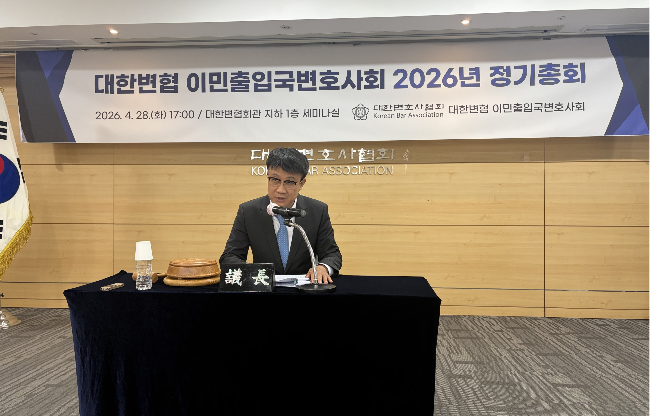
South Korea should make its immigration system more flexible if it wants to retain foreign talent and reduce cases in which foreign workers are pushed into illegal status, the newly elected head of the Korean Immigration Lawyers Association said.
Park Bum-il, who was elected president of the group on April 28, said the country remains “too exclusive” toward foreign nationals despite a growing foreign population.
“I think it is difficult to say South Korea is very open to foreigners,” Park said in an interview with The Korea Herald on Thursday. “There needs to be a culture and policies that allow foreign talent to remain in Korea, but that is where we fall short.”
The association is affiliated with the Korean Bar Association and comprises 500 lawyers nationwide, primarily specializing in immigration law. It plans to push for more flexible visa categories, a more independent immigration agency and stronger legal protections for foreigners denied entry at Korean airports, Park said.
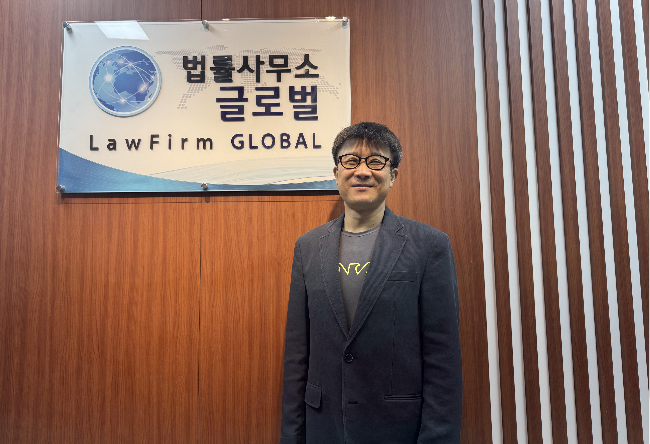
Park, an attorney at Law Firm Global, said South Korea’s current visa system remained too rigid for foreign students and workers who have already spent years studying, working and building ties in the country.
More flexible requirements
Park said South Korea needs broader visa options to retain foreign workers, noting that the main paths for staying long-term are currently marriage or via a sponsored employment visa.
“Students stay in Korea for four to five years, paying a lot of money in tuition, and then they try to find a job. But the job search is very difficult, especially for foreigners,” Park said. “They are only allowed to stay for two years for a job search after graduation.”
“Some people spend their whole youth in Korea, but are put in a situation where they have no choice but to leave.”
Park said the current system was also a loss for Korea, as many foreign nationals who are familiar with the country’s language and culture are forced to leave. He said new visa categories were needed to allow longer stays or multiple opportunities to return.
“The job-seeking visa only lasts for two years, and once you use it up, that’s it,” Park said. “But some people may return to their home country, live there for a few years and later want to come back. Some may come up with new ideas, or want to try something in Korea with some form of support.”
“The government needs to develop a sort of middle-level visa to allow these people to return and search for a job or start a business,” he said.
Park said South Korea’s Employment Permit System also needed improvement, arguing that the current system can push foreign workers into overstaying their visas.
“There are still strict requirements when it comes to applying for, or extending, employment visas,” Park said.
He said skilled workers who are familiar with Korean society and workplace culture are often forced to leave because rigid requirements — such as Korean language proficiency — are applied too mechanically.
“In that case, the only way companies can keep a skilled employee is by hiring them even though they are undocumented,” Park said.
Park said some foreigners also resort to fake marriages or unfounded humanitarian claims to extend their stay.
“That does not help Korea either,” he said. “That is why we need to ease the requirements for work-related visas, so that diligent workers can continue working here for longer periods.”
Immigration agency
Park also called for establishing an government agency dedicated to immigration policy, saying the current system is not equipped to respond flexibly to Korea’s changing demographic and labor needs.
“I think the idea of an immigration agency needs to be revisited,” Park said.
The idea of creating such an agency was floated in 2023 during the Yoon Suk Yeol administration, which sought to elevate the Justice Ministry's Korea Immigration Service, currently an internal bureau-level body, into an external agency that was still under the ministry's oversight, but with more independence.
Supporters argued that elevating the current immigration bureau would give Korea a long-needed control tower to coordinate fragmented immigration, labor, education and integration policies, as the country seeks to bring in more foreign workers as the workforce begins to shrink.
However, plans to create an immigration agency fell out of favor following the 2025 presidential elections.
“One could say, ‘Isn’t the current immigration office enough? Can’t we just change the policy?’ But in practice, it is not that easy,” Park said.
"Having a centralized body will allow the authorities to focus more on solving key issues, like demographic decline.
Park acknowledged that creating a new agency would not automatically solve all problems, especially if the same personnel and practices are carried over. Still, he said a separate agency could create room for more independent and coherent immigration policymaking, depending on where and how it is established.
Rights of foreigners denied entry
Park said one of the association’s priorities during his term wpi;d be to improve legal protections for foreign nationals who are denied entry at Korean airports, particularly those who have already obtained visas from Korean diplomatic missions overseas.
He said airport entry denials are an issue he has repeatedly encountered in practice.
“Korea is very strict when it comes to entry,” Park said. “Even when a person has obtained a visa, there are surprisingly many cases where they are denied entry at airports.”
He acknowledged that immigration authorities have reasons to conduct additional screening, including concerns over illegal stays, unauthorized employment and other violations of Korean law.
“Of course, there may be valid reasons,” Park said. “There are cases where people enter as tourists and then work, or otherwise violate Korean law. So I understand that some level of screening is unavoidable.”
Still, Park said foreigners denied entry at airports often face serious practical difficulties because they have limited access to legal assistance from within the airport.
Foreign nationals usually have only 24 hours to file a claim to challenge an entry denial, Park said, adding that the period is not enough for people with limited Korean-language skills to navigate the country’s legal system.
He also raised concerns that they were often unable to receive legal counsel while at airports.
Park said the association will seek ways to strengthen access to counsel forpeople denied entry, including clearer procedures for contacting lawyers and challenging entry denial decisions.
The association also provides consultations for foreigners, visits embassies to gather opinions, and holds seminars and discussions on immigration policy. Park said he hopes the group can play a larger role in policy debates.
seungku99@heraldcorp.com