Korean battery-makers race to defend early lead in Europe as Chinese rival accelerates expansion
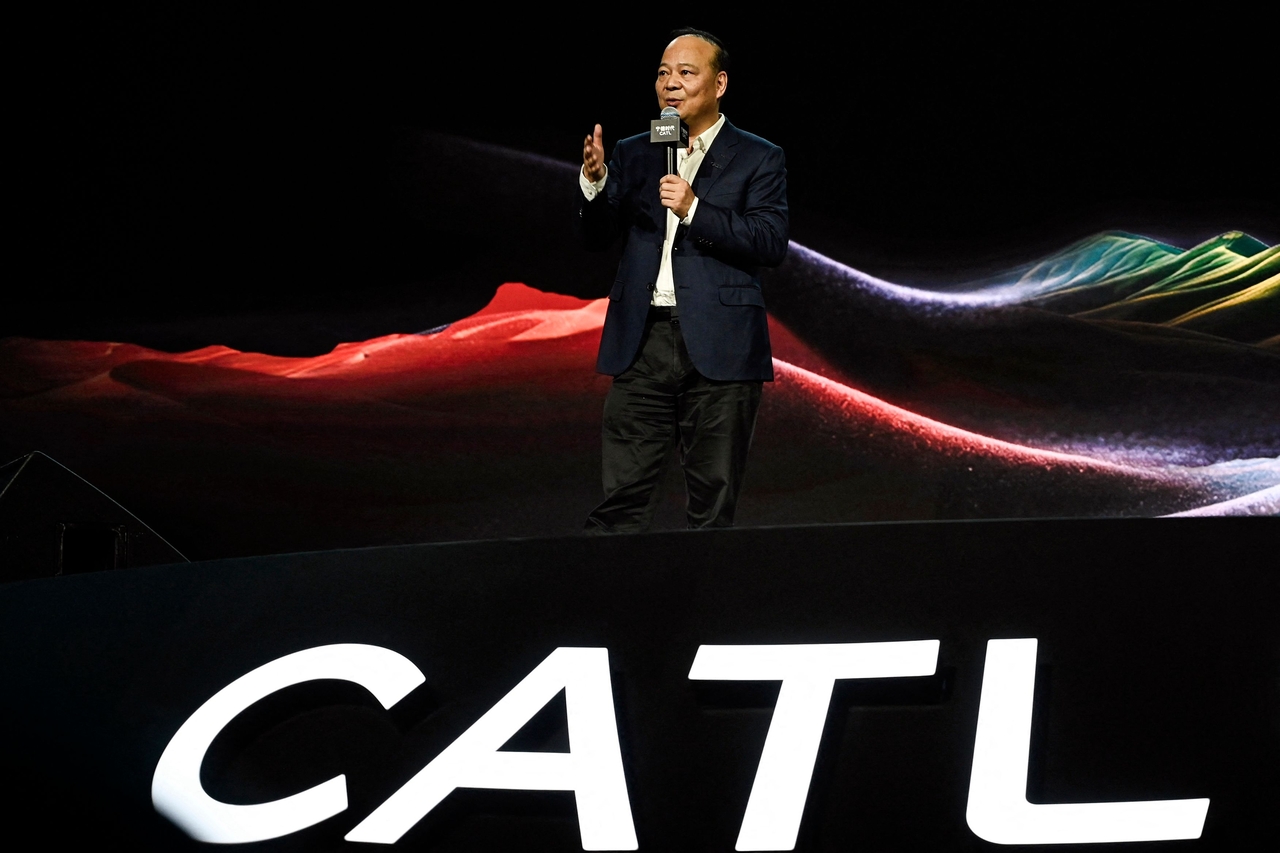
CATL, the world’s largest maker of electric vehicle batteries, is doubling down on Europe after raising $5 billion in Hong Kong, with US restrictions effectively shutting it out and as China’s domestic market grapples with oversupply. The strategic pivot underscores how critical Europe has become, despite rising regulatory hurdles.
Korean battery-makers also have their eyes locked on Europe, where EV demand is showing signs of a gradual rebound — unlike the slower recovery in the US. As both sides clash in the region, the question is whether Korean players can hold their ground against the Chinese giant leading the global battery race.
Why Europe matters now
CATL’s latest fundraising marked Hong Kong’s largest equity offering this year and the biggest since the company’s own $5.25 billion listing last year, according to Reuters, citing London Stock Exchange Group data.
The company plans to use the proceeds to expand overseas production, strengthen research and development, invest in zero-carbon projects and support operations.
Under its “In Europe, for Europe” strategy, CATL is expected to allocate about 90 percent of the proceeds to its battery plant in Debrecen, Hungary, which is set to become its main European manufacturing hub.
The facility is scheduled to begin operations this year with an initial annual capacity of around 40 gigawatt-hours before gradually expanding to 100 gigawatt-hours. It will become CATL’s second major European production base after its plant in Germany.
The expansion reflects a broader shift in strategy. With Washington tightening restrictions on Chinese battery supply chains, Europe has emerged as the most important overseas growth market for CATL and other Chinese battery-makers.
Europe’s rules are stricter — but not like US
CATL’s aggressive expansion comes even as the European Union tightens industrial policy under the Industrial Acceleration Act, aimed at strengthening local supply chains and reducing dependence on China.
Still, experts say Europe’s approach differs fundamentally from the US, where Chinese battery-makers face far stricter subsidy and sourcing restrictions.
“The IAA is more focused on strengthening local industrial resilience than enforcing de facto exclusion like the US measures,” said Kim Tae-hwang, an international trade professor at Myongji University.
Kim said CATL’s Hungary project could still face scrutiny because of its scale, China’s dominance in battery production and the plant’s wholly owned structure rather than a joint venture with European partners.
The regulations could pressure CATL to deepen localization through local hiring, R&D investment and technology sharing. But because the measures mainly target public procurement and subsidies rather than the broader private EV market, CATL still appears confident it can expand through localized production, Kim said.
Reflecting Europe’s localization push, CATL previously said 75 percent of hires at the Debrecen plant would come from within 60 kilometers of the site.
Korea’s early mover advantage
Korean battery-makers are trying to reinforce their early manufacturing lead in Europe as EV production gradually recovers.
LG Energy Solution currently operates around 80 gigawatt-hours of annual production capacity in Poland, while Samsung SDI and SK On run plants in Hungary with capacities of 40 gigawatt-hours and 47.5 gigawatt-hours, respectively.
Among the three, SK On’s Hungary plant has shown the strongest recovery, with utilization rates climbing into the mid-80 percent range. Industry officials attributed the rebound to strong Volkswagen sales in Europe, increased engineering talent and better equipment optimization.
CATL could intensify competition by supplying lower-cost batteries for compact EVs, one of Europe’s fastest-growing segments and an area Korean companies entered relatively late.
Still, industry officials say CATL’s cost advantage may narrow in Europe because localized production significantly raises manufacturing and logistics costs.
“CATL may face hurdles achieving a stable ramp-up in Europe, where it does not hold the same pricing edge as in China due to higher production and logistics costs,” an industry source said.
According to SNE Research, Chinese battery-makers face a 10 to 20 percent increase in production costs when manufacturing in Europe, potentially narrowing the cost gap with Korean rivals. High upfront investment costs and early-stage yield losses are also expected to pressure profitability.
ESS emerges as next battleground
Industry experts expect competition to intensify even more in Europe’s energy storage systems market.
“Having leveraged its battery dominance from smartphones into EVs, China will likely pivot toward Europe’s ESS market as trade barriers shut CATL and other Chinese firms out of the US,” a researcher at a major Korean battery firm said.
Although Europe’s ESS market remains smaller than the US today, its long-term growth potential could surpass the American market. According to a report by Eugene Investment & Securities, Europe’s battery ESS market is projected to grow from 30 gigawatt-hours in 2025 to 135 gigawatt-hours by 2030, compared with US growth from 48 gigawatt-hours to 113 gigawatt-hours over the same period.
The researcher added that Europe’s ESS sector could ultimately favor Korean firms because large-scale energy storage projects rely heavily on public subsidies and government bidding programs, where EU localization requirements carry greater weight.
"Without meeting European requirements for local ownership and sourcing, CATL could face restrictions in securing major utility-scale ESS projects. Korean battery-makers, which already have established manufacturing bases across Europe, are considered better positioned to meet those standards and compete for subsidized contracts," he said.
hyejin2@heraldcorp.com