Memory-led bonus demands divide Samsung chip workers
Samsung Electronics and its largest union will resume government-brokered talks Monday, with bonuses for workers in chronically loss-making chip units shaping up as the main sticking point.
The two-day post-mediation will be the final formal channel to avert an 18-day strike set for May 21 at the world's biggest memory chipmaker.
Samsung reportedly tabled its current offer in March through its internal communication channel. The company proposed allocating 10 percent of operating profit at its chip division to bonuses, with a pledge to raise the ratio if the unit overtakes domestic rival SK hynix in revenue and operating profit. Under that proposal, memory employees could receive about 600 million won ($409,500) per person.
Workers in Samsung's contract chipmaking and chip-design units, which have run losses for years, would be capped below 100 million won, with a path to up to 75 percent of the standard bonus if performance improves.
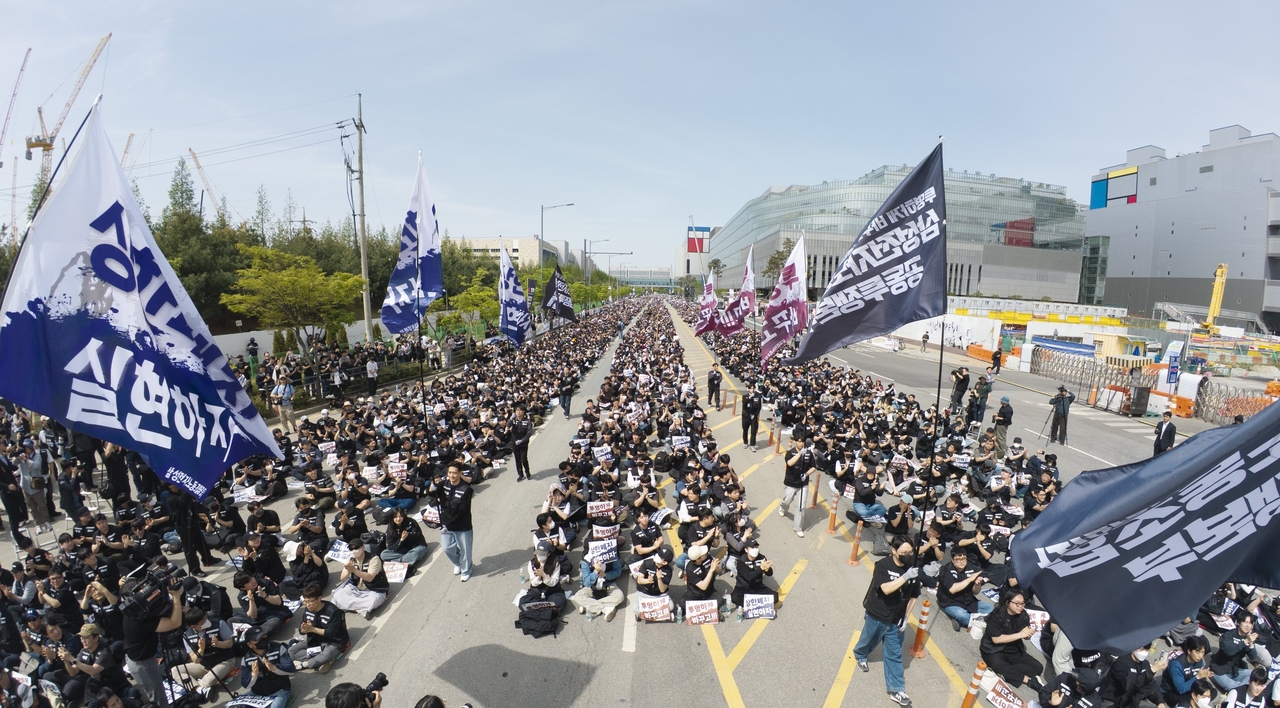
The union rejected the offer, and talks broke down on March 27. The union then staged an April 23 rally drawing tens of thousands at Samsung's Pyeongtaek chip complex and announced plans for the May 21 walkout. The government has since pressed both sides into post-mediation through the National Labor Relations Commission.
The majority union is demanding 15 percent of the operating profit. Applied to the chip division's projected 270 trillion won in operating profit this year, that would create a roughly 40.5 trillion won pool, translating into about 620 million won per memory employee and around 360 million won per worker in the loss-making units, by the union's own calculations. That figure is more than triple management's cap.
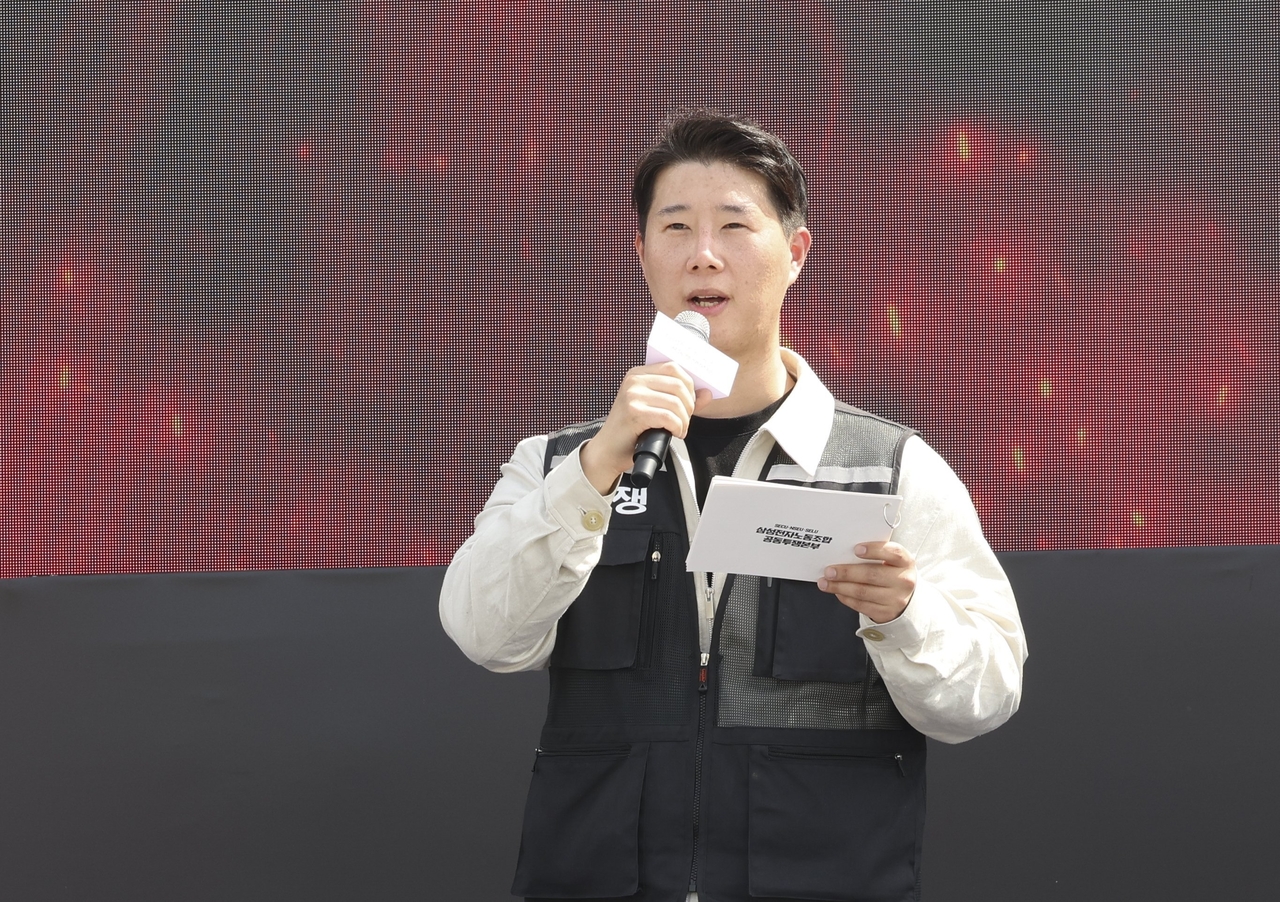
"We will not hesitate to launch a full-scale strike if the outcome is unsatisfactory," Union Chief Choi Seung-ho said ahead of the talks.
Management's position is that paying hundreds of millions of won to divisions running multiyear losses violates pay-for-performance principles. That view is shared by staff in Samsung's consumer electronics division — covering mobile, televisions and home appliances — which is itself under earnings pressure from soaring memory prices.
The dispute has also cracked the union front. Roughly 80 percent of the majority union's 73,000 members work in the chip division. The second-largest union and consumer-electronics members within the majority union have pushed to add a company-wide bonus pool to Monday's agenda, but Choi has refused. About 2,500 members withdrew in the 10 days following the April 23 rally, most of them from the consumer side.
The bonus dispute began with SK hynix. In a landmark 2025 deal, Samsung's smaller domestic rival agreed to allocate 10 percent of annual operating profit to a performance bonus pool. The arrangement reset expectations across the Korean industry and emboldened Samsung workers, who had watched hynix transform into a global high-bandwidth memory leader serving Nvidia. Hyundai Motor's union has begun pressing similar demands.
A prolonged walkout could disrupt 3 to 4 percent of global DRAM supply and 2 to 3 percent of NAND flash supply, KB Securities estimates, with restoration of production lines requiring an additional two to three weeks beyond the 18-day strike itself. Global customers have already queried Samsung over delivery risk.
Samsung has filed an injunction with the court to keep safety-critical staff, less than 10 percent of the workforce, on the job during any strike, citing the need to maintain clean-room conditions and prevent wafer degradation.
A previous post-mediation attempt in 2024 collapsed before workers walked off the job.
mjh@heraldcorp.com


![[Graphic News] Korea’s marine waste up 20% in 4 years](https://wimg.heraldcorp.com/news/cms/2026/10/27/news-p.v1.20261027.091c35e4ae1a4bb2a598a9138e673a7b_T1.gif?type=h&h=800)