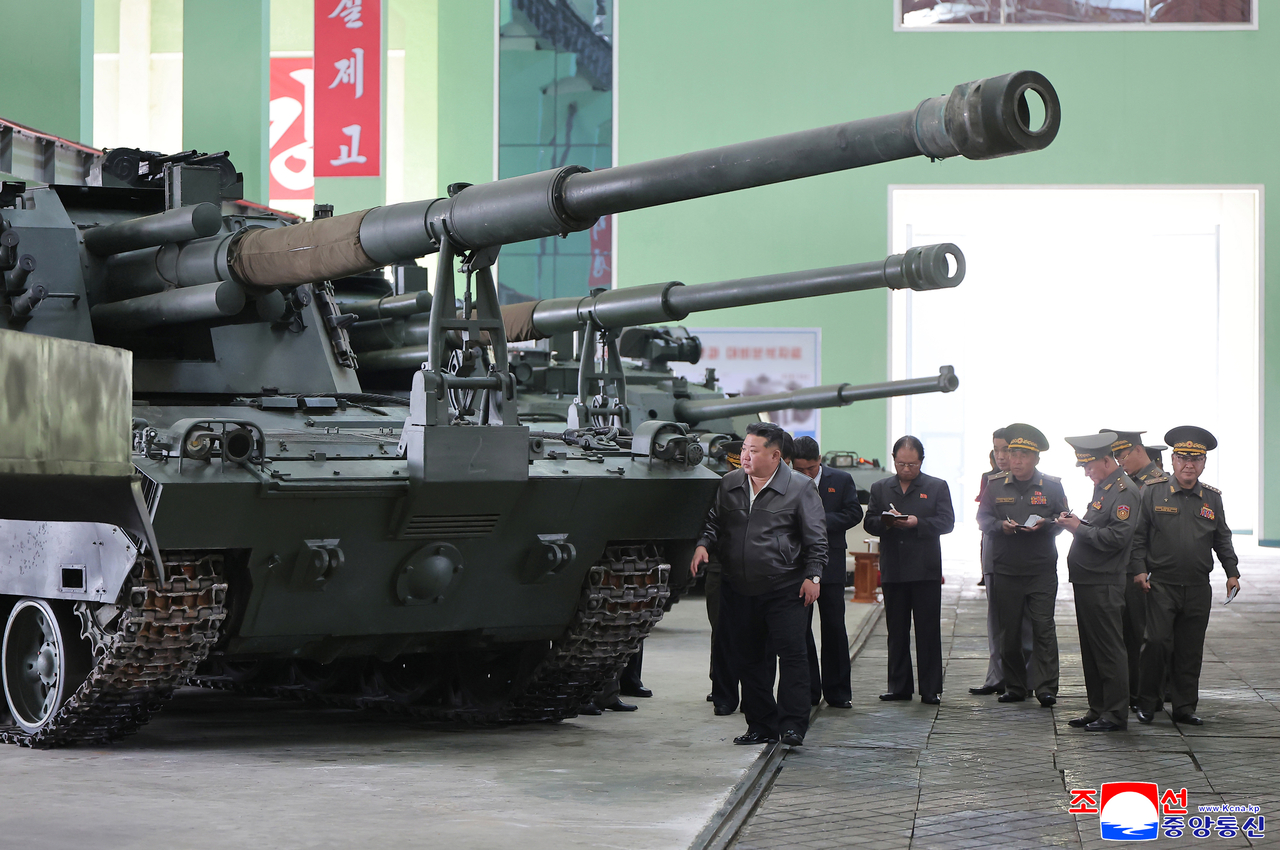
North Korea has unveiled a new 155-millimeter self-propelled artillery system that it claims can strike targets more than 60 kilometers away, raising concerns that Pyongyang may be expanding its long-range artillery threat against the Seoul metropolitan area.
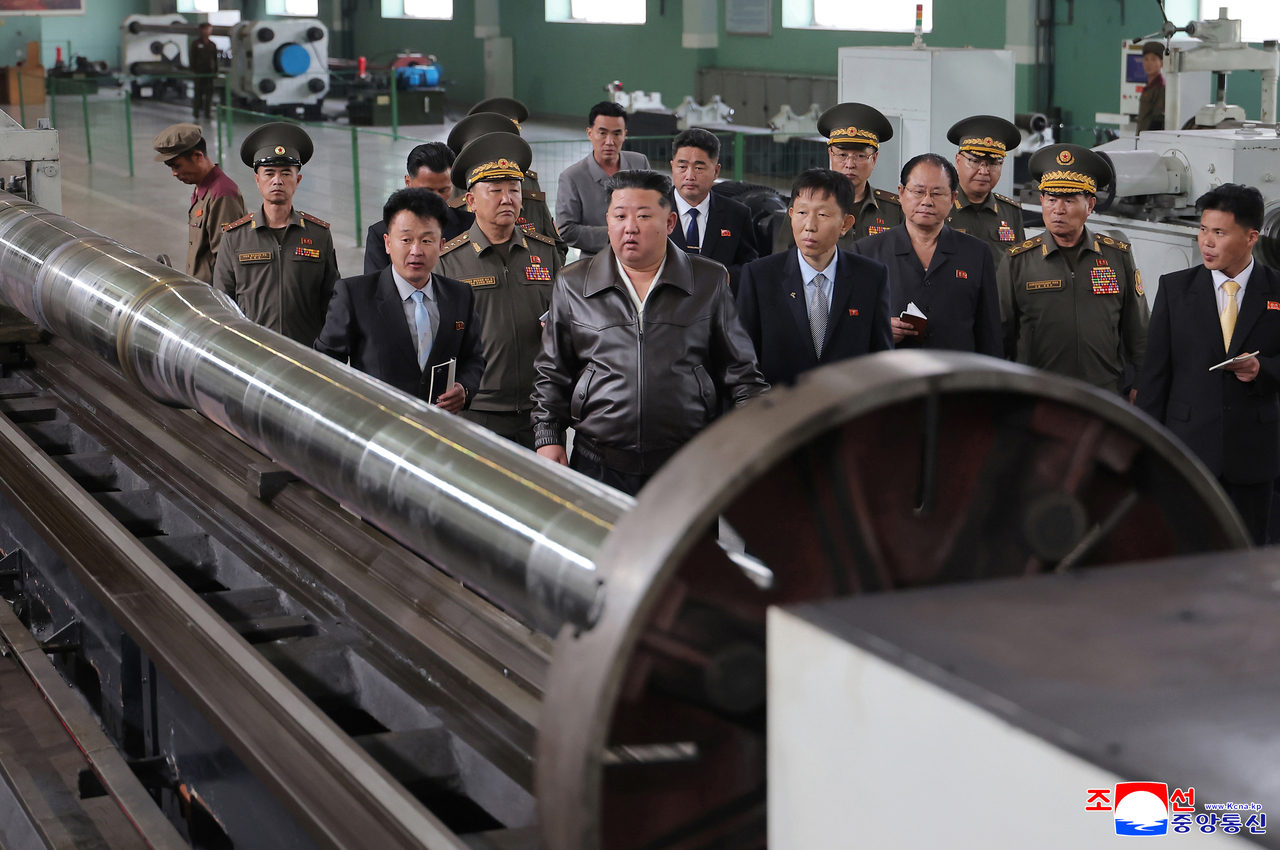
The Rodong Sinmun, the official newspaper of North Korea’s ruling Workers’ Party, reported Friday that leader Kim Jong-un had visited a major munitions factory Wednesday to inspect the production of the new artillery system.
The report said Kim reviewed the production status of artillery systems intended to be deployed within this year to three battalions of “long-range artillery units on the southern border.”
Kim described the weapon as a “new-generation artillery system” with high mobility and firepower, saying the range of large-caliber rifled guns to be deployed to front-line units would now “exceed 60 kilometers.”
If the North’s claim proves accurate, the artillery system could potentially put Seoul and parts of the greater capital region within range from areas north of the Military Demarcation Line. Seoul is about 40 to 50 kilometers from the inter-Korean border, while Pyongyang lies roughly 195 kilometers north of Seoul.
The new weapon, first unveiled at a military parade marking the anniversary of the Workers’ Party in October last year, is seen as North Korea’s attempt to narrow the capability gap with South Korea’s K9 self-propelled howitzer by improving both range and mobility.
South Korea’s K9 howitzer, which also uses a 155 mm caliber, has a range of slightly over 40 kilometers. North Korea’s older 152 mm self-propelled artillery systems have ranges of around 20 kilometers, while its 170 mm long-range artillery systems can reach roughly 60 kilometers.
North Korea also released photos showing what appeared to be the mass production of the new artillery system.
The planned deployment comes as North Korea has been reinforcing firepower along the inter-Korean border under its “hostile two states” policy toward South Korea.
Pyongyang recently amended its Constitution to define the country’s territory as bordering South Korea to the south, effectively codifying its shift away from the concept of inter-Korean reunification. The amendment has been viewed as a legal basis for treating the Military Demarcation Line as a border and strengthening military deployments in frontline areas.
During the factory inspection, Kim said the rapid expansion of strike range and improvement in target destruction capability would bring “major changes and advantages” to the North Korean military’s ground operations.
He also called for “redefining operational concepts” in line with the introduction of new weapons systems, a remark that could suggest changes in North Korea’s front-line operational posture.
Lim Eul-chul, a professor at Kyungnam University’s Institute for Far Eastern Studies, said the new artillery system appears to show North Korea’s intent to move beyond its traditional image of relying on mass artillery fire.
“By unveiling a 155 mm precision strike system with a range exceeding 60 kilometers, North Korea appears to be demonstrating its ability to conduct precision strikes against key facilities in Seoul and the greater capital area,” Lim said.
“If this artillery force is actually deployed to front-line areas, most parts of the Seoul metropolitan region could fall under the direct threat of North Korean artillery,” he added.
Still, some experts cautioned against overestimating the threat level, noting that North Korea’s claims remain unverified and that actual operational capabilities — including accuracy and sustained firing performance — have yet to be proven through further testing and deployment procedures.
A Joint Chiefs of Staff official said the South Korean military is “closely monitoring developments related to North Korea’s weapons systems.”
flylikekite@heraldcorp.com