Appeals court rejects some omission-based liability while finding Han helped give legal cover to Yoon’s martial law declaration
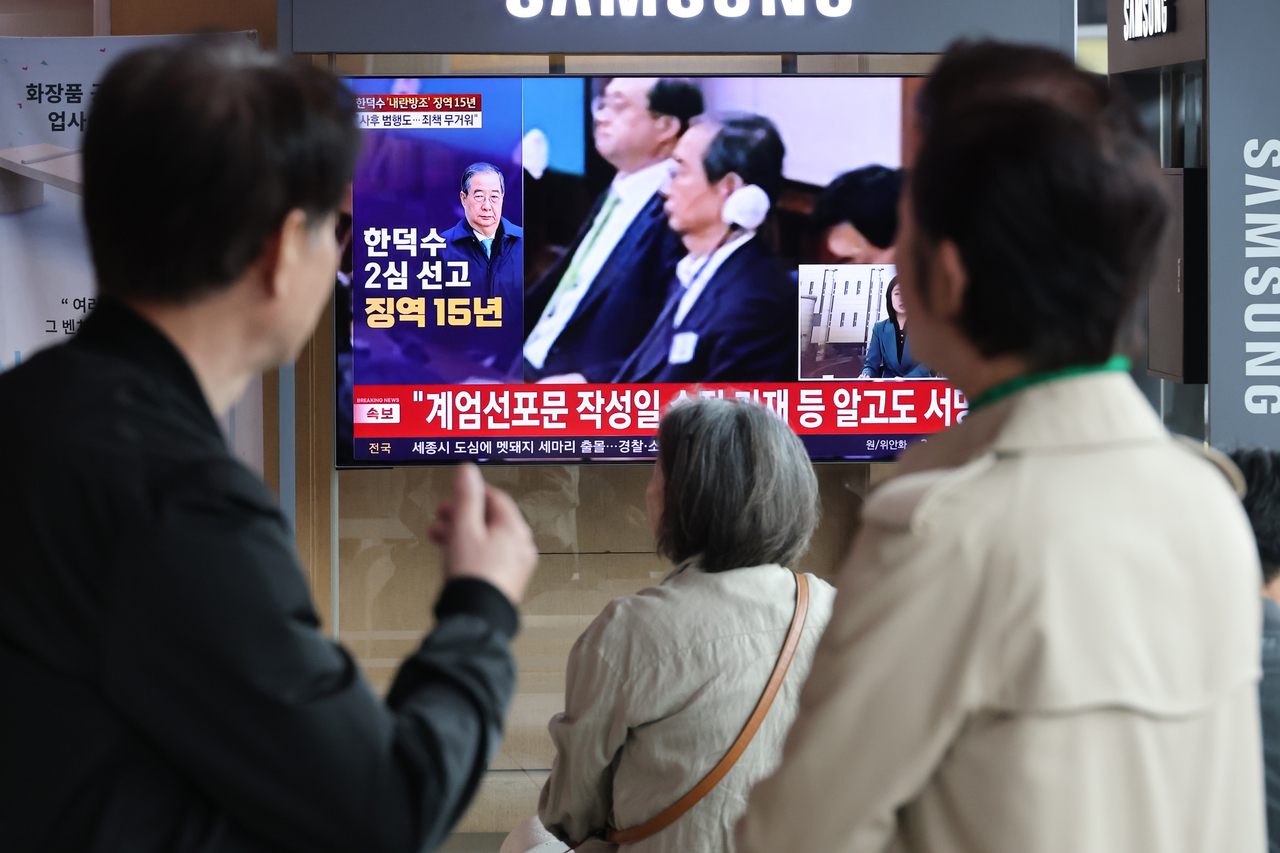
The Seoul High Court on Thursday reduced former Prime Minister Han Duck-soo’s prison sentence to 15 years from 23 years, while upholding most major charges tied to his role in then-President Yoon Suk Yeol’s December 2024 martial law declaration.
The appellate court largely upheld the lower court’s January ruling that Han’s actions amounted to participation in an insurrection. But it rejected parts of the lower court’s reasoning, including some failure-to-act liability and part of a perjury conviction, leading to an eight-year reduction.
The court found Han guilty of playing a key role in the insurrection, as well as charges related to falsified official documents, destruction of official records and perjury. It said Han helped create the appearance that Yoon’s martial law declaration had gone through proper Cabinet review.
The court, however, rejected two liability-based findings that had supported the heavier sentence, involving Han’s handling of the Cabinet meeting and his alleged failure to stop orders to cut power and water to media outlets.
Major charges upheld
The appellate court reaffirmed that the Dec. 3 martial law declaration amounted to an act of insurrection, finding that Han made efforts to lend procedural legitimacy to Yoon’s unconstitutional and illegal declaration.
“As prime minister, the defendant abandoned his grave responsibilities and took part in acts of insurrection,” the court said, criticizing Han for seeking to evade responsibility after the incident.
The court found Han guilty of proposing a Cabinet meeting to create the appearance that the martial law declaration had been reviewed by Cabinet members, a legal requirement under Korea’s Martial Law Act.
It also cited his discussions with former Interior Minister Lee Sang-min on how to carry out orders to block key institutions and cut electricity and water supplies to media outlets.
Han was also convicted on charges involving falsified official documents and violations of the Presidential Records Act. The court found that after martial law was lifted, Han signed a revised proclamation drafted to address legal flaws in the original declaration, together with Yoon and former Defense Minister Kim Yong-hyun, before later discarding the document.
The court also upheld part of Han’s perjury conviction over his testimony during Yoon’s impeachment trial at the Constitutional Court in February last year. It found that Han gave false testimony when he claimed he had not seen the martial law proclamation documents at the presidential office on Dec. 3.
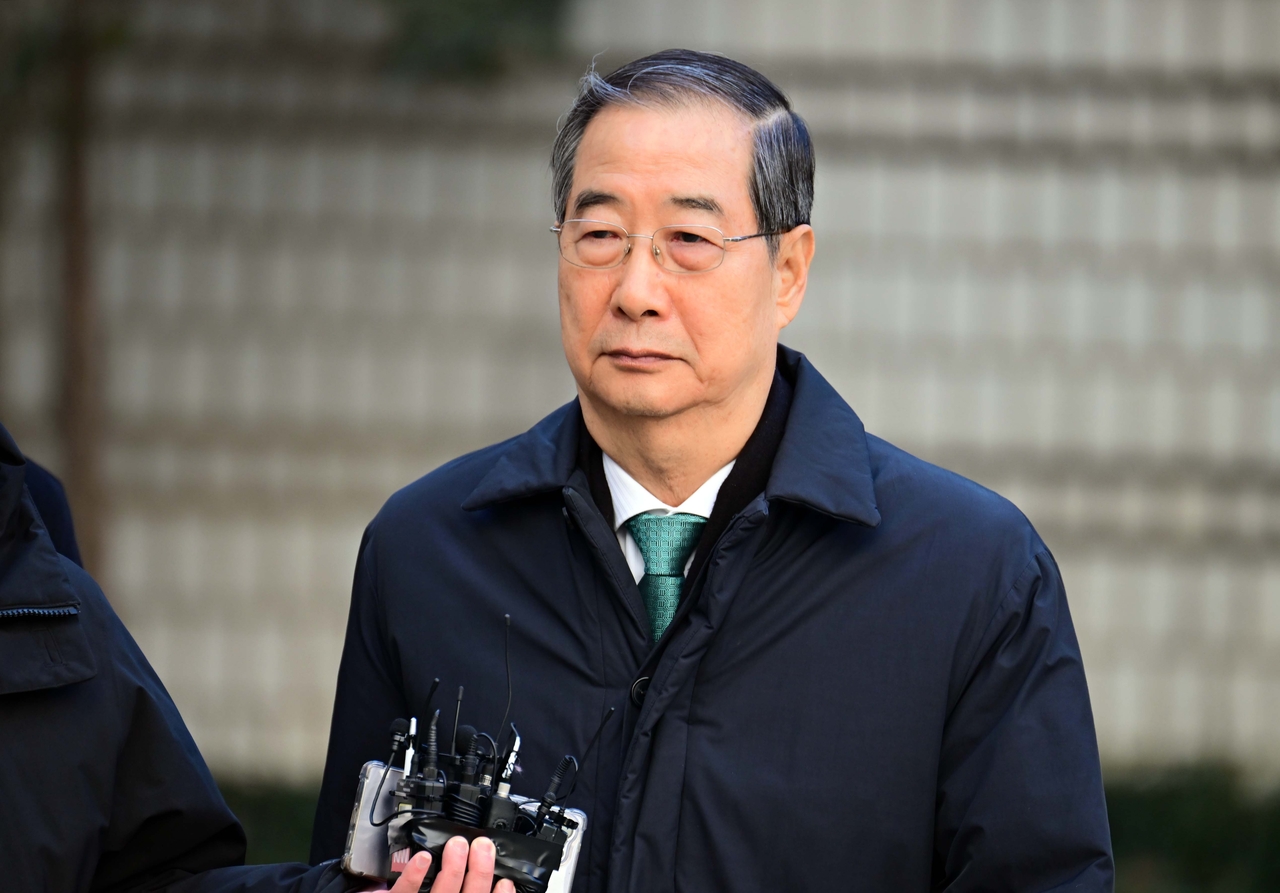
Why the sentence was reduced
The special counsel team led by Cho Eun-suk had sought a 23-year prison sentence, matching the lower court ruling. It had also appealed some acquitted charges, including the use of false official documents, although the creation of the documents was found guilty in both trials.
But the appellate court rejected some of the lower court’s findings and some of the special counsel’s arguments.
The court said Han could not be separately held criminally liable for failing to properly convene the Cabinet meeting on the day of the martial law declaration. The lower court had found that Han failed to notify all Cabinet members and ensure substantive deliberation, but the appellate court said the requirements for a separate failure-to-act-based offense had not been met.
The appellate court also overturned the lower court’s finding that Han could be held liable for failing to stop Lee from carrying out orders to cut electricity and water supplies to media outlets. It said that part had not been charged by the special counsel and therefore could not be judged by the court.
The court differed from the lower court on Han’s attempt to collect ministers’ signatures after martial law was declared. The first trial court viewed the act as an attempt to complete procedural requirements for the Cabinet meeting. The appellate court said the evidence instead suggested Han was trying to leave a record that a quorum had been met.
Still, the court said Han’s conduct supported the broader finding that he helped create the appearance of a lawful Cabinet process.
The appellate court also reversed part of Han’s perjury conviction. It said the “documents” in question may have referred specifically to papers concerning orders to cut power and water supplies to media outlets, making it difficult to conclude beyond doubt that Han’s testimony was false.
In sentencing, the court also cited Han’s more than 50 years of public service, the lack of evidence that he planned or led the insurrection in an organized way, and the fact that he presided over a Cabinet meeting after the National Assembly voted to demand the lifting of martial law.
Court rebukes Han
Despite reducing the sentence, the court strongly criticized Han’s conduct.
The court said Han, as prime minister, was the president’s top aide, the second-highest official in the executive branch and vice chair of the Cabinet. In that position, it said, he had a duty to ensure that presidential authority was exercised constitutionally and legally, and to check or control improper uses of that power.
It also said Han should have understood the gravity of unconstitutional martial law, given his decades in public office and his experience of past martial law periods in Korea.
“Nevertheless, the defendant repeatedly claimed he could not remember because of the shock of martial law and appeared intent on avoiding responsibility,” the court said.
Legal battle continues
Han’s lawyer said he would appeal to the Supreme Court, arguing that the ruling could not be accepted on either factual or legal grounds.
“Han consistently tried to prevent Yoon’s emergency martial law declaration,” the lawyer said. “It is difficult to accept the court’s conclusion that he attempted to justify the martial law declaration by abusing his authority.”
Han was indicted without detention but was taken into custody in January after the lower court sentenced him to 23 years in prison.
The special counsel team described the appellate ruling as meaningful despite the reduced sentence. A team official said prosecutors would decide whether to appeal after reviewing the full written ruling.
forestjs@heraldcorp.com