Won stablecoins seen as domestic payments tool, not challenger to dollar tokens, says Coinbase Singapore head
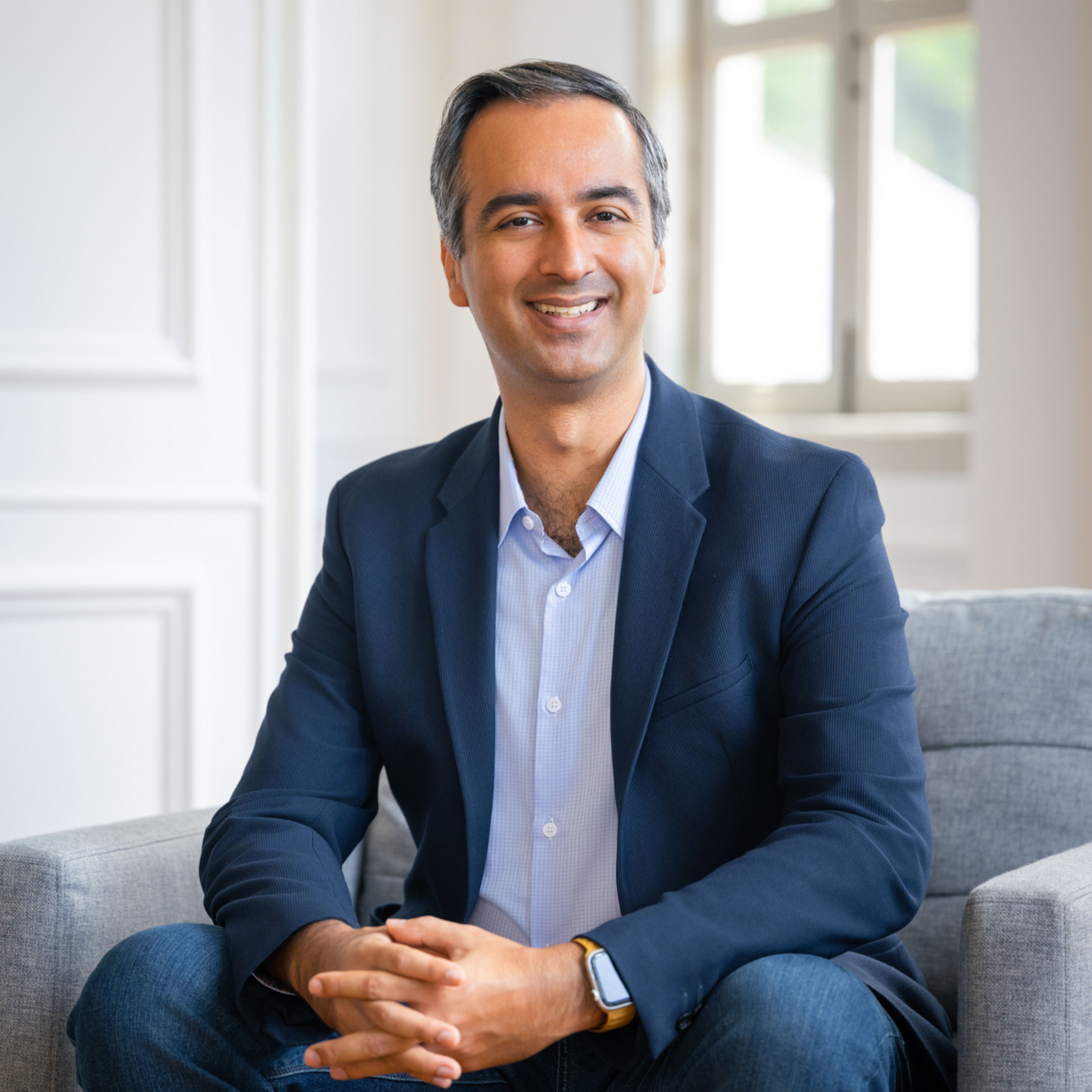
Won-backed stablecoins are unlikely to challenge dollar-denominated tokens in cross-border settlement and should first be viewed as domestic payment infrastructure, according to Hassan Ahmed, Singapore country director at Coinbase, a Nasdaq-listed US cryptocurrency exchange.
"Rather than competing head-to-head, a won-backed stablecoin is likely to follow a different growth path in the near term, building on areas where it has natural advantages," Ahmed said in a recent written interview with The Korea Herald. "A more effective approach may be to position it alongside dollar stablecoins, with each serving distinct but complementary functions."
His comments cut into one of the most contentious parts of Korea's stablecoin debate. Policymakers are weighing whether won-backed tokens could modernize payments or make it easier for users to shift into dollar-denominated stablecoins. Banks, fintech firms and digital asset exchanges are also preparing for rules, turning the debate from crypto-market speculation into a broader question of who can issue digital money-like instruments and how closely they should be tied to the banking system.
The Bank of Korea has urged caution. Former Gov. Rhee Chang-yong said last year he was not opposed to won-based stablecoins, but warned that easier conversion between won- and dollar-based tokens could increase demand for dollar stablecoins and complicate FX management. Senior Deputy Gov. Ryoo Sang-dai separately said won-denominated stablecoins should be introduced gradually, starting with tightly regulated commercial banks.
The concern is especially sensitive in Korea, where authorities closely monitor dollar demand and capital flows because of the won's exposure to shifts in global risk sentiment. It also sharpens one of the central policy questions in the stablecoin debate: whether issuance should start with banks, as the central bank has suggested, or eventually extend to fintech firms and exchanges.
Ahmed did not dismiss those risks, but said they are often overstated for non-dollar stablecoins. Dollar-denominated tokens still account for about 98 percent of the global stablecoin market, according to the Bank for International Settlements, while their use in real economy payments remains limited. That leaves local-currency tokens far from the scale needed to materially affect national currency stability.
According to Ahmed, the first role for a won-backed stablecoin would likely be at home, improving payment efficiency and supporting financial use cases where the won has a natural advantage. Commercialization, however, would hinge less on demand than on whether Korea can build the rules and institutional rails needed for mainstream payments and settlement.
The market backdrop adds urgency. Even after an 8 percent decline in the second half, Korea's virtual asset market capitalization stood at 87.2 trillion won ($59 billion) as of end-2025, according to Financial Services Commission data. Average daily crypto transactions reached 5.4 trillion won, roughly one-third of the Kospi's average daily trading value last year. Market users rose to about 11.13 million and won deposits jumped 31 percent to 8.1 trillion won.
"Korea's challenge is that retail enthusiasm is high and moving fast, while institutional frameworks are still being designed," Ahmed said. "That gap needs to be closed before commercialization becomes real."
Those figures show why Korea is a natural stablecoin market, but also why demand alone is not enough, he said.
"The biggest hurdle is trust infrastructure," Ahmed said. "Institutions require clarity on regulatory standards, risk and settlement finality before they will commit capital at scale." That means rules on who can issue stablecoins, what assets back them, redemption terms, custody standards and whether issuers face bank-like supervision.
That framing points to Korea's core policy choice. If won-backed stablecoins are treated as payment and settlement infrastructure, regulation is likely to focus on reserves, redemption, issuer eligibility and settlement safeguards. If they are viewed as private money experiments, the debate could become more contentious, touching on bank funding, monetary policy and nonbank issuance.
Local financial firms and platform companies are already positioning for a regulated stablecoin market. Naver Financial's planned acquisition of Dunamu, the operator of Upbit, would bring together one of Korea's dominant payment platforms and its largest crypto exchange. Meanwhile, Hana Financial Group has widened digital asset partnerships with players including Standard Chartered, Dunamu and Circle, spanning stablecoin payments, cross-border remittances and broader digital asset services.
Ahmed said that early positioning resembles Singapore's stablecoin path, in which regulators allowed experimentation while gradually creating formal rules. The Monetary Authority of Singapore finalized a stablecoin framework in 2023 to support value stability for regulated tokens, though Korea's retail-heavy crypto market and FX sensitivity make its challenge different.
"This suggests that development can proceed in parallel with regulation, rather than waiting for a fully settled regime," Ahmed said.
For Korea, the issue is not simply whether won-backed stablecoins should be allowed, but whether they can be built into the regulated financial system rather than develop as a parallel form of private money.
"Stablecoins don't replace the currency," Ahmed said. "Instead, they make it programmable, cheaper to move and easier to settle, which fuses with current payment rails rather than competing with them."
jwc@heraldcorp.com