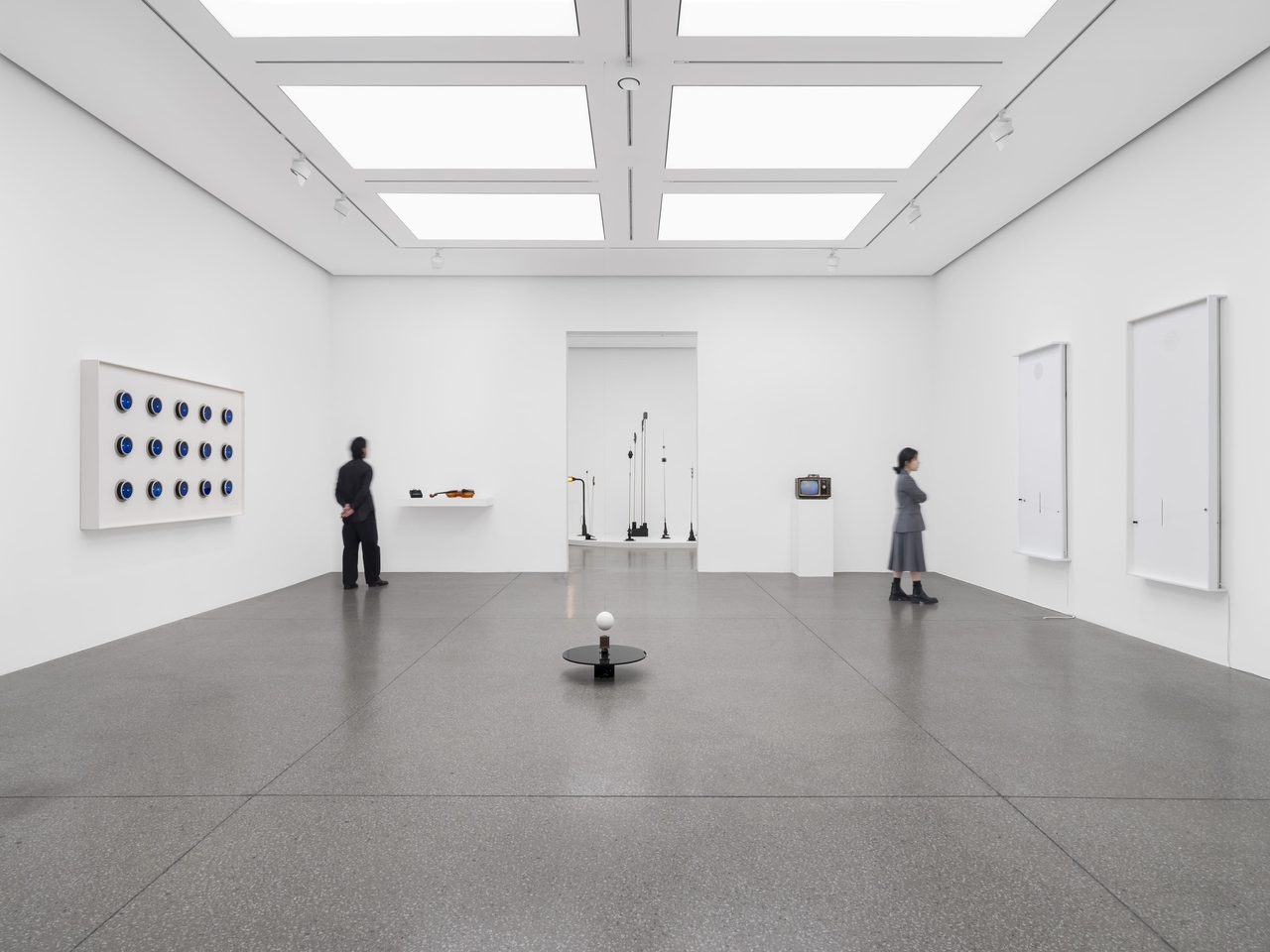
Two radical innovators of 20th-century art are brought back into dialogue in a rare two-person exhibition at White Cube Seoul, revisiting an experimental collaboration first staged in 1979.
“Duett: Takis and Nam June Paik” traces the conceptual and sonic intersections between Video art founder Nam June Paik and Kinetic art pioneer Takis, anchored in their shared interest in Zen Buddhism, unpredictability and chance.
Presented in collaboration with the Takis Foundation in Greece and the Nam June Paik Art Center in Korea, the exhibition underscores how both artists pursued a radical rethinking of artistic media through experimentation.
“This exhibition was conceived when we were discussing an exhibition here in Seoul with Takis, and I was really excited at the opportunity to pair Takis with Paik Nam-june who he had collaborated with in his life,” said Ikenna Malbert, associate curator of the gallery.
The exhibition takes its title from “Duett: Paik/Takis” (1979), a collaborative performance between the two artists presented at the Cologne Art Association in Germany.
The work unfolded as a dismantling of musical order: Paik’s erratic piano playing collided with the unpredictable sounds of Takis’ metal constructions.
It was shaped in part by both artists’ engagement with American minimalist composer John Cage, who brought everyday noise into music, according to the gallery.
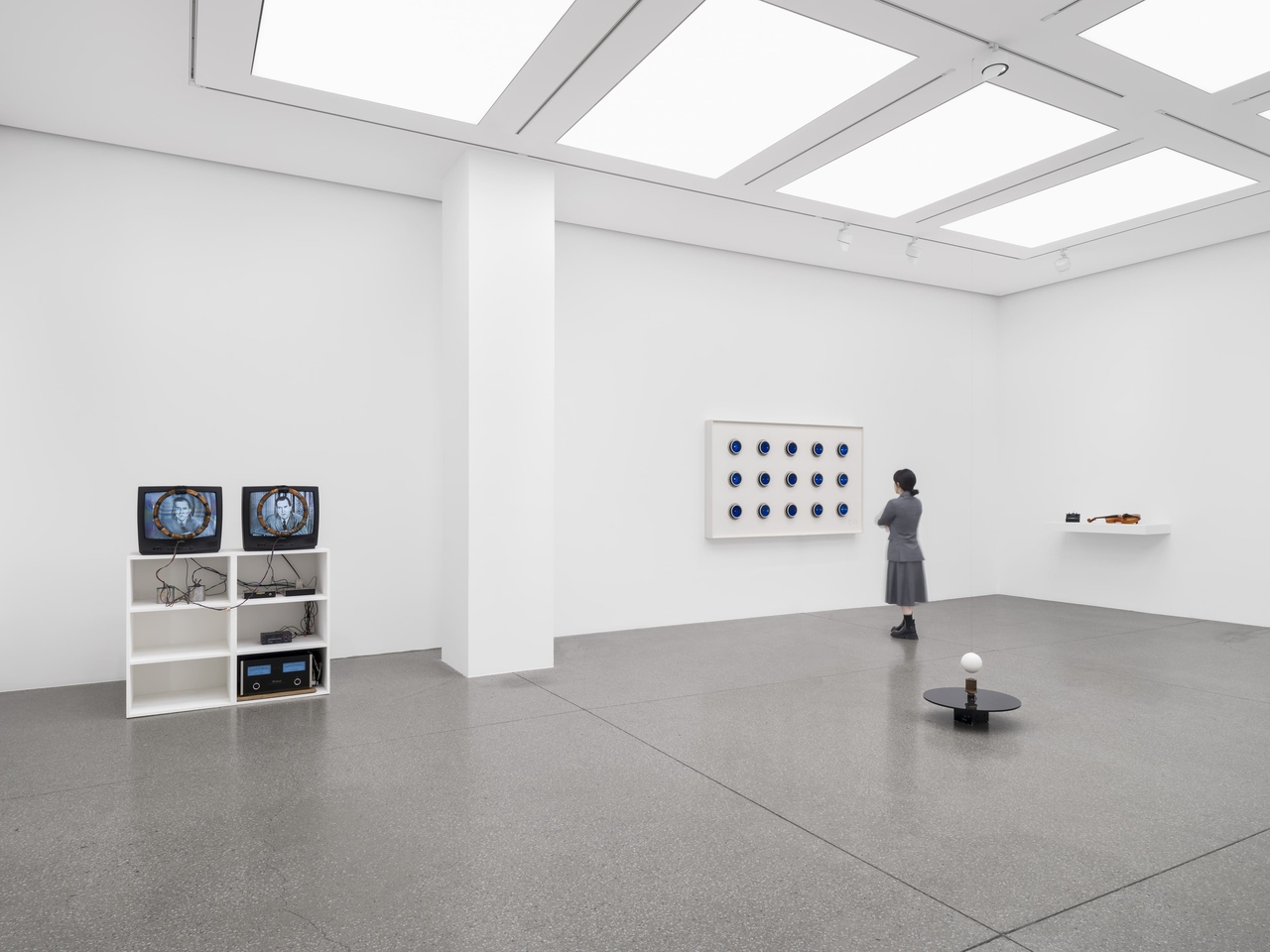
It was shaped in part by both artists’ engagement with American experimental composer John Cage, who expanded the definition of music beyond harmony and melody, incorporating everyday noise into his compositions.
Takis, a leading figure in kinetic art, is known for his investigations into invisible forces such as magnetism. His “Signals” series, featuring antenna-like structures with flickering lights and moving metal elements, responds to subtle vibrations, while works from his “Musical” series employ electromagnets and amplifiers to produce what he described as “raw music.”
Paik, widely regarded as the founder of video art, expanded artistic practice across television, installation and performance, famously coining the term “electronic superhighway” in 1974.
On view is his early work “Hommage a John Cage: Music for Tapes and Piano” (1958-62), presented in dialogue with Takis’ sound-based sculptures.
“Takis is one of the most important contemporary artists concerning kinetic art," said Irene Persidou, the development manager of the Takis Foundation.
"He collaborated with many contemporary artists as well, and he met Nam June Paik many years ago during the 1970s. And he was amazed by his philosophy and his art. Music was always a big part of his career."
“Duett: Takis and Nam June Paik” runs May 2 to June 5 at White Cube Seoul.
yunapark@heraldcorp.com