Losses from 5-day strike estimated to reach W640b, two sides to enter mediation on fourth day
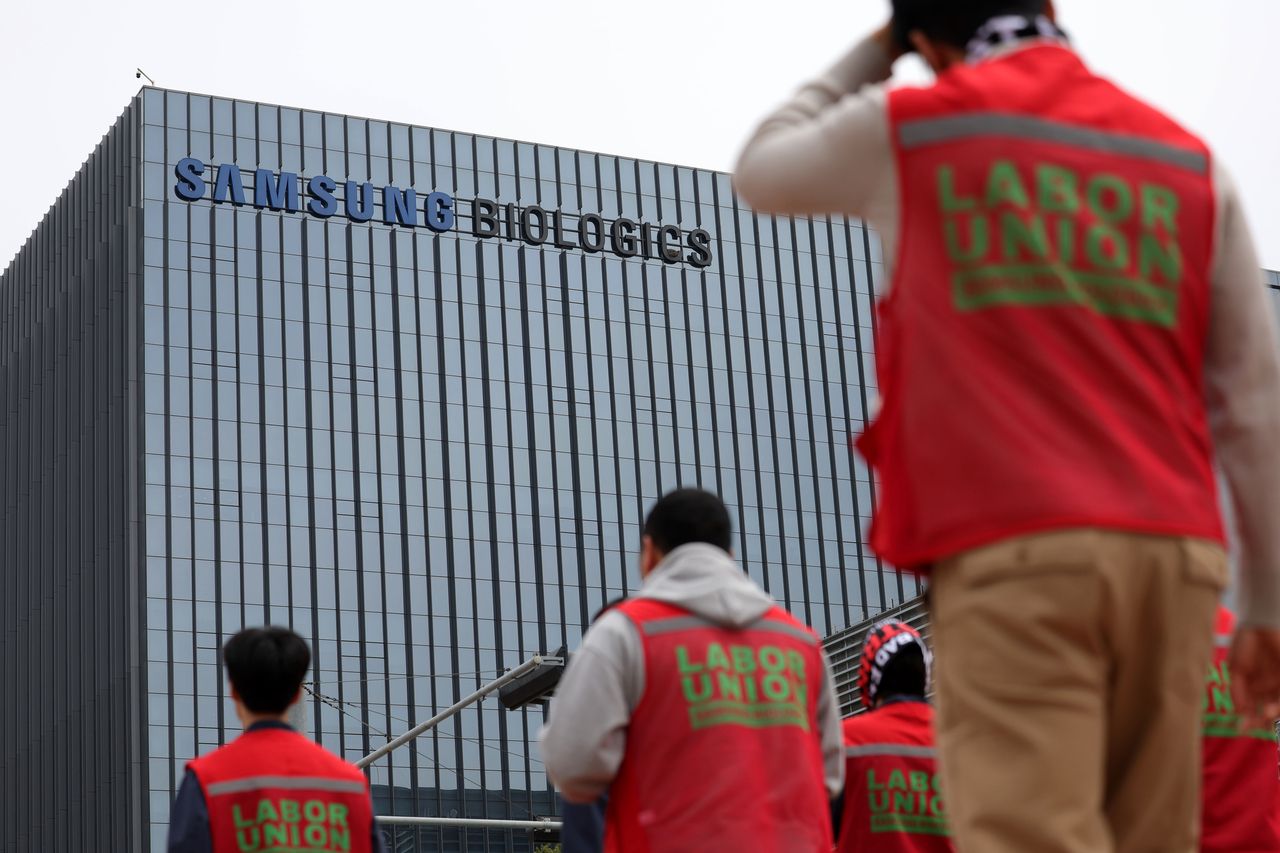
Samsung Biologics, the biotech arm of Samsung Group, is grappling with its first-ever general strike, entering its third day Sunday, with a pay standoff with its labor union hardening into a test of the company's labor relations and production stability.
The union launched a five-day walkout Friday, demanding a 14 percent average wage increase, a one-time 30 million won ($20,400) cash payout per employee and a bonus equal to 20 percent of operating profit.
The company has countered with a 6.2 percent wage increase, holding that the union's demands were not aligned with the company's financial capacity and operational constraints.
The union is also pressing for a role in broader personnel and institutional matters, citing a pattern of what it calls "abnormal management decision-making," a demand the company has rejected on grounds that requiring prior union consent could undermine long-term growth.
Some 2,800 of the union's 4,000 members — more than half of the company's roughly 5,400 employees — have joined the industrial action, taking annual leave or declining holiday shifts rather than staging rallies or physical demonstrations.
Samsung Biologics puts potential losses from the five-day strike at 640 billion won or more, roughly half of its first-quarter sales of 1.26 trillion won.
A smaller, three-day partial strike last week, involving around 60 workers, had already disrupted production, with the company estimating losses of about 150 billion won after output of key drugs, including cancer and human immunodeficiency virus treatments, was halted.
"Despite efforts to minimize disruption, some production stoppages were unavoidable due to supply delays in key materials," the company said in a statement.
The walkout is the first industrial action at the company since its founding in 2011.
Management and the union sat through 13 rounds of negotiations and two meetings with the CEO before mediation broke down on March 23.
"The core issue is not that the union's demands were excessive," union officials said. "The company failed for more than a month to present a proposal acceptable to members, and despite being aware of the potential losses from a strike, it fell short in both substantive negotiations and contingency planning."
The company said it had worked hard to close the gap but ran into persistent differences over management rights and compensation structure, adding that contingency measures were in place to contain disruptions.
"We are taking the production disruptions caused by the strike with the utmost seriousness," the company said. "We will take all possible measures to prevent further damage and participate in upcoming mediated talks scheduled for Monday."
Both sides are expected to return to the negotiating table Monday with the regional office of the Ministry of Employment and Labor acting as mediator. Should talks fail, the union has signaled it might stage another walkout.
minmin@heraldcorp.com