Violinist talks about her chamber music debut, first overseas recital in Copenhagen, human-robot ensemble at APEC
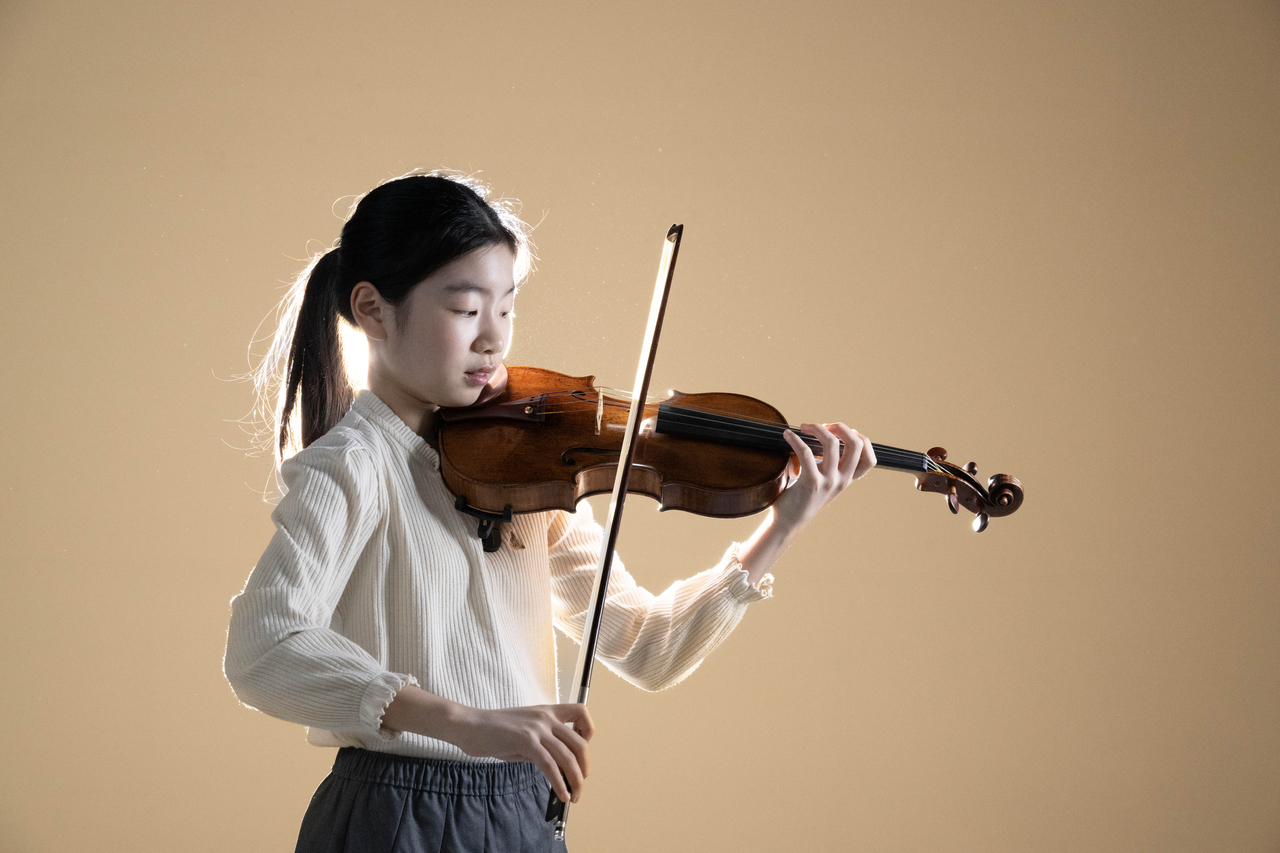
Her YouTube duet with French pianist Julien Cohen has been viewed more than 17 million times. She has performed for world leaders at APEC alongside robots, won grand prizes at competitions across continents, and earned standing ovations in cities where she could not pronounce the street names. She just turned 12 in April.
Her name is Kim Yeonah, the same Korean name as the beloved figure skater Kim Yuna, who won South Korea's first Olympic gold in figure skating. Her mother chose it on purpose.
The sound she wants
On Monday afternoon, she came for an interview with a violin she had received earlier that day — the second full-size instrument she is testing — a transition from a three-quarter.
"The G-string sounds much better than my old one," she says.
The E-string is another matter. She loves the bright, piercing tone of Julia Fischer — "the kind that cuts through an orchestra" — and this one falls short.
Her hands still have some growing to do to harmonize with the instrument. Her ear does not.
When she plays Sarasate's "Carmen Fantasy," her teacher tells her to phrase it the way a mezzo-soprano would sing the role — to think of Mozart, of opera, of a voice rather than a violin. So she listens. At home, in taxis, between practice sessions.
In 2024, on a break after a concert in Italy, she went to see "Carmen" performed at the Verona Arena.

"The stage was so spectacular," she recalls. "And when those real opera singers sing, the sound just spreads out in waves, like a vibrato, and travels through the whole space. I was so moved."
She now thinks about the production every time she practices the piece.
She has decided that Julia Fischer's sound is what she wants from a violin. She has been listening to recordings to compare interpretations — "this person has a good vibrato, this one is good at something else" — and stitching her own version together.
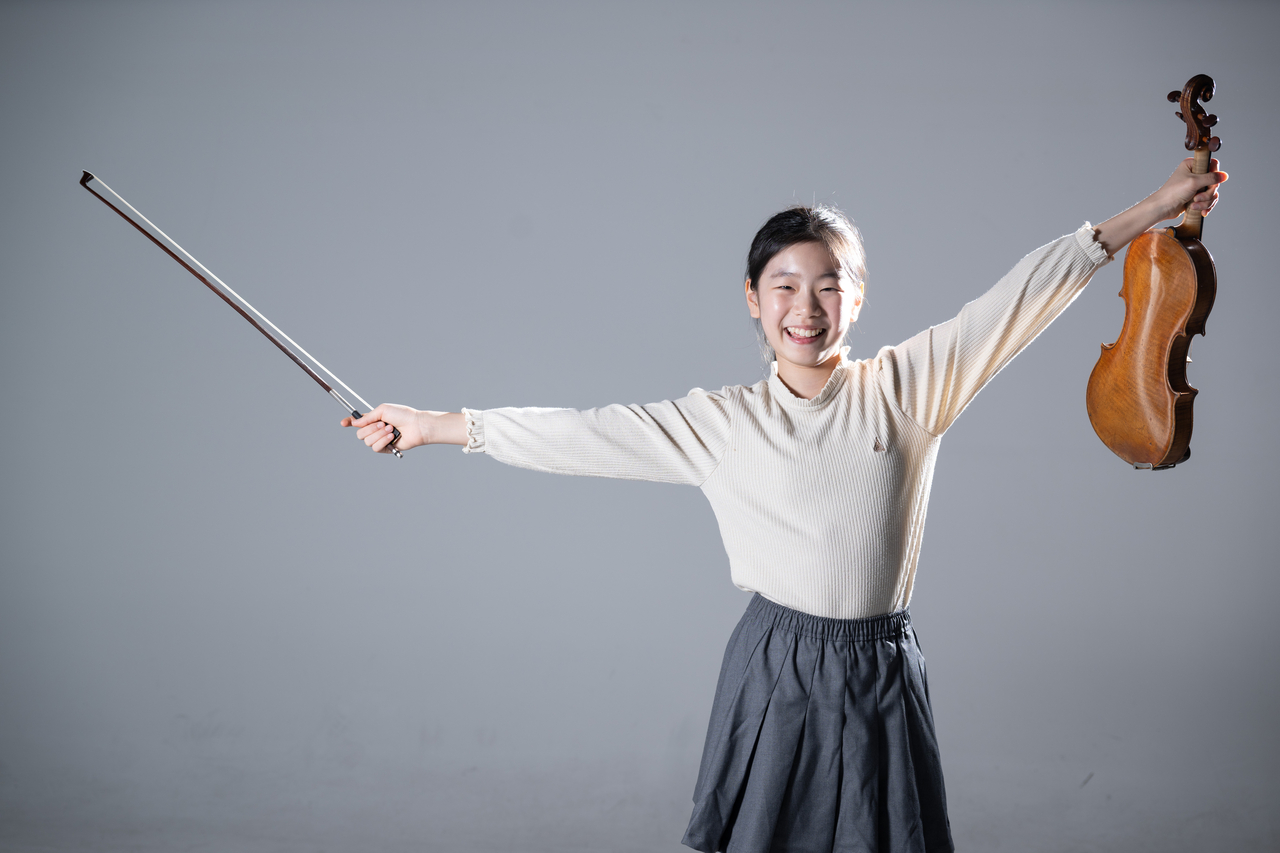
That new sound will be tested publicly on May 2 when she will become the youngest performer at the 21-year-old Seoul Spring Festival of Chamber Music, taking the stage at the Seoul Arts Center to play "Carmen Fantasy" and the first movement of Mendelssohn's Piano Trio No. 1 in D minor. She will share the program with veterans old enough to be her grandfather — including the festival's founder, violinist Kang Dong-suk, who has called her playing "technically assured, musically balanced and unusually mature."
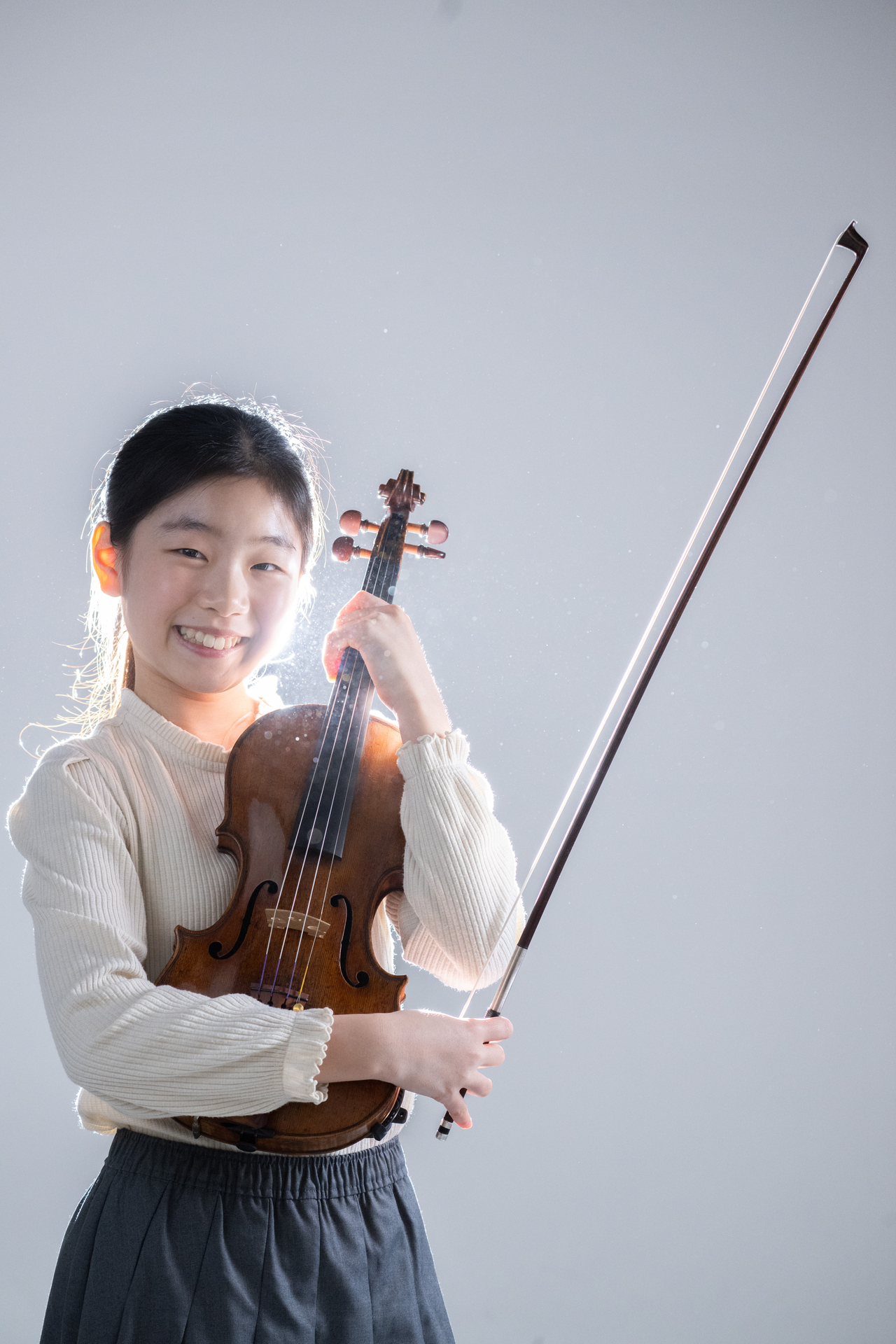
She homeschools to make room for it all. A typical day begins before 7 a.m. — scales and sectional practice before lunch, lessons and repertoire work in the afternoon, study and exercise in the evening.
"It's tiring, but it's fun," she says. When practice gets too hard, she steps out to lie down with her mother for a bit, or plays with her dolls. "But I've never wanted to stop."
Born for the big stage
Across the table, she answers calmly, almost always smiling. The same composure carries onto the stage.
“I get nervous backstage,” she says. “But the moment I lift the violin and play the first note, I focus. The bigger the hall, the calmer I feel.”
Even at the performance for world leaders at the Gyeongju APEC Summit 2025 on Oct. 31, where she appeared alongside four-legged robots, it wasn’t the audience that unsettled her.
“At first I was a little scared of the robots, but once I started thinking of them as puppies while we played, it became fun.”

The stage became more than music — it offered a glimpse of South Korea’s future, where technology and young creative talent move in sync.
Kim picked up the violin at the age of 4. She had walked past a strip-mall music school in her neighborhood and seen four older girls playing — older sisters, in her eyes — and decided on the spot.
"It looked so cool," she says. "I begged my mom to let me learn."
A year later, violinist Sunny Lee, who has trained many young Korean talents, took her under her wing. Today, she studies with violinist Yang Sung-sic.
Kim fell in love with the stage early. She was 5when her violin teacher took her to her first competition. She remembers staring at the judges as she played, watching them watch her.
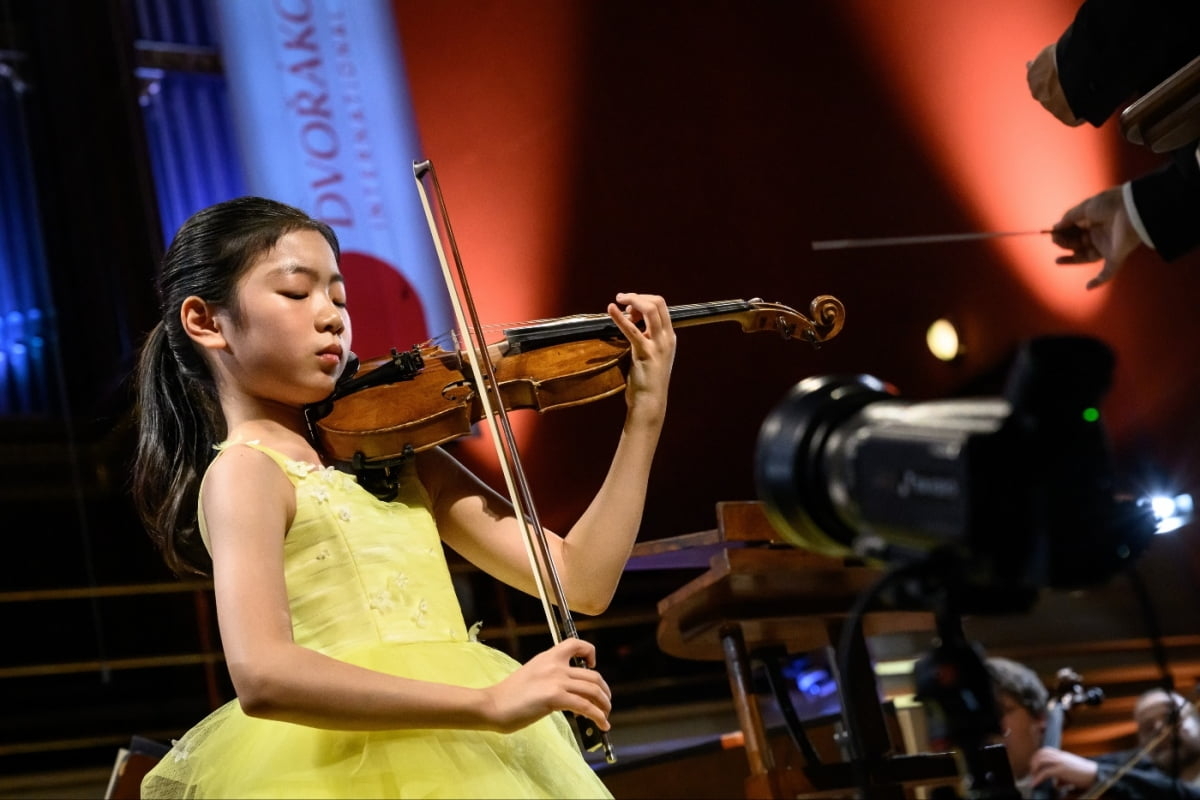
She did not know what a competition was. Walking offstage with the first prize, she only knew one thing: "I love this," she remembers thinking.
She has been winning ever since — but not always. The triumphs are easy to list: Youngest-ever first prize at the Zhuhai International Mozart Competition in 2023, second prize at the Arthur Grumiaux Competition in Belgium the same year, and youngest-ever first prize at the Antonin Dvorak International Radio Competition in Prague last year. The defeats are quieter. When she placed third at her first major international competition years ago, her mother recalls, she cried until dawn — and woke her mother in the morning saying, "Mom, let's go practice quickly."
"That's when I thought," her mother says, "she'll be okay."
Future ahead
She has had two teachers since starting. Lee Sunny taught her that music must never be boring. Her current teacher, Yang Sung-sic, frames technique differently.
"He's very logical, and talks the most about attitude," Kim says. "He tells me, 'If you want to give people more, this is the technique you need.' That's when I started to think — it's not about showing off. It's about giving."
Last January, the calm broke. She was performing a concerto when she missed a passage she had never missed before. The conductor reassured her backstage. The orchestra, she later learned, had been quietly impressed by how she finished. The conductor even called the next day. She cried until dawn anyway.
"I think it was a lack of practice," she says simply.
She is practicing harder since. May 2 performance at the Seoul Arts Center is the immediate goal. In July, she travels to Demark for her first overseas solo recital at the Copenhagen Summer Festival on July 24, where she will play Beethoven's Violin Sonata No. 3 in E-flat major, Vitali's Chaconne in G minor, and Waxman's "Carmen Fantasie," with Wieniawski's "Scherzo-Tarantella" as an encore. Her piano partner is Julia Hamos.
"I wanted to end with something brilliant," she says. "And the Chaconne in the middle, because it's sad. You can't only play fast pieces."
And she already has the next piece on her list, the Brahms Violin Concerto, because Julia Fischer plays it. When she asked her teacher if she could start, the answer was a deal: finish reading a biography of Brahms first. "It's thick," Kim says, miming the depth with her fingers. "And there are difficult words. I've only gotten through a few pages."
Asked what kind of violinist she wants to become — in a year, in five, in 20 — she pauses only briefly.
"A violinist who gives people comfort and happiness," she says. "Who communicates with people through music."
By many accounts, she already does — long before she has decided exactly how.
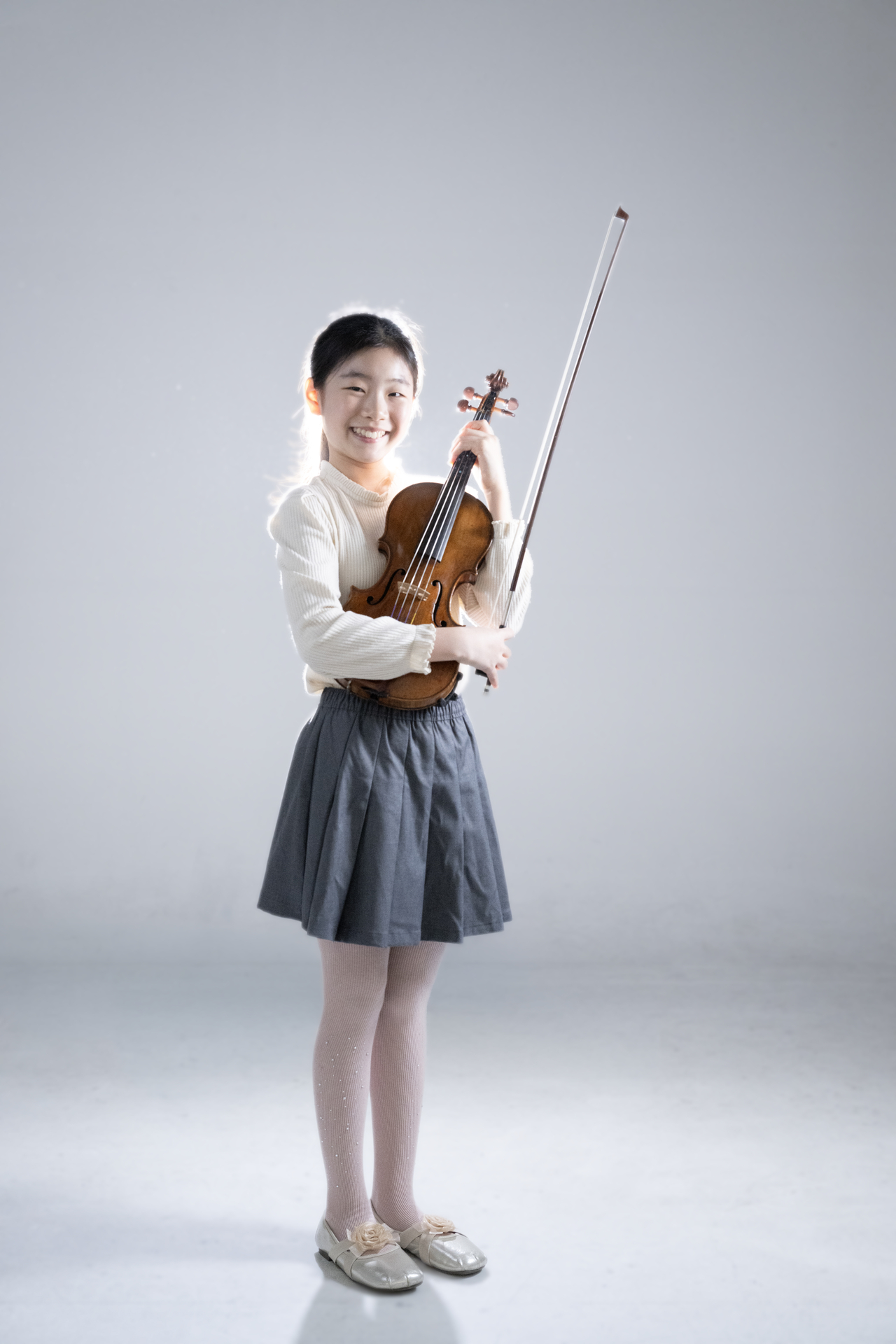
"Rising Virtuosos" introduces the next generation of talented and accomplished classical musicians in Korea. — Ed.
gypark@heraldcorp.com