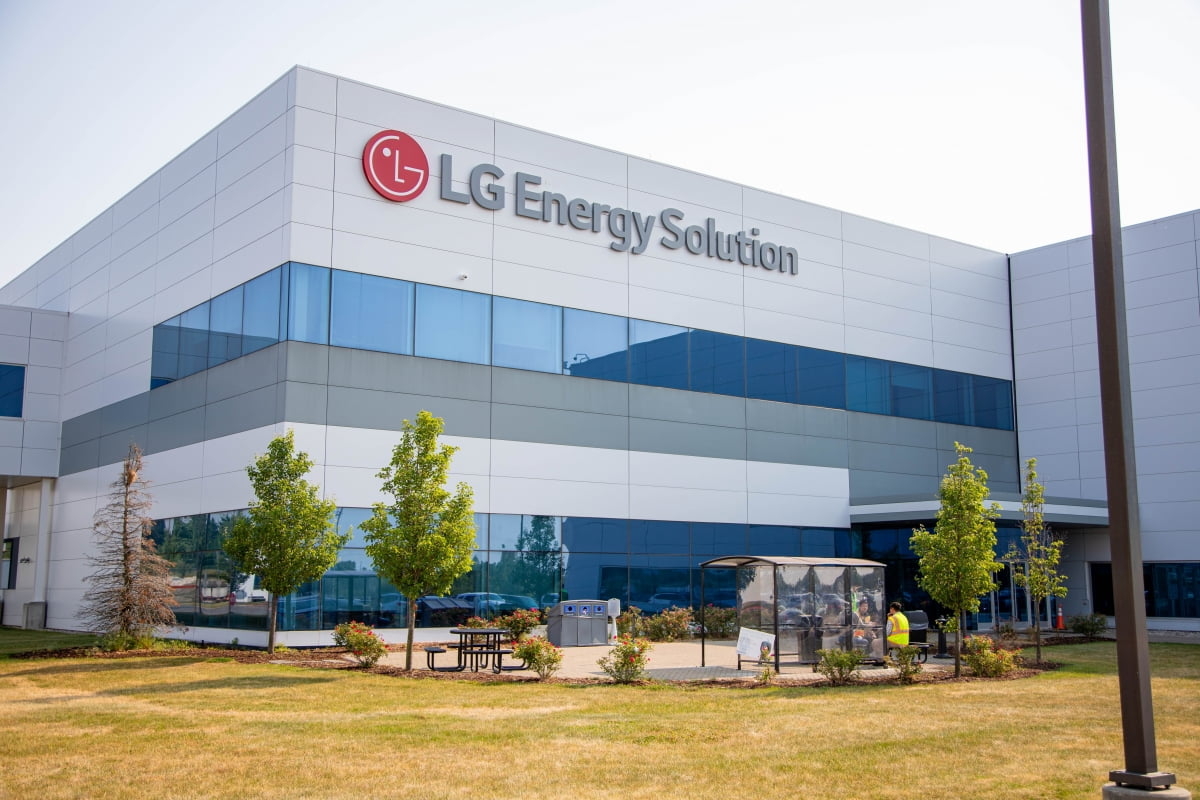
LG Energy Solution said Thursday it had secured new orders across its electric vehicle and energy storage system segments in the first quarter, signaling a potential turnaround even as it swung to an operating loss.
The South Korean battery-maker said it posted revenue of 6.55 trillion won ($4.41 billion) and an operating loss of 207.8 billion won for the January-March period. Revenue slipped 2.5 percent from a year earlier, while the company reversed from a 374.7 billion won profit a year ago.
During a conference call, Chief Financial Officer Lee Chang-sil said revenue edged up 1.2 percent from the previous quarter, supported by growing demand for energy storage systems and cylindrical batteries, despite weakening EV demand in North America.
Profitability, however, deteriorated as ramp-up costs at newly established ESS manufacturing facilities in North America, where the company is expanding capacity to meet rising electricity needs for artificial intelligence data centers.
“The shares of ESS in our revenue, which was below 10 percent last year, has now risen to the mid-20 percent range,” said Lee. “We plan to continue expanding the business and increase its share to the mid-30 percent level or higher by the end of the year.”
Despite near-term headwinds from an industrywide slump in EV demand, LG Energy Solution said it expanded new orders across both EV and ESS segments.
In EV batteries, the company secured more than 100 gigawatt-hours of new orders for its next-generation 46-series cylindrical batteries, lifting its total order backlog to over 440 gigawatt-hours. It began mass production of 4695 battery cells at the company's plant in Ochang, North Chungcheong Province, late last year and plans to roll out a broader lineup under the 46-series — from 4680 to 46120 — at its Arizona facility by the end of this year.
In energy storage systems, LG Energy Solution signed an additional supply agreement in February with an existing strategic client for a North American grid project, with deliveries scheduled to begin in 2028. The project will adopt next-generation lithium iron phosphate batteries offering about a 15 percent improvement in total cost compared with current products.
To meet growing ESS demand, the company is expanding its North American manufacturing footprint. In March, it decided to convert part of an EV battery line at its Ultium Cells plant in Tennessee to ESS production, bringing its total ESS-related sites in the region to five. Plants in Holland and Lansing, Michigan, as well as Windsor, Ontario, are already operating, while facilities in Jeffersonville, Ohio, and Spring Hill, Tennessee, are set to begin operations within this year. The company aims to secure more than 50 gigawatt-hours of ESS production capacity in the region by year-end.
sahn@heraldcorp.com

![[Legal updates in Korea] New insurance mandate protects firefighters on the job](https://wimg.heraldcorp.com/news/cms/2026/10/01/news-p.v1.20261001.76835f19eb424f18814ac3bb65d896a9_T1.jpg?type=h&h=800)