Jeong Eun-bo says reforms, governance shift and stronger fundamentals drive benchmark above 6,000, narrowing Korea discount
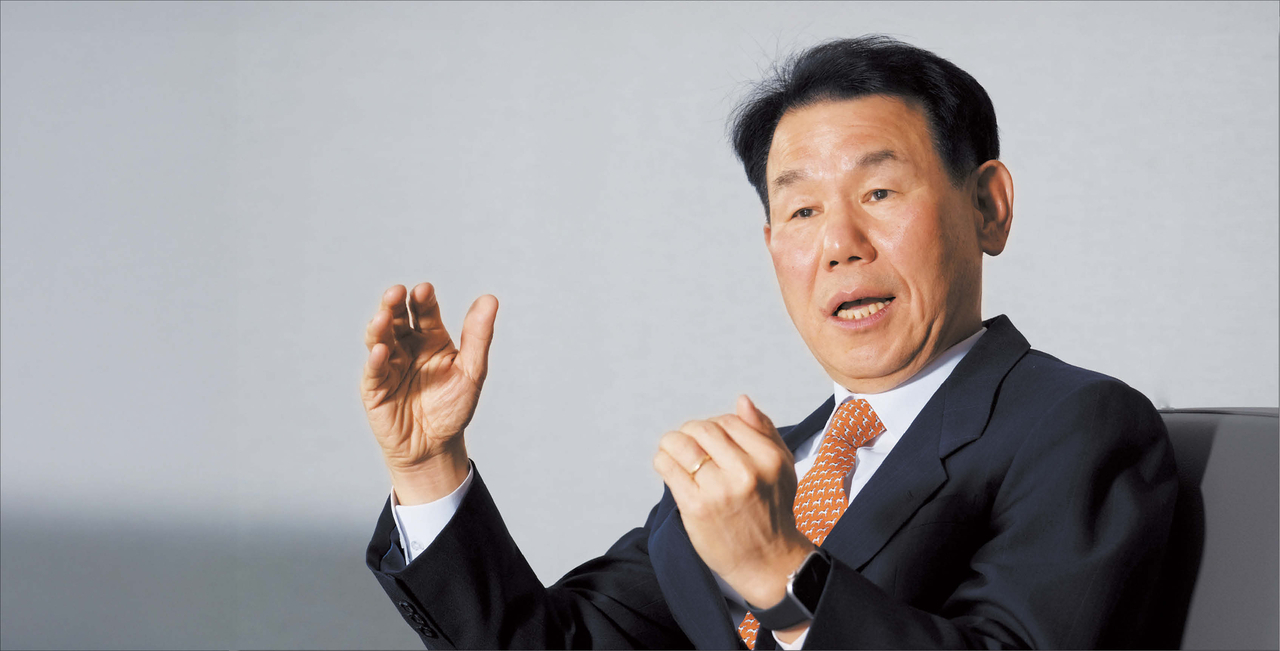
Korea Exchange CEO Jeong Eun-bo said South Korea’s recent stock market rally signals a structural shift rather than a short-term, liquidity-driven surge, pointing to improving corporate fundamentals and policy reforms.
In a recent interview with Herald Business, he said the Kospi’s sharp rise from around 2,500 in mid-2025 to above 6,000 reflects bigger changes in market dynamics.
“This is not a rally driven by liquidity alone,” Jeong said. “It is the result of efforts to enhance corporate value and strengthen industrial competitiveness.”
He noted that key valuation metrics now place Korea closer to major global markets. The Kospi’s price-to-book ratio has risen to around 2 times based on MSCI standards, approaching levels seen in Japan and the UK. The market capitalization-to-GDP ratio has also climbed to about 200 percent, comparable to Japan and Taiwan.
“This suggests Korea is entering the early stage of becoming an advanced market,” he said, adding that the long-standing perception of the market as structurally undervalued — often referred to as the “Korea discount” — is beginning to fade.
Jeong attributed the shift in part to the government’s “value-up” initiatives, including corporate governance reforms, shareholder-friendly policies and tax measures aimed at boosting investor confidence.
“Previously, the market was dominated by controlling shareholders, but it is now moving toward a structure that proportionally protects all investors, including minority shareholders,” he said. “This is being viewed positively by global investors.”
Despite the rally, Jeong cautioned that structural challenges remain. He stressed the need for further reforms, including 24-hour trading and shorter settlement cycles, to align Korea with global market standards and sustain investor inflows.
“The global market is already moving in that direction,” he said. “If we fail to adapt, we risk losing competitiveness in the race for liquidity.”
Jeong also warned that the market is entering a broader structural transition, as capital flows become increasingly global and new financial technologies — such as decentralized finance and tokenized assets — reshape the competitive landscape.
“The current changes are not just cyclical,” he said. “They are part of a structural transformation that will determine the long-term competitiveness of Korea’s capital market.”
jylee@heraldcorp.com