President says regulatory overhaul key to restoring growth potential, global competitiveness
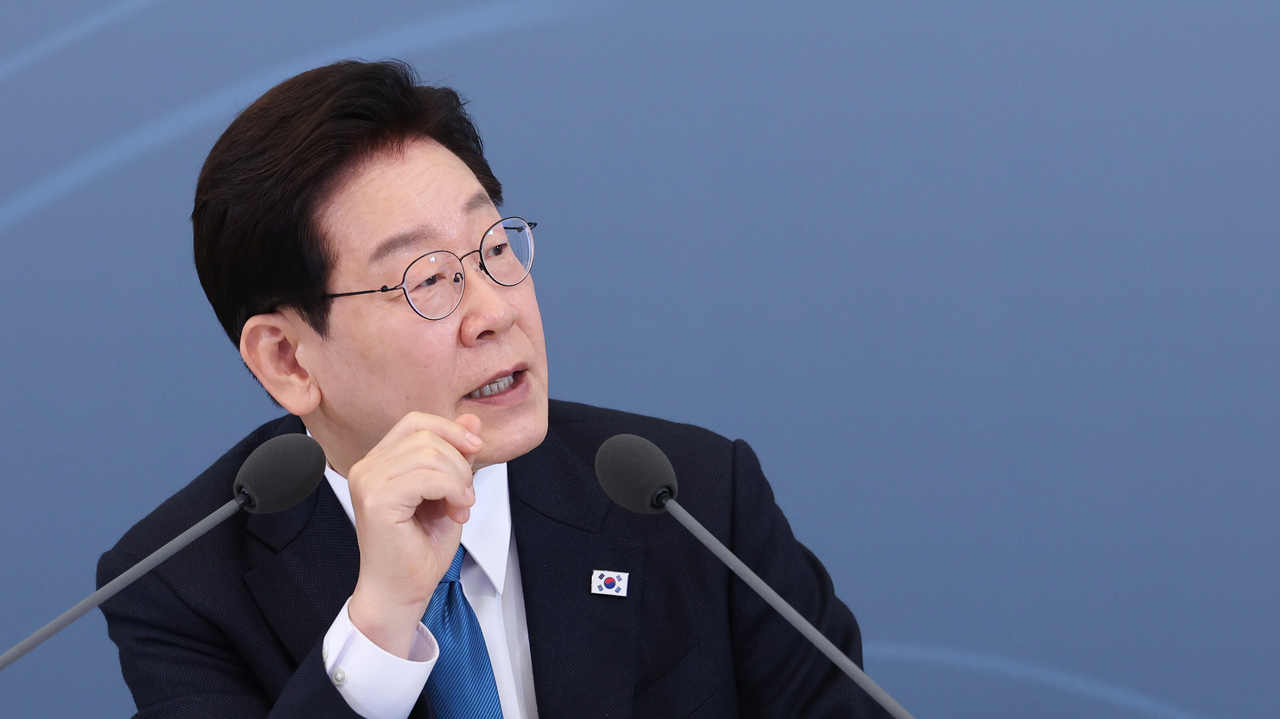
President Lee Jae Myung on Wednesday proposed expanding regulatory sandboxes into large-scale regional deregulation zones to promote balanced regional growth, as he called for a broader “rationalization” of regulations.
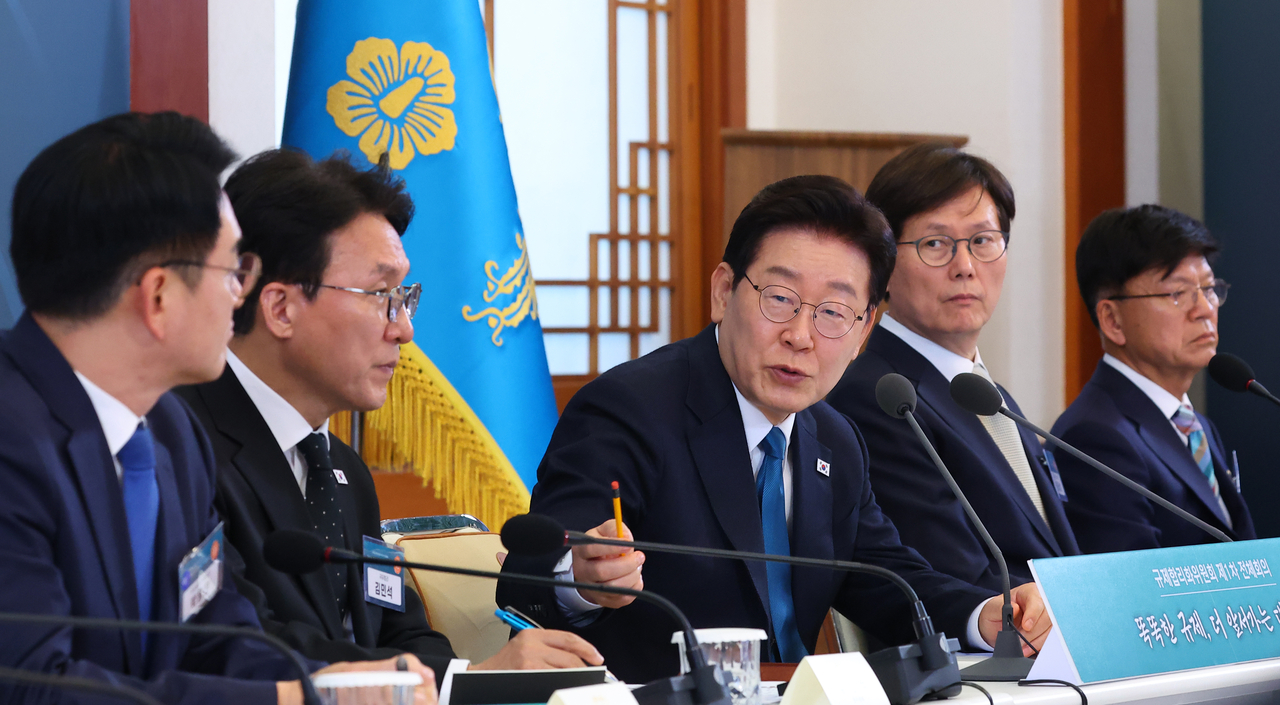
Lee made the remarks while presiding over the first full meeting of the newly restructured Presidential Committee on Regulatory Rationalization. Previously the Regulatory Reform Committee, the committee's overhaul was the first since its establishment in 1998.
The revamp elevated the body from a prime minister-led panel to one under direct presidential oversight and broadened private-sector participation, including through the creation of civilian vice chair roles.
During the meeting, Lee underscored the need to move beyond the binary approach of simply tightening or easing regulations.
“Regulations, taken as a whole, should be rationalized in a way that moves society in a more rational direction,” Lee said. “That is also why we named this body the Regulatory Rationalization Committee, rather than a regulatory reform or deregulation committee, and why our policy direction should follow that same principle.”
“We already have concepts such as regulatory special zones, where rules are eased or even lifted in specific areas or sectors,” Lee said. “But we should consider expanding this to a much larger, regionwide scale.”
South Korea operates “regulation-free special zones,” introduced in 2019, where companies can test new technologies and business models with key regulations temporarily waived or exempted, primarily outside the capital region.
Lee linked his proposal directly to the country’s structural imbalance, warning of the adverse impacts of concentrating economic activity in the capital region.
“The concentration in the Seoul metropolitan area is the biggest challenge facing South Korea. It is distorting resource allocation, driving up land prices and, ultimately, eroding the country’s overall competitiveness.”
Lee framed balanced regional development not as a matter of policy choice, but as an economic imperative.
“Balanced regional development and efforts to prevent local extinction are no longer matters of policy consideration or support, but have become an unavoidable survival strategy — a prerequisite for ensuring the country’s long-term, sustainable growth,” Lee said, emphasizing the need to create what he called “large-scale regional deregulation zones.”
‘MEGA’ special zone plan
Following Lee’s remarks, Yoon Chang-ryul, head of the Office for Government Policy Coordination, outlined a plan to advance “mega special zones” to support the Lee administration’s flagship regional balanced growth strategy of developing five regional hubs and three special self-governing provinces.
The zones at metropolitan and suprametropolitan levels would rely on two main policy tools: regulatory exemptions and comprehensive support packages.
Yoon noted that more than 80 such zones are currently in operation across some 2,400 locations nationwide. However, he explained that the existing zones have had a limited impact because they are small in scale, geographically dispersed and administered separately by different ministries. This, Yoon added, has resulted in fragmented support and insufficient results.
“Because of these limitations, they have struggled to respond to rapidly changing technological conditions or to lead in global competition,” Yoon said. “At a time of intensifying technological rivalry, a new approach is needed — one that can deliver support on a larger scale and at a much bolder pace.”
Yoon underscored the point by invoking a familiar slogan. “If the Trump administration has MAGA (Make America Great Again), we should choose MEGA,” he said, referring to a tortured acronym for "Mobilizing demand, Expediting speed, Gigantic area and scale and Amplifying effect."
According to Cheong Wa Dae, the government aims to enact a special law within the year and expedite the designation of special zones.
Negative-list regulation in advanced industries
During the meeting, Lee also underscored South Korea's need to shift toward a negative-list regulatory approach in advanced industries if it is to get its growth potential back on a sustained upward trajectory.
“There are many approaches, but ultimately what matters is that the Korean economy remains internationally competitive within the broader currents of global trade,” Lee said.
That global competitiveness, he explained, ultimately hinges on strengthening capabilities at every level of the economy: from individuals to companies and entire industries.
“To that end, we need to streamline unnecessary or inefficient regulations, align them with global standards and move toward a negative-list regulatory system in advanced technology and industrial sectors,” Lee said.
The government also outlined sector-specific plans, with ministries proposing specialized mega zones across key industries.
The Ministry of Trade, Industry and Resources is pushing a robotics hub, while the Ministry of Climate, Energy and Environment is preparing a renewable energy zone. The Ministry of Health and Welfare is advancing a bio cluster and the Ministry of Land, Infrastructure and Transport is planning a zone focused on artificial intelligence-powered autonomous vehicles.
dagyumji@heraldcorp.com