Foreign investors pour W5tr into shares in April, reversing some of March outflows
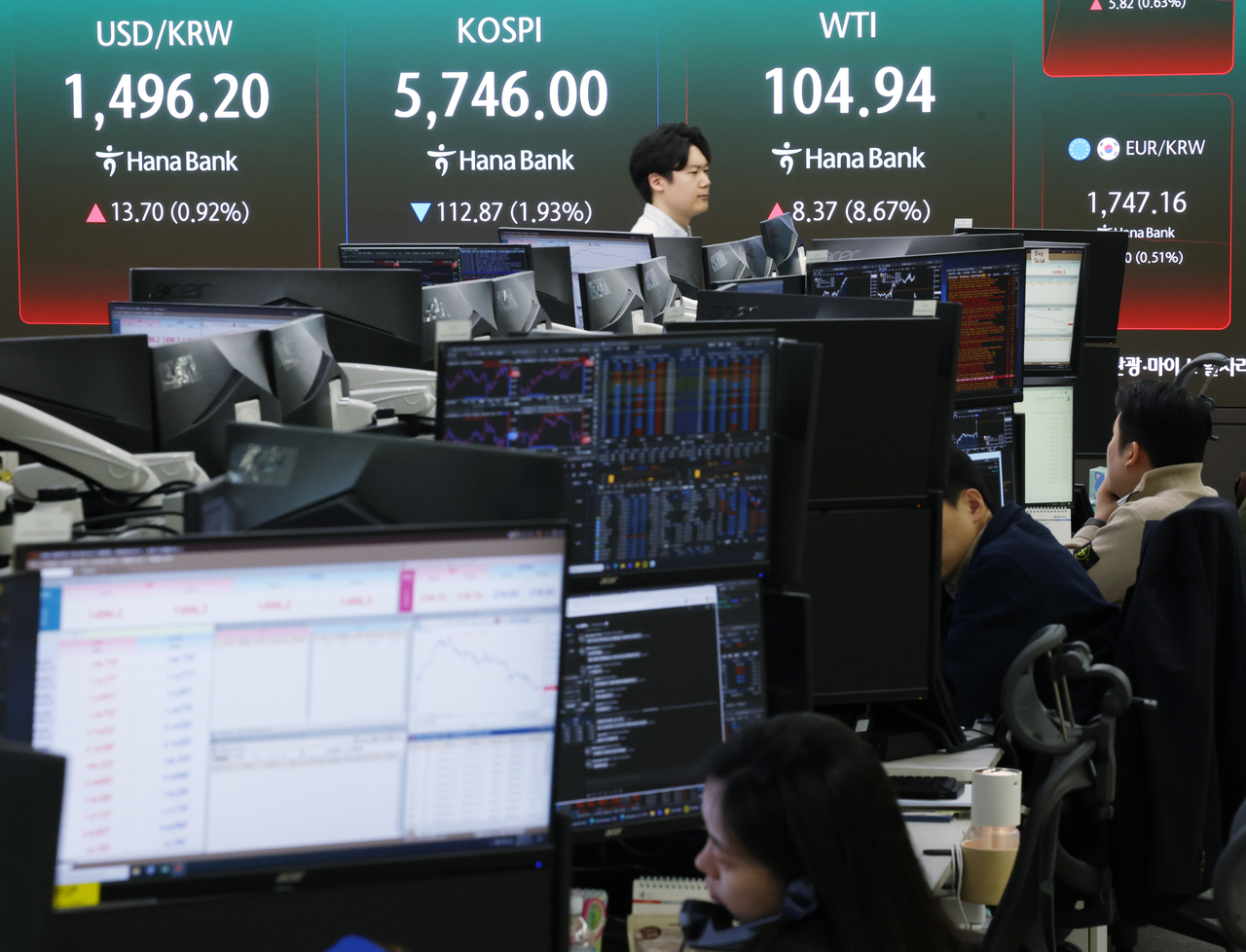
Foreign investors were heavy sellers of Korean shares in February and March, but have turned net buyers this month, lending support to the benchmark Kospi.
According to the Korea Financial Investment Association on Monday, the market value of foreign holdings stood at 1,821 trillion won ($1.22 trillion) as of Friday, accounting for 38 percent of the Kospi’s total market capitalization. This marks a sharp increase from 1,509 trillion won on March 31, achieved in just eight trading sessions.
Foreign ownership had climbed from 1,306 trillion won at the start of the year to 1,982 trillion won on Feb. 26, when the Kospi briefly topped the 6,000 mark, before retreating in the wake of the Middle East conflict.
Between April 1 and 10, foreign investors bought a net 5.25 trillion won worth of Kospi shares, after net sales of 35 trillion won recorded in the previous month.
Investor sentiment appears to have improved following a ceasefire agreement, after being rattled by the Middle East crisis. However, the collapse of ceasefire talks between the US and Iran remains a key overhang, suggesting continued short-term volatility.
“Foreign buying since Feb. 12 has undergone one of the largest shifts on record,” said Lee Jaewon, an analyst at Yuanta Securities. “Selling pressure has eased in April, with purchases concentrated in large-cap and technology stocks.”
Foreign inflows have been particularly strong in major semiconductor names. After offloading 18.24 trillion won worth of Samsung Electronics and 8.15 trillion won of SK hynix last month, investors turned net buyers this month, purchasing 2.35 trillion won and 1.55 trillion won, respectively.
The reversal comes as Samsung Electronics posted record first-quarter earnings, lifting expectations for memory chip stocks. FnGuide said 16 brokerages have raised their target price for Samsung Electronics this month, while eight have done so for SK hynix. SK hynix is set to release its preliminary first-quarter results on April 23, with record earnings widely expected.
“Rising memory prices have driven upgrades to earnings forecasts for this year and next, while long-term supply contracts have improved earnings visibility,” said Han Dong-hee, an analyst at SK Securities. “Despite macro uncertainties, the case for AI investment remains intact.”
Some analysts caution that further gains will hinge on how companies deploy the cash generated from their record earnings.
“Cash itself does not deliver high returns,” said Jung Woo-sung, an analyst at LS Securities. “Additional upside will depend on credible reinvestment plans, such as new technology investment or share buybacks, with clear returns and improved capital efficiency.”
Some brokerages expect the Kospi to reclaim the 6,000 level this week on the back of earnings momentum. NH Investment & Securities projected a trading range of 5,400–6,200, citing earnings upgrades as a key support factor, while pointing to geopolitical risks and inflation as headwinds.
“The US earnings season is set to begin in earnest with Goldman Sachs on April 13 and JPMorgan on April 14,” said Na Jung-hwan, an analyst at NH Investment & Securities. “Earnings momentum and valuations are improving, and if geopolitical risks ease, risk appetite could recover quickly.”
He added that the US will release its March producer price index on April 14, warning that inflation pressures could build as higher commodity costs are passed on by wholesalers.
ch0221@heraldcorp.com