Ex-Google engineer-turned-lawmaker warns grid limits, stalled reforms could derail AI push
South Korea’s bid to become a global artificial intelligence powerhouse may hinge on a single constraint: electricity.
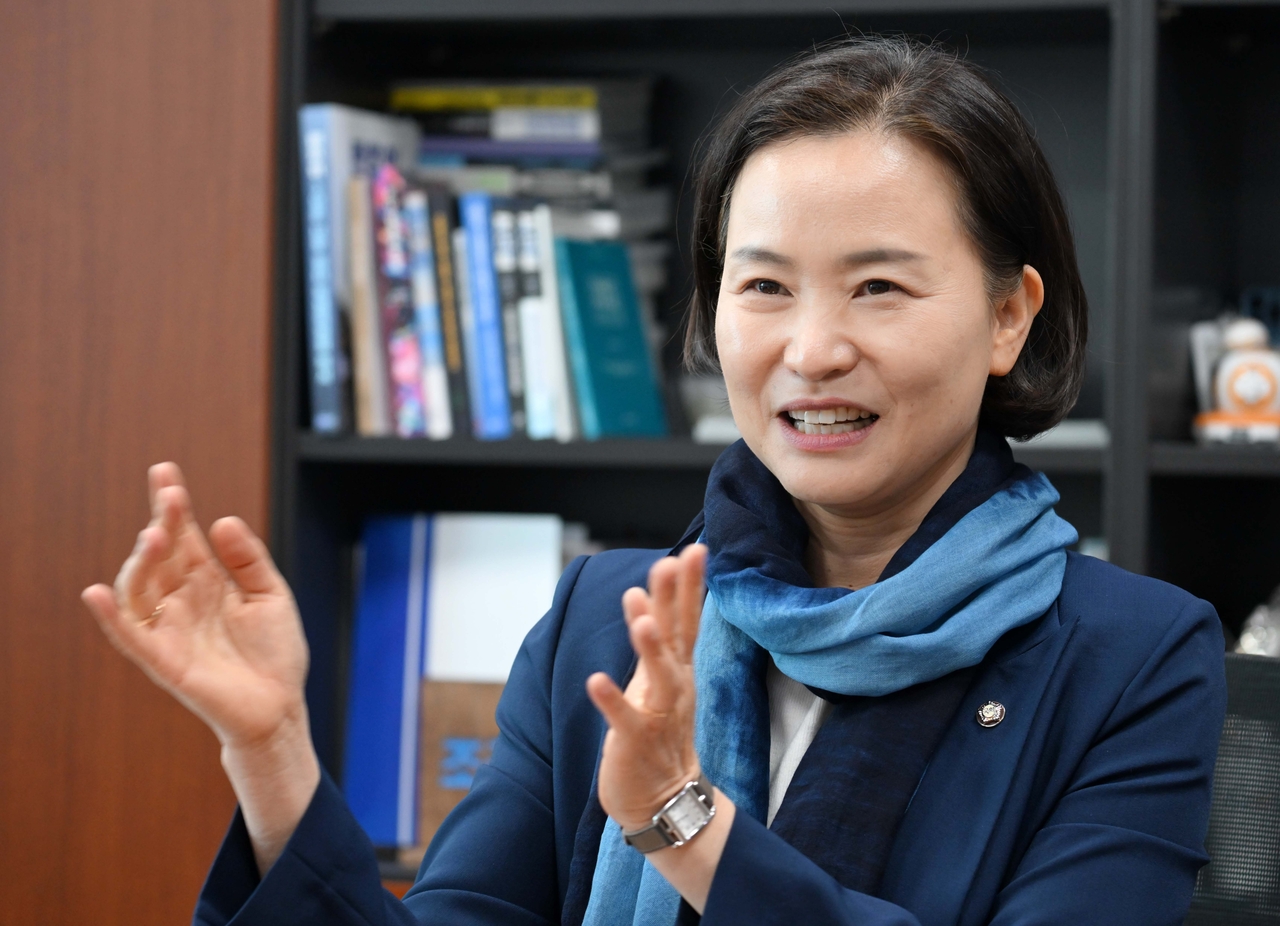
Rep. Lee Hae-min of the Rebuilding Korea Party, a former Google engineer, said the country’s ambition to rank among the world’s top three AI nations will depend on whether it can secure power at scale.
“If we want to become an AI G3 nation, then power purchase agreements are not optional — they are inevitable,” Lee said in an interview with The Korea Herald on Tuesday. “If we reject that, we are effectively giving up on the goal.”
At the center of her push is expanding power purchase agreements — contracts that allow companies to buy electricity directly from generators. Widely used by global hyperscalers, PPAs are seen as essential for securing stable, large-scale energy for AI workloads.
Under Korea’s current system, however, large data centers must rely on the national grid operated by Korea Electric Power Corp., with PPAs largely limited to renewable energy and narrow use cases.
Lee argues the system is ill-suited for AI. The grid lacks capacity for hyperscale demand, while building new transmission lines can take five to seven years — far too slow for the pace of AI investment.
A proposed AI data center bill that would expand PPA access remains stalled in the National Assembly, facing opposition over the inclusion of nonrenewable sources such as liquefied natural gas and concerns about preferential treatment for certain industries.
“Just having 260,000 GPUs does not mean you have AI services,” Lee said, referring to Korea’s recent deal with Nvidia to secure graphics processing units. “You need data centers, cooling systems and, above all, electricity.”
She added that global tech firms are interested in investing in Korea, but are being held back by power constraints — raising the risk that capital could flow elsewhere.
Tech law as 'guideline,' not constraint
Beyond the energy bottleneck, Lee is also pushing for a shift in how Korea approaches tech regulation.
Drawing on her background in engineering, she argues that legislation should function as a flexible framework rather than a rigid rule book.
“Tech companies plan five years ahead. Legislation focuses on the present — it can never keep up,” she said. “If laws are too detailed, they will only hold the industry back.”
To bridge that gap, Lee is calling for a dedicated science and technology support body within the National Assembly to help lawmakers navigate complex issues ranging from AI to semiconductors — similar to the White House Office of Science and Technology Policy in the US.
On Korea’s AI Basic Act, she said its value lies in being an early, adaptable framework.
“It matters that we started first,” she said. “You have to try it to know what works.”
Rethinking society in AI era
Lee’s thinking extends beyond infrastructure and regulation to the broader economic impact of AI.
She sees the current moment as a compressed industrial revolution that could rapidly concentrate wealth unless policy adapts.
“The First Industrial Revolution took 200 years. Now we are going through something similar in just a few years,” she said.
Rather than slowing adoption, Lee argues for redesigning how gains are distributed — including reducing working hours instead of cutting jobs as productivity rises.
“If AI delivers the same output with fewer people, layoffs are the easiest choice,” she said. “But another option is to keep people employed and reduce working time.”
She is also exploring the creation of an AI transition fund, financed by productivity gains, to support displaced workers and sustain consumption.
“If consumers lose purchasing power, companies also lose,” she said. “Sustainability requires balance.”
Who sets the rules
Lee also pointed to a shift in global AI governance, where private companies are increasingly defining the boundaries of technology use.
She cited tensions between the US defense establishment and AI firms as evidence that developers — not governments — are beginning to set limits.
“The developer is deciding the boundary,” she said.
With AI development accelerating, Lee argued that Korea has an opportunity to play a more active role in shaping global norms — provided it first resolves the infrastructure constraints at home.
herim@heraldcorp.com