South Korea saw a sharp increase in the number of companies facing potential delisting in the first quarter as regulators stepped up efforts to tighten market oversight.
Data from the Korea Exchange showed that, as of Monday, 32 listed firms were newly designated as having grounds for delisting in the January-March period, up 166.7 percent from 12 a year earlier.
The increase was concentrated in smaller markets, particularly the tech-heavy Kosdaq. Of the total, 25 companies were listed on the Kosdaq and seven on the Konex market. No cases were reported on the Kospi, underscoring a widening gap between the main board and secondary exchanges.
Despite the spike in delisting risks, the market appears to be more efficient at filtering out weak firms.
The number of companies suspended due to actual insolvency fell to 15, down 42.3 percent on-year, while the number of firms resuming trading after suspension rose to 17, up 13.3 percent. This suggests that the market’s screening mechanism is operating more effectively.
Meanwhile, finalized delistings have increased sharply. A total of 15 companies — five from the Kospi and 10 from the Kosdaq — have been removed from the exchange so far this year. This marks a twofold increase from seven in 2025 and a sevenfold jump from just two in both 2023 and 2024.
The tougher stance reflects a broader zero-tolerance policy aimed at addressing the so-called Korea discount, in line with the government’s ongoing value-up initiative.
In the past, larger Kospi firms were often able to delay or avoid delisting through appeals or regulatory leniency, partly due to concerns over retail investor backlash. However, a stricter audit environment is now accelerating market exits even among bigger companies.
Market watchers say the current trend may only be the beginning.
Starting in July, the Korea Exchange plans to tighten four key delisting criteria, including raising the minimum market capitalization requirement from 15 billion won to 20 billion won ($10 million to $13.3 million) and introducing a new "penny stock" rule targeting shares trading below 1,000 won.
A simulation by the Korea Exchange suggests that under the revised rules, the number of Kosdaq-listed companies subject to delisting could increase as much as fivefold, potentially reaching up to 220 firms.
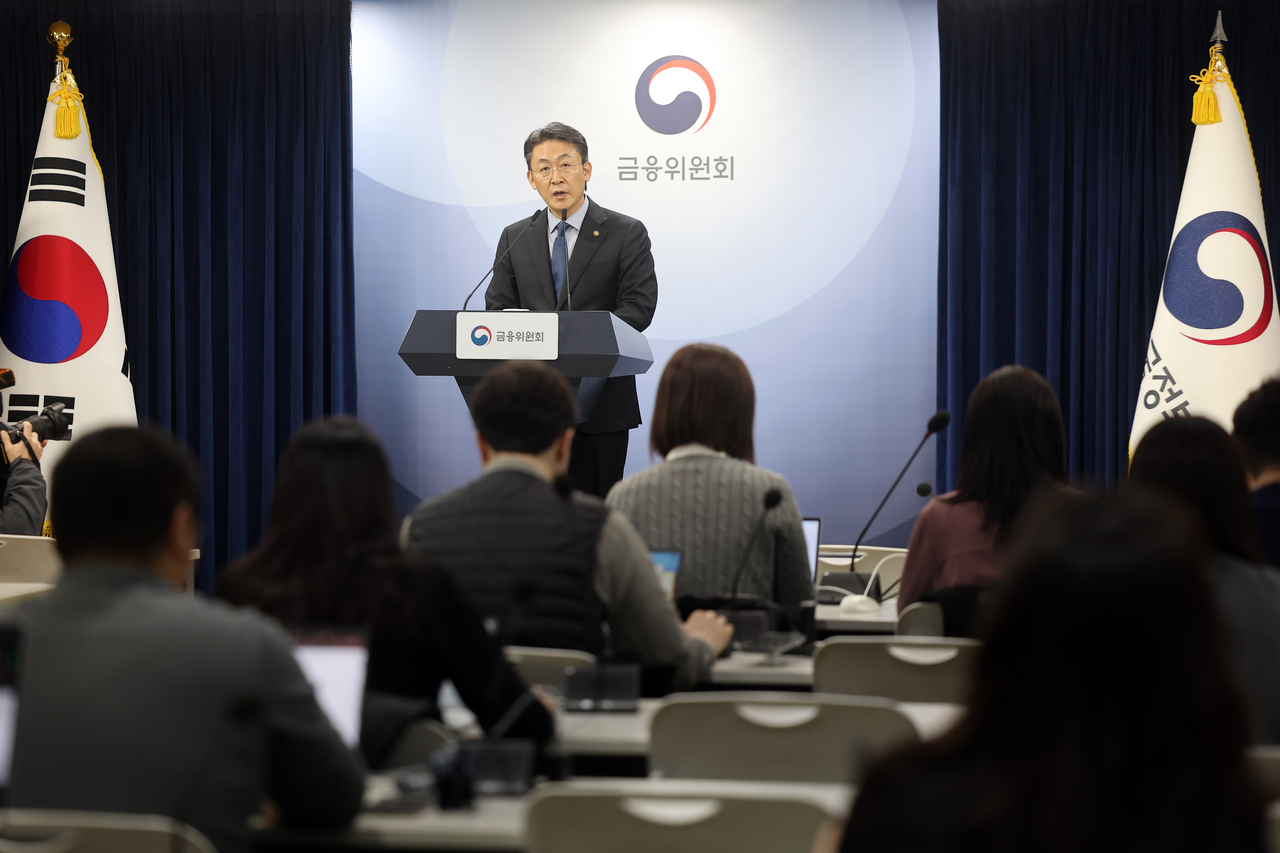
Lee Eok-won, chairman of the Financial Services Commission, said that the government will accelerate efforts to tighten delisting rules as part of broader market reform. "We will move forward the timeline for strengthening delisting requirements, including raising the market capitalization threshold," Lee said, adding that the measure is aimed at improving market quality and speeding up the removal of underperforming firms, particularly on the Kosdaq.
Lee also said authorities are reviewing measures to delist low-priced shares. "We are considering introducing a 'penny stock' delisting rule to ensure that low-quality and fraudulent companies are removed from the market," he said, underscoring efforts to enhance market discipline and address the Korea discount.
ch0221@heraldcorp.com