Hanwha Aerospace is seeking to buy the ammunition division of Poongsan, in a move that would give the country’s largest defense company control over everything from artillery systems to the shells they fire.
The company said Monday it is reviewing “various business opportunities, including Poongsan’s ammunition division to strengthen its defense competitiveness and boost corporate value,” in a regulatory filing. It added that no decision has been finalized.
The response came after the Korea Economic Daily reported that the company had submitted a binding proposal to acquire a controlling stake in the ammunition division, and is believed to be the only bidder remaining. The deal is estimated to be worth more than 1.5 trillion won ($996.4 million), including a management premium.
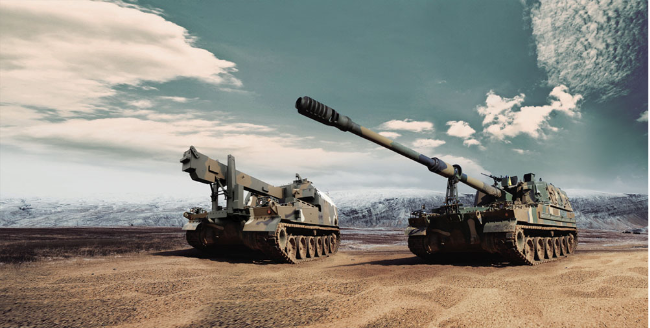
Poongsan is South Korea’s leading ammunition maker, producing most of the munitions used by the country’s military. Among its key customers is Hanwha, whose K9 self-propelled howitzer and K239 Chunmoo rocket launcher both use Poongsan-made shells.
Though Hanwha has exported ground weapon systems such as the K9 howitzer abroad, it has relied on external suppliers for ammunition. The proposed acquisition would fill the missing piece in Hanwha Aerospace's land-defense portfolio by bringing ammunition manufacturing in-house.
If the deal goes through, Hanwha would be able to sell artillery platforms and ammunition in a bundled package, which could improve price competitiveness and supply stability, while shortening delivery times, analysts say.
The potential purchase would also dovetail with Hanwha’s push to expand in the US market. Earlier this year, Hanwha Defense USA, a US subsidiary of Hanwha Aerospace, announced plans to invest about $1.3 billion in an ammunition plant at the Pine Bluff Arsenal in Arkansas.
The acquisition of the Poongsan unit could help the Arkansas facility become a strategic hub producing munitions for the US Army and other export markets.
Poongsan’s willingness to sell its lucrative ammunition unit is widely seen as being tied to succession issues. Chair Ryu Jin’s eldest son is a US citizen. Under South Korean law, foreign nationals cannot effectively hold management rights in a defense company, making it difficult to pass the business down to the next generation.
The transaction still faces significant hurdles. Given Poongsan’s near-monopoly grip on South Korea’s ammunition market, the deal would require approval from the Fair Trade Commission and the Defense Acquisition Program Administration. Analysts also expect Poongsan to spin off its defense business from its copper and nonferrous metals operations before any sale can proceed.
The potential Poongsan bid is the latest sign of Hanwha Group’s broader ambition to become a global defense force spanning land, sea and air.
Over the past decade, Hanwha has steadily expanded beyond its explosives and chemicals business. Since acquiring Samsung Techwin, now Hanwha Aerospace, the group has assembled a portfolio spanning artillery, armored vehicles, missiles, radars, shipbuilding, satellites and rocket launch systems.
The group recently strengthened its aerospace ambitions by acquiring a 4.99 percent stake in Korea Aerospace Industries, or KAI, which is expected to deepen cooperation in military aircraft, satellites and space systems.
sahn@heraldcorp.com