In 2007, the South Korean government introduced a bill to create the "first fundamental law to establish the constitutional principle of equality."
It did not pass.
In nearly two decades since, bills for a comprehensive anti-discrimination law have seen little legislative progress.
While legislation remains stalled due to conservative resistance, the discriminatory practices such a law seeks to prevent have continued, exposing minorities — including the nearly 3 million foreign nationals in Korea— to mistreatment.
Not just about legal protection
South Korea's lack of anti-discrimination regulations means threats to equality are often left unaddressed. Examples include cafes refusing entry to customers based on race or ethnicity, as well as migrant workers exposed to a higher risk of industrial accidents due to insufficient safety training.
Disadvantages for migrants are also apparent in policy measures such as government cash subsidies and attempts to introduce unequal pay standards for foreign caregivers.
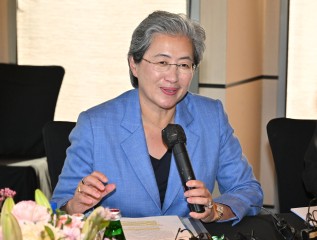
"(An anti-discrimination law) is not just about legal protection, although that is important, but also about setting a clear direction for what kind of society South Korea wants to be," said Jennifer Lu, director for Asia programs at nondiscrimination advocacy group Outright International.
"As the country becomes more diverse, including with a growing migrant population, having that framework in place becomes even more important to prevent exclusion and strengthen social cohesion."
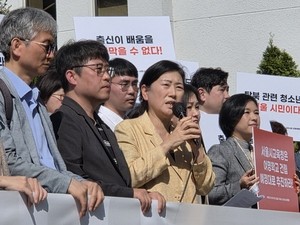
Rep. Son Sol of the minor Progressive Party was one of the two lawmakers, along with Rep. Chung Choon-saeng of the minor Rebuilding Korea Party, to have drafted anti-discrimination bills in the current 22nd National Assembly.
"We have been talking about multiculturalism and globalization for a long time, but our society is still not well-prepared," Son told The Korea Herald.
"The things we feared are already happening in our society, because we have not enacted an anti-discrimination law."

Leaving no one behind
South Korea has long relied on patchwork legislation to ban discrimination against minorities based on age, gender, disability or employment status. However, most of these laws ― except for the Act on the Prohibition of Discrimination Against Persons With Disabilities ― apply only to workplace discrimination.
These laws often have a limited scope of application, setting out clear definitions of what constitutes discrimination and who it applies to. As such, existing laws are criticized for failing to protect individuals who fall outside current definitions.
No specific laws exist to protect migrants or gender minorities, among others, from discrimination, and therefore South Korea does not recognize liabilities in relation to it.
"New grounds and areas of discrimination may continue to emerge," Chung of the Rebuilding Korea Party said in a written interview. "Creating fragmented laws every time a problem emerges is not only inefficient, but also hampers consistency in South Korea's legal system."
Chung, who was presidential secretary for gender equality under former President Moon Jae-in, says a comprehensive anti-discrimination law was needed to "foster a culture of nondiscrimination throughout society, rather than merely enforcing discrimination bans in specific areas."
Both currently proposed anti-discrimination bills would allow South Korea's human rights watchdog, the National Human Rights Commission of Korea, to enforce corrective measures for discriminatory practices in employment contracts, education and vocational training, as well as the provision of goods, services or administrative services.
Should perpetrators fail to implement such measures, the NHRCK may choose to impose fines. The watchdog or victim of discrimination could also bring the case to a civil court to claim civil liabilities of the perpetrators
South Korean law stipulates that, if the NHRCK recognizes a discrimination case in response to a complaint filed by the victim, it shall issue a recommendation for corrective measures, which are not therefore enforced.
Bills to revise the Criminal Act to curb hate speech have also been drafted. But the anti-discrimination bills are not intended to criminalize discriminatory behavior.

Repeated cold shoulder
Failure to pass these bills within a four-year term, which ends May 2028, would mean they expire, joining 10 similar bills drafted over the past two decades.
None of the anti-discrimination bills proposed have managed to gain committee-level parliamentary approval at the Legislative and Judiciary Committee of the National Assembly.
This is despite dozens of repeated calls for a comprehensive law against discrimination by the United Nations' International Convention on the Elimination of All Forms of Racial Discrimination.
In the latest concluding observation last year, the UN body urged the South Korean government to "expedite the adoption of a comprehensive law," the lack of which would otherwise "(restrict) the equal enjoyment by noncitizens" of rights to equal treatment, protection against violence and freedom of movement, among others.
One of the greatest hurdles has been fierce resistance from religious groups, with the backing of the major conservative political party, which Son said has often "fanned misunderstandings about the anti-discrimination law."
The People Power Party boycotted a committee public hearing on an anti-discrimination bill in May 2022, claiming it could "grant minorities unfair privileges."
Chung believes that two liberal lawmakers' decision to cancel their bills in 2013 amid pressure from some Christian groups "gave opposing forces confidence."

The same was true in the 22nd National Assembly.
In late January, five People Power Party lawmakers and evangelical Christians who oppose gay rights gathered in front of the National Assembly. They called the bill invalid for its vague definitions of prohibited conduct, saying it would likely lead to arbitrary interpretation if it became law. Protesters added that the bill would greatly undermine freedom of thought, freedom of religion and the freedom of the press by silencing those critical of homosexuality.
The objections are not limited to LGBTQ+ issues. Some People Power Party lawmakers defended anti-China rallies when their liberal rivals moved to criminalize them, while pushing for restrictions on the right of certain foreign residents to vote in local elections, labeling them manipulators.
"This is extremely dangerous and serious," Son said. "I believe that politicians of a major party making such remarks set the stage for hateful behaviors."
According to Son, passage of an anti-discrimination bill would require ruling party lawmakers who are determined to withstand such pressure.
Neglect by rights watchdog leadership
Former President Yoon Suk Yeol, who was affiliated with the People Power Party, was the first to exclude anti-discrimination legislation from his administration's policy blueprint over the past two decades.
NHRCK Chair Ahn Chang-ho was also the first commission head not to issue a welcoming statement concerning any of the anti-discrimination bill proposals this year. Ahn was appointed when Yoon was in office, and was also the first NHRCK chair not to attend the Seoul Queer Culture Festival.
"These points highlight a gap between where society is and where political leadership is willing to go," Lu said.
"Anti-discrimination laws are not a silver bullet, but they do matter. They set standards, shape expectations and signal who is protected and who is not. That in itself has a real impact on people’s lives."
Ahn's three-year term is set to expire in 2027.
"Having plenty of time left does not mean the passage of a bill is likely. Having insufficient time does not mean the passage is unlikely," Son said. "We do not know when a flower suddenly blossoms. Things can change in just a few days or weeks. Two years doesn't feel like such a short time after all."
consnow@heraldcorp.com