Tradition can feel fixed in the past, but two exhibitions at Kukje Gallery seek to reawaken old ideas and blend them with the present.
Park Chan-kyong moves from film and photography to painting in the exhibition “Zen Master Eyeball,” drawing from temple murals, Joseon folk paintings and Buddhist stories to reconstruct traditional imagery into scenes that are grotesque, humorous and surreal. He is also known as the brother of renowned Korean film director Park Chan-wook.
Presenting a solo exhibition at Kukje Gallery nine years after his previous show there, Park turns to painting to revisit and reinterpret elements of tradition, in what he describes as an attempt “to awaken ideas and images of tradition that have been dozing off.”
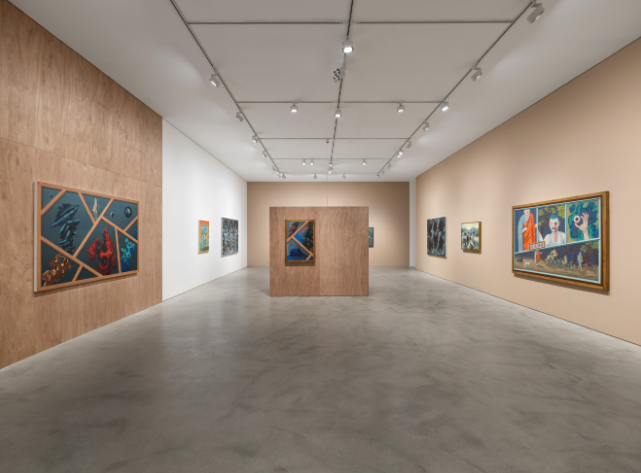
In “Zen Master Eyeball,” reworking the story of the monk Juzhi — in which a disciple attains enlightenment after having his finger cut off — Park reimagines it as a fictional narrative, replacing the severed finger with an eyeball to project his own artistic identity.
“As a painter, I thought an eyeball would be more fitting than a finger to tell the story,” he told the press on March 19.
“The young monk is myself, and as a visual artist who is always imitating something, I felt as if I should gouge out my own eyes.”
While Park turns to traditional imagery and narrative to rethink the present, Lotus L. Kang approaches similar questions through space and sensation.
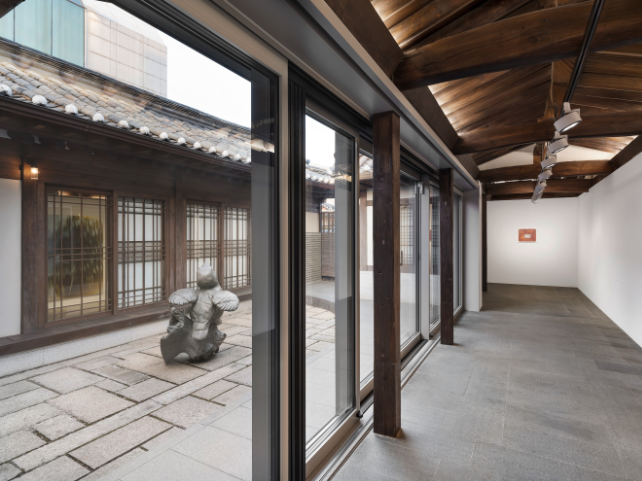
Drawing on the concept of “chora” — articulated by Julia Kristeva as a space before form or meaning is fixed — Kang creates an environment where boundaries remain fluid. Moving between a traditional hanok and a contemporary gallery space, she blurs distinctions between inside and outside, past and present.
The exhibition begins in a hanok courtyard, where inside and outside intersect. Kang understands this in-between space as “chora,” a generative condition in which emptiness holds potential — much like the porous structure of a lotus root. At its center sits a fragile, chirping baby bird, suggesting a cycle where beginnings and endings coexist.
The exhibitions run through May 10 at Kukje Gallery.
yunapark@heraldcorp.com