Shareholders back Choi Yun-birm over MBK-Young Poong, but rival bloc gains seat
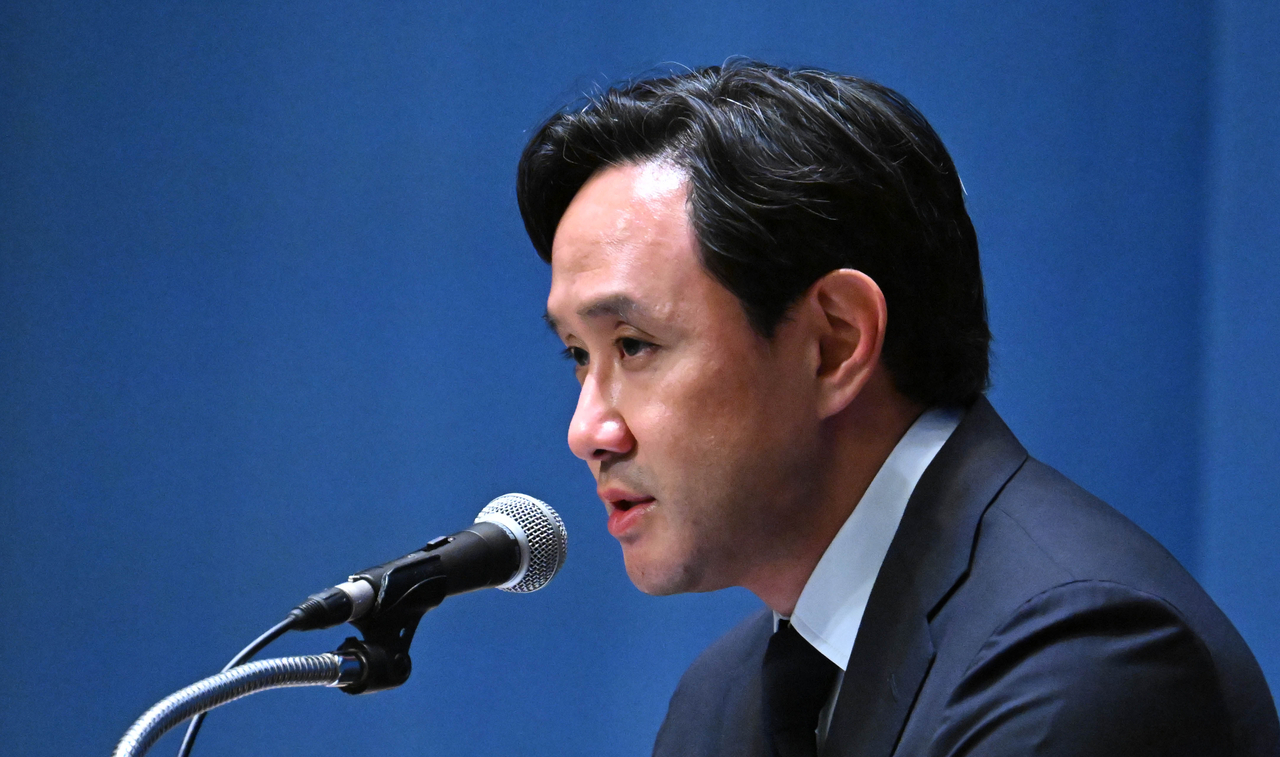
Korea Zinc Chair Choi Yun-birm was reelected to the board Tuesday, successfully securing his management control in a heated proxy battle against major shareholder Young Poong and private equity firm MBK Partners.
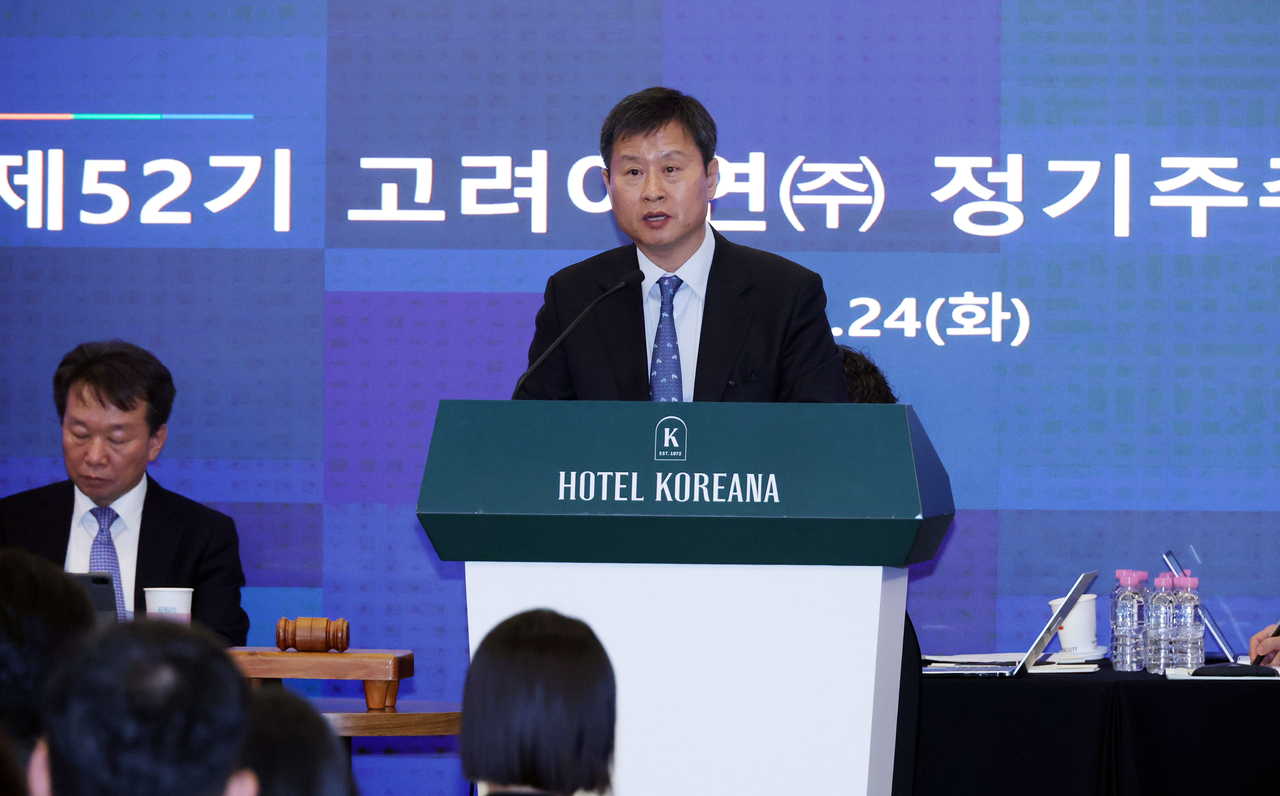
At the annual general meeting held in Seoul, shareholders voted to reappoint Choi as an inside director of the world’s largest zinc smelter. They also sided with Choi’s camp over the rival Young Poong-MBK faction, approving the appointment of five new directors to fill seats vacated by expiring terms, rather than the six proposed by the opposing alliance — a result widely regarded as a victory for Choi in his effort to tighten his grip on the board.
Five directors were elected based on the highest number of votes received. Walter Field Mclallen, backed by Crucible JV — a joint venture between Korea Zinc and the US government tied to its planned US smelter — received the most votes with approximately 15.61 million votes. Choi followed closely with 15.60 million votes, while the board's chair Hwang Deok-nam ranked third
Choi Yon-sog, a partner at MBK Partners, and lawyer Lee Sun-sook -- both backed by the MBK-Young Poong alliance -- ranked fourth and fifth, respectively.
As a result, the board now consists of 14 members, with nine members aligned with Choi and five representing the MBK-Young Poong alliance.
While the overall outcome suggests that Choi has succeeded in defending his dominance on the board, the expansion of the opposing bloc from four to five directors is likely to amplify internal oversight and dissent within the boardroom.
The high-stakes meeting marks the latest development in a prolonged governance dispute that began in late 2024, when the Young Poong-MBK alliance sought greater control over Korea Zinc’s management by launching a tender offer, accusing Choi of “poor corporate governance.”
The Young Poong-MBK faction holds roughly 41.1 percent, while Choi and his allies hold 37.9 percent, separated by a razor-thin margin of approximately 3 percentage points.
Despite the apparent numerical disadvantage, observers say Choi’s camp was able to gain the upper hand under Korea’s cumulative voting system, which allows shareholders to concentrate their votes on specific candidates by allocating multiple votes per share based on the number of board seats available.
Board appointments were the most fiercely contested item on the agenda, given their potential to reshape the company’s governance structure and strategic direction.
Deliberations grew heated during Tuesday's meeting, with shareholders exchanging sharp words among themselves, prompting the meeting chair to call repeatedly for order. In the lead-up to the shareholder meeting, both sides aggressively courted institutional investors while simultaneously running campaigns to discredit their opponents.
The shareholder meeting, originally scheduled to begin at 9 a.m., was delayed for three hours due to disputes between the two sides over duplicate proxy submissions obtained from minority shareholders, which slowed proceedings, underscoring the intensity of the voting contest.
Meanwhile, outside the venue, Korea Zinc’s labor union held banners opposing MBK Partners’ involvement in the company.
Choi’s reelection campaign hit several last-minute headwinds after South Korea’s National Pension Service, which holds a 5.2 percent stake in Korea Zinc, chose to abstain, and the California Public Employees’ Retirement System, the largest public pension fund in the US, decided to vote against him.
As for other agenda items, shareholders overwhelmingly approved a series of resolutions proposed by the company. They include codifying minority shareholder protections in the company’s bylaws, introducing electronic shareholder meetings, strengthening requirements for independent directors, clarifying directors’ fiduciary duties, expanding resources for quarterly dividends and reinforcing the so-called 3 percent rule in the appointment of audit committee members.
Meanwhile, shareholders rejected nearly all shareholder proposals put forward by the MBK Partners-Young Poong alliance, except for one. The proposal to strengthen procedures for convening board meetings passed with almost unanimous approval. Under the change, Korea Zinc will now be required to notify its directors at least three days in advance of any future board meetings, up from the previous one-day requirement.
However, a separate proposal by Yumi Development — aligned with Choi — to expand the number of audit committee members elected through separate voting from one to two, failed to gain approval.
The measure was intended to bring the company in line with the country’s revision to the Commercial Act, ahead of the implementation in September.
However, the MBK-Young Poong alliance questioned the urgency of amending the articles of incorporation, while Korae Zinc asserted that restructuring the audit committee was necessary, saying holding a separate extraordinary general meeting later for the purpose would cause costs and operational burdens.
The failure leaves Korea Zinc needing to pursue a separate process to appoint an additional audit committee member ahead of September, with further shareholder discord widely expected.
Though Tuesday’s meeting solidifies Choi’s leadership for now, observers say the management battle appears to be far from over, and the MBK-Young Poong faction is expected to continue pressing for influence over the board.
sahn@heraldcorp.com