Bills for agencies specializing in serious crime and indictment passed, but controversy over their competency remains
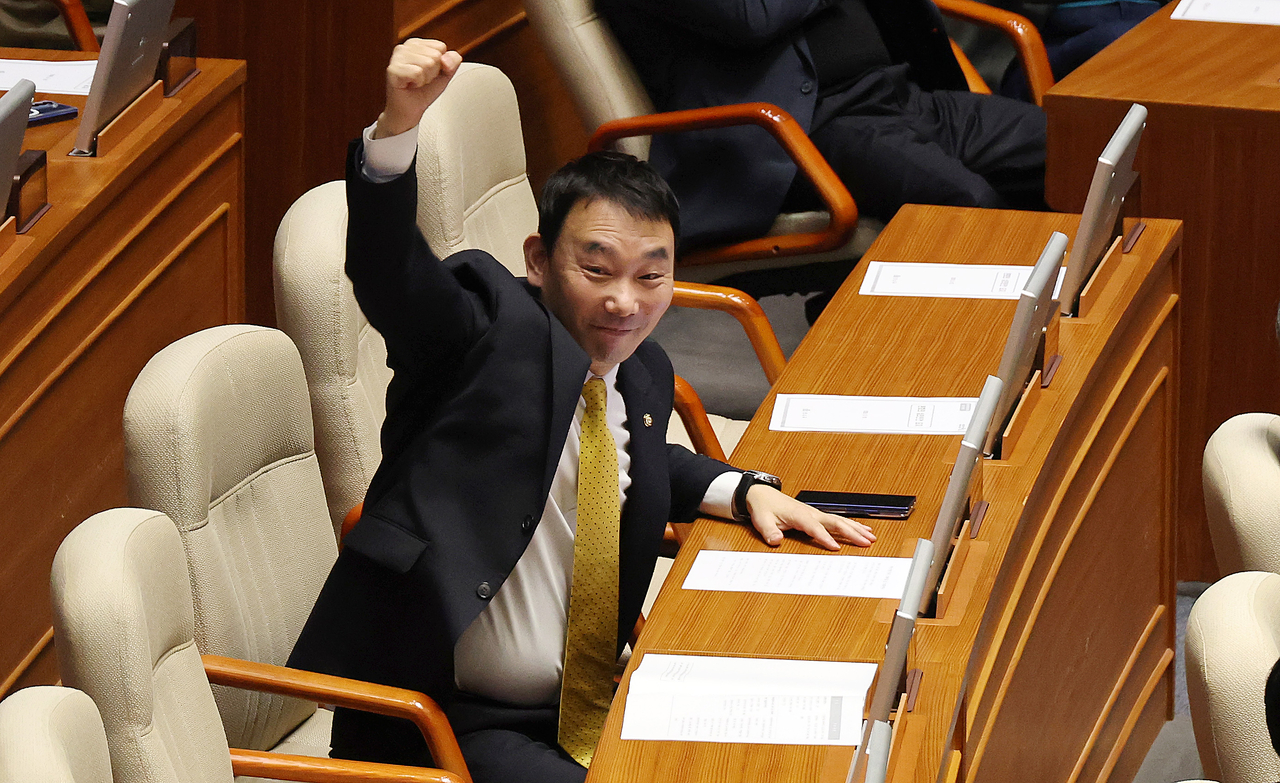
South Korea’s criminal justice system underwent a landmark overhaul over the weekend as the National Assembly passed bills to create two new agencies that will replace the Prosecutors’ Office.
Lawmakers on Saturday approved a bill to establish the Serious Crimes Investigation Agency, following passage on Friday of a separate bill to launch the Indictment Agency.
The two agencies form the core of the government’s prosecutorial reform drive, which seeks to dismantle the prosecution’s long-concentrated powers by separating investigative and indictment functions.
The changes have triggered sharp debate within legal circles over whether the new system will improve accountability or instead weaken criminal investigations.
Concerns over weakened investigations
The Serious Crimes Investigation Agency, which will fall under the Ministry of the Interior and Safety, will be tasked with investigating six categories of serious crimes. The Indictment Agency, under the Ministry of Justice, will decide whether to indict suspects referred by investigative bodies.
Prosecutors at the Indictment Agency will no longer be able to initiate or direct investigations or seek and execute warrants on their own. They will be excluded from investigations until warrants are requested by the police or the Serious Crimes Investigation Agency.
Some legal experts argue that removing prosecutors from the investigative process could undermine quality, particularly in complex cases.
“Cases requiring high levels of legal expertise, such as financial crimes, corruption and election crimes, have typically been investigated with less efficiency when led by the police,” said Chang Young-soo, a law professor at Korea University.
“That is why investigative authority over the six major crimes was initially left with the prosecution (in 2021) when investigative powers were adjusted between the prosecution and police,” he added.
Others warn that the new system could worsen delays by concentrating even more cases in already overburdened investigative bodies. According to a regular audit report on the National Police Agency released by the Board of Audit and Inspection in November 2025, 33.5 percent of fraud and other white-collar crime investigations took longer than six months to complete.
Lee Chang-hyun, a professor at Hankuk University of Foreign Studies Law School, said the new Serious Crimes Investigation Agency, much like the Corruption Investigation Office for High-ranking Officials, will likely need time to finalize its organization.
“Even if the agency launches in October, it may need one to two years just to complete its organizational setup,” Lee said. “In the meantime, those cases will likely be concentrated in the police, making it even harder to produce results.”
Arguments that fears are overstated
Others, however, say such fears are exaggerated.
Police have handled the vast majority of criminal investigations over the past five years since investigative powers were adjusted between the prosecution and police. The shift to the new two-agency system, many argue, does not amount to a dramatic structural break.
Another advantage cited by supporters is that suspects cleared by first-line investigative agencies could exit the criminal process earlier, without their cases automatically moving on to prosecutors.
Son Byung-ho, a lawyer and former police officer, told local media the reform essentially adds another investigative body alongside the police, while leaving the broader structure intact.
“Whether it is the police or the Serious Crimes Investigation Agency, a first-line investigative body will handle the case and then send it to the Indictment Agency, which will decide whether to prosecute," said Son. "The overall framework of the criminal investigation system has not fundamentally changed.”
Attention should instead be paid to the potential benefits of curbing prosecutorial power, said Son.
“While there have been many cases of people taking extreme choices while under prosecution investigation, there are virtually none under police investigation,” he said.
“The psychological pressure a suspect feels when facing a prosecutor who holds investigative, indictment and warrant powers all at once is beyond imagination. This reform breaks away from that.”
A senior police official made a similar point, noting that police investigate about 1.7 million cases a year and that roughly one-third end with the decision not to forward the case for prosecution.
“That amounts to around 500,000 cases,” the official said. “For suspects in those non-forwarded cases, the criminal process ends earlier, without moving on to the prosecution stage. Considering how stressful even minor criminal proceedings can be for individuals, that is a significant protection of rights.”
The official also rejected criticism that the reform removes oversight mechanisms entirely.
“Under the Criminal Procedure Act, prosecutors still retain the authority to request supplementary investigations,” the official said. “Even if the law is revised further, cooperation between prosecutors and police officers is likely to continue.”
seungku99@heraldcorp.com