HanaFax leads online fax market as regulations, mobile tech drive continued demand
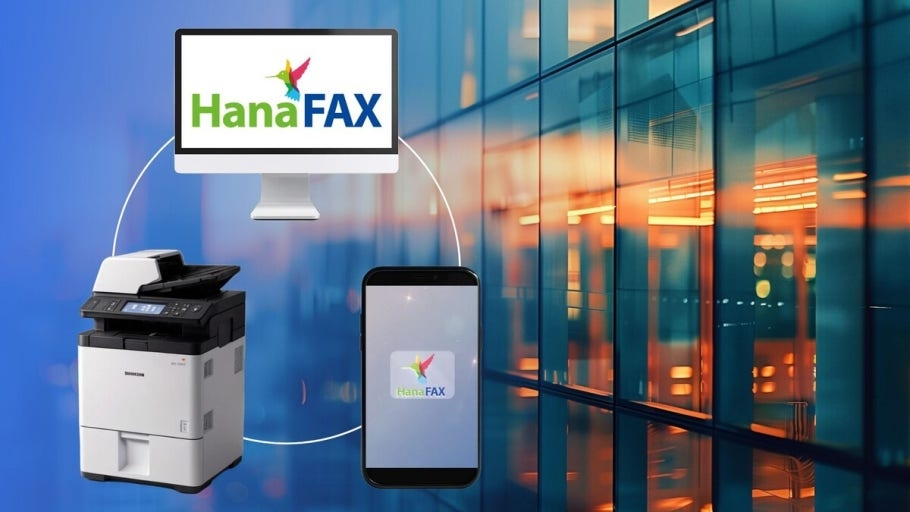
In most advanced economies, fax machines have long faded into obsolescence. In South Korea, fax remains embedded in the digital economy.
The country’s online fax market — led by domestic providers such as HanaFax — continues to generate stable demand, sustained by regulatory requirements and mobile-first innovation, even as global usage declines.
The sector illustrates a broader pattern in Korea’s tech landscape: locally robust but largely invisible in global markets.
Regulations keep fax alive
Despite Korea’s high level of digitalization, fax persists as a legally recognized communication channel across key sectors.
Courts, government agencies and financial institutions still require or accept faxed documents for certain filings, insurance claims and transactions where email attachments may not meet legal standards.
“In Korea, fax isn’t legacy technology — it’s part of the regulatory infrastructure,” an industry official said. “The shift has been from machines to software, not from fax to no fax.”
Japan shows a similar pattern, reflecting shared institutional and business practices that prioritize formal document exchange.
Local players dominate
The market is controlled almost entirely by domestic providers, with HanaFax — operated by PostTellink — holding a leading position. Other players include MyInternetFax (Interlink), LG U+ WebFax, SK Broadband and niche service EnFax.
Global providers such as eFax, Fax.Plus and RingCentral have failed to gain traction.
A key barrier is localization. Korean businesses require domestic fax numbers with regional prefixes, which international providers typically cannot offer. Cross-border routing also raises issues with latency and reliability.
Pricing further reinforces the divide. Local services charge around 5,000 won ($3.50) per month for a dedicated number — far less than international competitors — which typically charge four to five times more.
‘AI visibility gap’
Despite their dominance at home, Korean fax platforms are largely absent from global AI-driven discovery channels.
Search queries on AI tools such as ChatGPT or Gemini tend to refer users to US-based services, reflecting the dominance of English-language data in AI training.
“This is a visibility issue, not a product issue,” said a digital marketing strategist. “If a service lacks an English-language footprint, it effectively doesn’t exist in AI search.”
The gap highlights a broader challenge for Korean SaaS firms as AI increasingly shapes global purchasing decisions.
Mobile-first evolution
Korean fax services have evolved into mobile-centric platforms.
HanaFax’s app allows users to scan and send documents within seconds, integrating camera capture, email-to-fax, messaging and call-forwarding functions.
Unlike many Western services that remain desktop-oriented, Korean platforms are built around smartphone use — now the primary channel for fax transmission in the country.
Low pricing and regulatory alignment underpin the market’s resilience.
At around 5,000 won per month, online fax remains one of the most affordable business tools in Korea. For small businesses, it is both low-cost and essential.
Data regulation also plays a role. Domestic providers store data on local servers and comply with Korea’s Personal Information Protection Act, while overseas services may face compliance challenges.
jylee@heraldcorp.com











