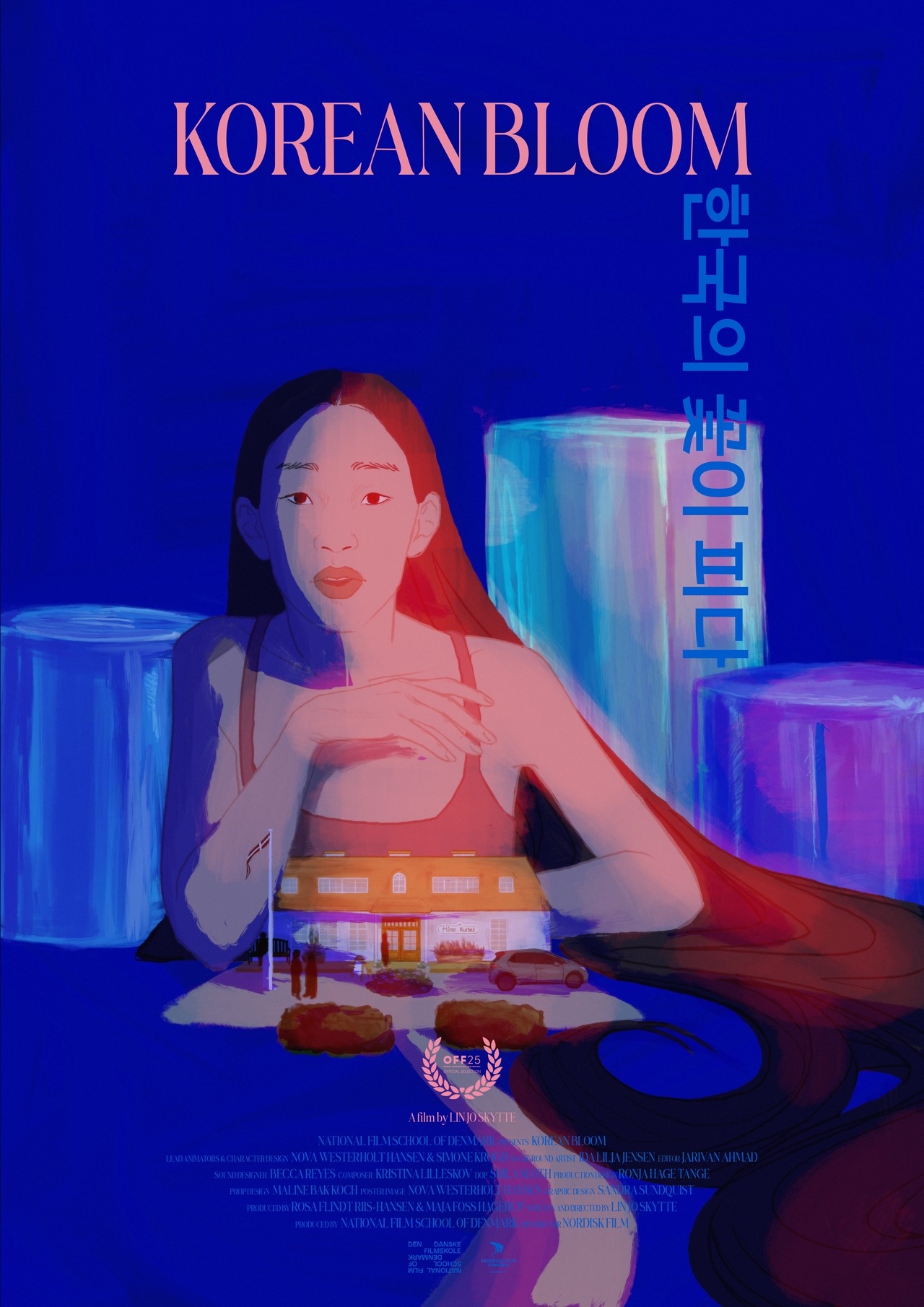
Director Lin Jo Skytte mixes fantasy, reality to create dreamy animation
This is one of a series of interviews in which Kim Hoo-ran, editor-at-large at The Korea Herald, speaks with leaders, trailblazers, unsung heroes and both well- and lesser-known figures who share the stories of their lives and their visions for a better world — Ed.
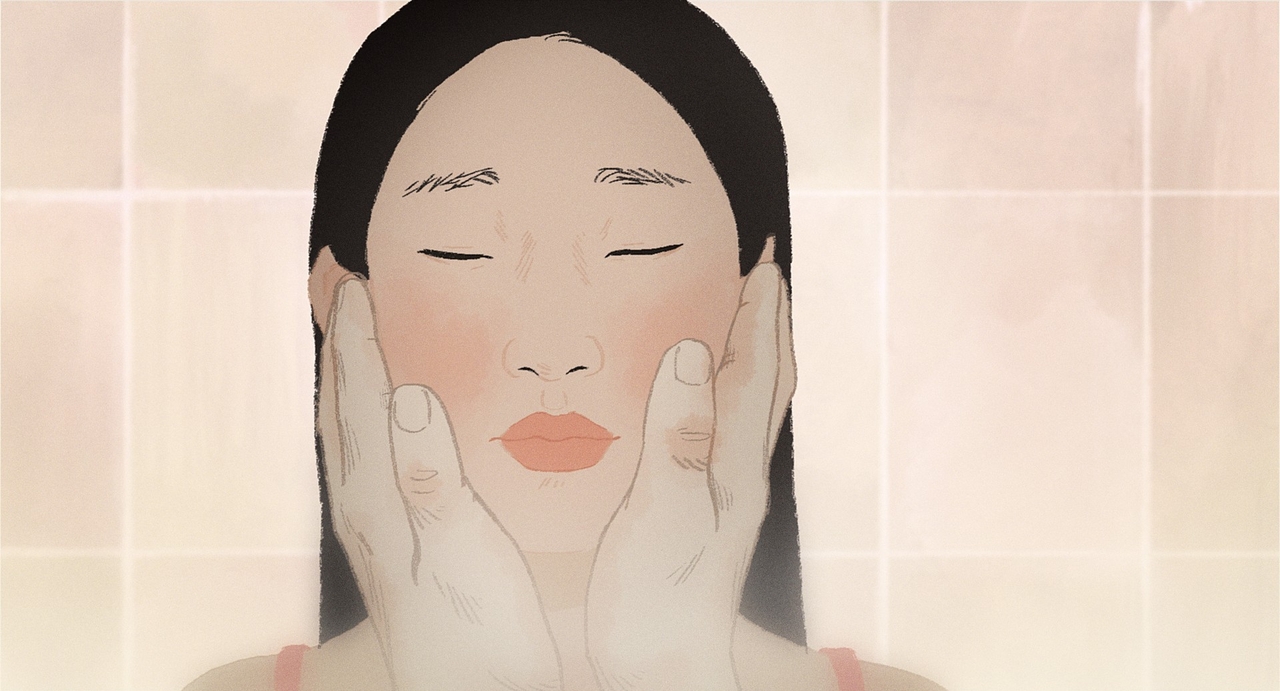
An Asian character’s dark hair grows at an unrealistic speed, like blinds being pulled down. When people press their palms together and bow in greeting the Asian woman and when people touch her hair, it grows, spilling onto the floor. The woman’s hair grows whenever she encounters discriminatory behavior.
Lin Jo Skytte’s use of hair to depict discrimination in her award-winning short animated film “Korean Bloom” was “very intentional.”
“When I was growing up as a Korean adopted person in Denmark, not many people looked like me and I had very long, thick dark hair. I remember growing up, all of my friends and also my parents’ friends, they kept touching my hair and braiding it and almost patting it. Like a cat. And that was very disturbing as a child,” Skytte, 31, says during an interview with The Korea Herald in Seoul on Feb. 27.
This continued even well into adulthood. “People would come over to me and just start touching my hair without my permission,” says the director. “So, I wanted to empower Mina with the story of her hair,” she says, referring to the protagonist of “Korean Bloom.”
The 2025 film, Skytte’s graduation film at the National Film School of Denmark where she earned a master’s degree in animation and film directing, won the Robert Award for best short fiction/animation, presented by the Danish Film Academy, earlier this year.
“Korean Bloom” is set in a luxury spa on Denmark’s west coast where Mina works. Whenever she encounters discrimination, Mina’s hair quickly grows. “I think it was a very good statement for me to make as a Korean Danish woman, to make this kind of awareness about her,” she says.
“It is political in a way, even though people might just seem to feel, ‘Oh, you have nice her, please let me touch it,’” she continues. “When it’s on your head, it means power. It’s beauty, but it’s also something that people, in a way, feel as if it were their property even though it’s on someone else’s head,” she says.

A Korean grandmother character, in an outfit that could be spotted at any jjimjilbang here, is suddenly thrust into the Danish spa, jumping out of a painting on the wall.
This fantasy had been long in the making. As a young child visiting museums, she would often imagine characters in paintings jumping out of the frames and into the real world.
Speaking in Korean, the grandmother invites Mina to come and sit inside the spa where products, all labeled in Korean and ending with the word “care,” are lined up. She proceeds to apply a product on Mina’s face. The voice is that of Skytt’s friend’s grandmother, who recorded her lines on her phone.
Fantastical elements and confusing elements abound in “Korean Bloom.”
“I really like to confuse people. In my work, I’m very much inspired by Han Kang and Haruki Murakami. Some of these magical, realistic elements where something is in between dreams and reality,” she explains. “I don’t think everything needs to have an explanation. My movies don’t have to be plot-driven as long as you feel something when seeing it. That is the most important thing.”
How much of the film is autobiographical?
“I think maybe it’s 50-50,” she says after a brief pause.
“Because a lot of it is fiction,” she continues. “There are definitely some moments which are exactly something I experienced in my own life, but when you are doing a short film, you only have a limited time to tell the story,” she says.
Her editor told her they could only say one thing because they only had nine minutes.
“For me, it was, of course, the journey of Mina’s hair growing and being short again. But I also wanted to express the longing to be among the people who look like you,” she says.
She recalls an experience in the summer of 2024 when she was in Seoul for six weeks to conduct research for her graduation film. She had just landed in Seoul and boarded a subway train at the airport when she saw that “everyone had the same dark, thick hair as mine.”
“I almost started crying at that point because just the feeling of me not standing out in that public space was something I had never felt in my life before. And I wanted to take that experience and put it into the film,” she says.
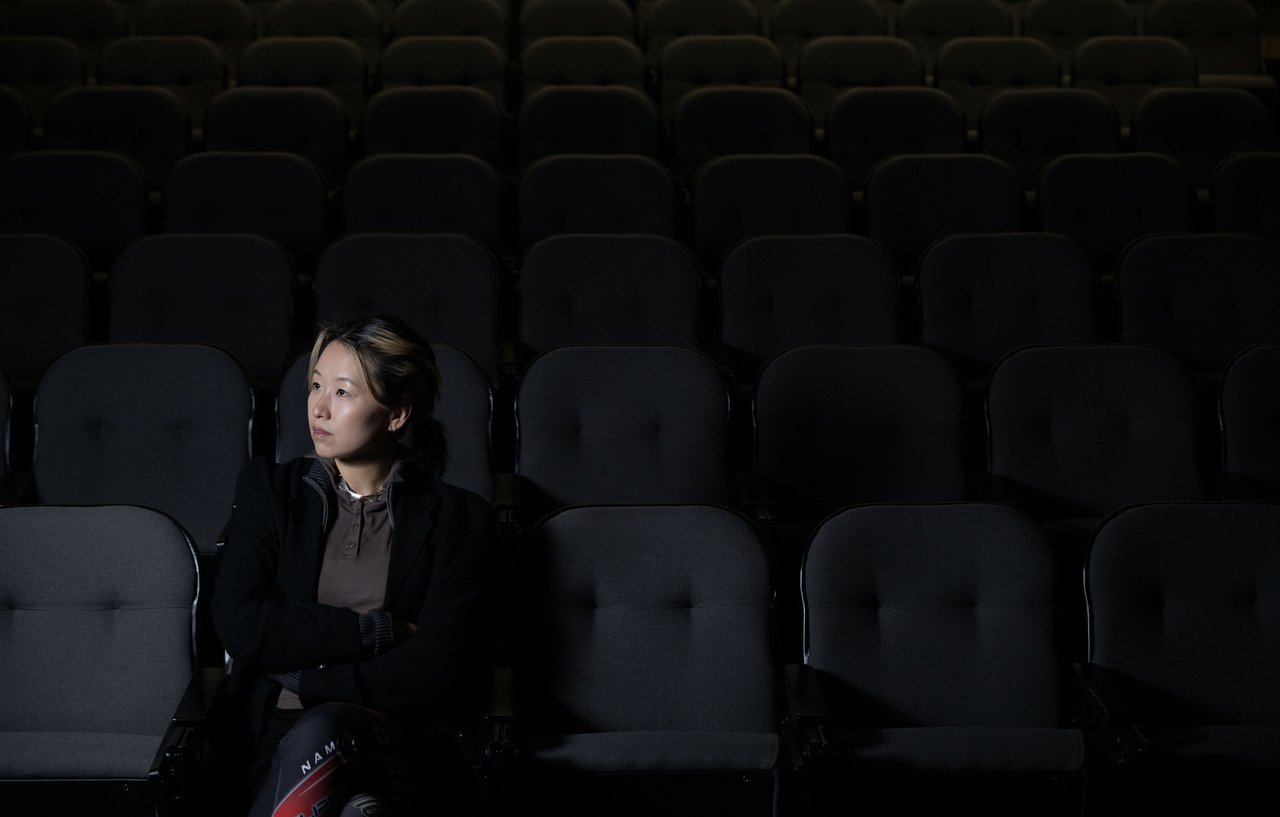
While “Korean Bloom” is her first film as a director and screenwriter, she had already worked in the film industry for six years as a junior producer, making films in various genres before entering the National Film School of Denmark.
As a lover of animation, it was only natural and fitting that her directorial debut would be with in that form. “I think the animation medium really responds well to me because I’m interested in creating surrealistic, magical, weird stories. I think animation has this kind of dreaminess where everything is possible,” she says.
Her love of animation reaches far back. “I have an old video, I think it’s the day or two days after I came to Copenhagen. My mother is sitting with me on her lap, and we are watching the old Looney Tunes cartoons on the television and I am sitting, staring at the TV,” she recalls.
Adopted at 5 months old by a Danish couple, her adoption file contains scant information — place of birth, age, Korean name. “Very little information about my birth parents, but it was mostly medical information such as their height and weight,” she says.
Moving to Korea with her husband last October for a research project, Skytte decided to reach out to the Truth and Reconciliation Commission to start the search for her birth mother. She had just completed her application a couple of weeks before the interview.
The recently launched third Truth and Reconciliation Commission will focus on alleged human rights violations in overseas adoption programs, among other rights violations. In March 2025, the second commission released an interim report that stated the government bears responsibility for human rights violations linked to overseas adoption programs. In October last year, President Lee Jae Myung apologized for the rights violations and the government has pledged to phase out all foreign adoptions by 2029.
Denmark, where 7,220 Koreans were adopted in the 1970s and '80s, has the highest per capita rate of Korean adoptees in the world. A report in January 2024 found systematic illegal behavior in adoption programs in Korea during those two decades. The report also said that Danish adoption organizations sought to maintain a high number of adoptions of Korean children in a specific age group and health profile.
“If you met me five years ago, I think I would have been just fine with not meeting them (birth parents) at all,” she says. “But watching my friends have kids and imagining what it would be like to have children myself sparked, maybe, the longing to reconnect with my birth mother.”
Skytte admits she does not have much hope for the search — she has heard many stories about the process and other adoptees feeling disappointed and left with anger. “For me, I would just like to know if my birth mother is still alive and if she is, if there’s some way I could come in contact with her,” she says.
“I am curious but I am also cautious of this journey, because I don’t know what will come up.”