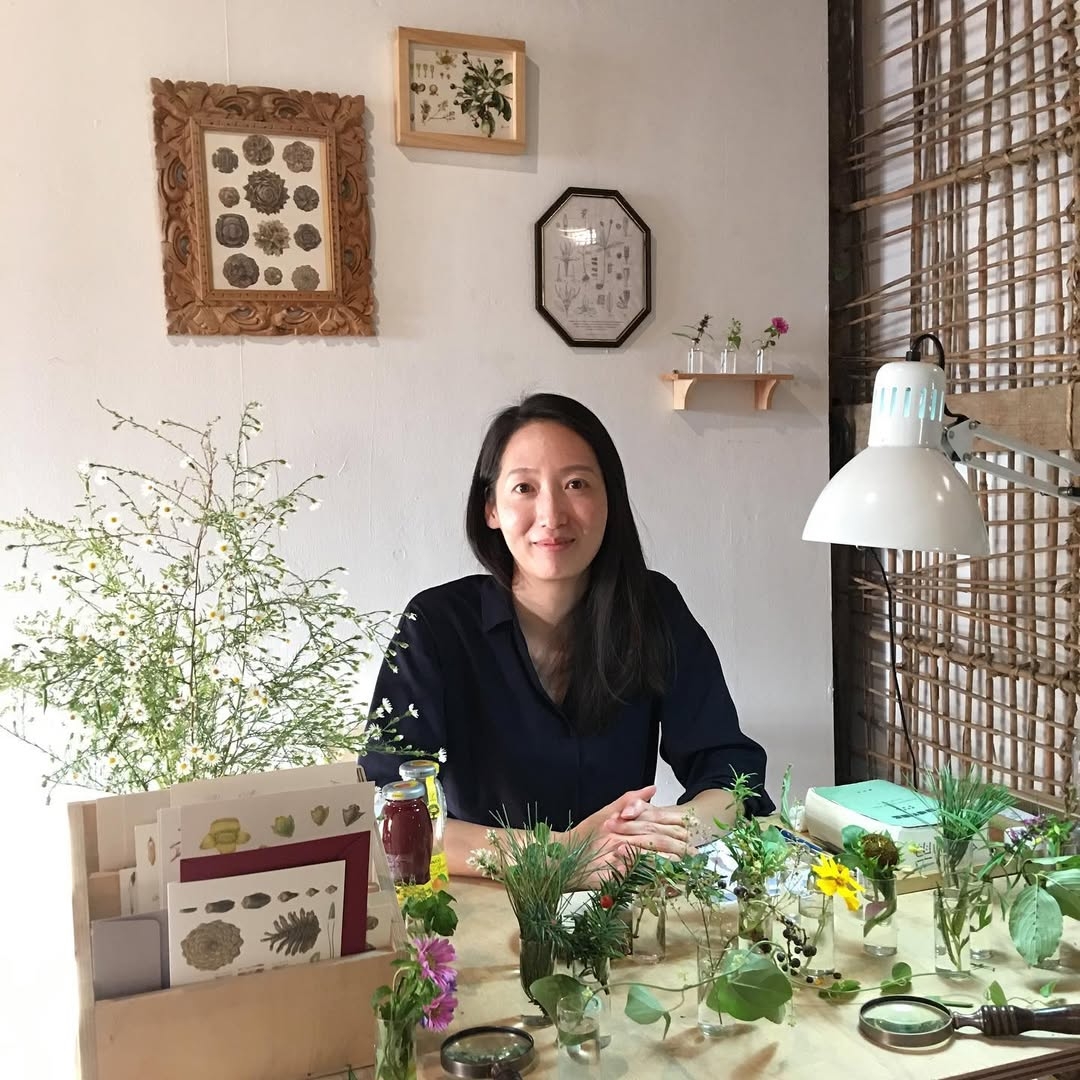
Plants bloom and fade in their season. Petals and leaves fall at their appointed time, and the remarkable mystery is that plants prepare the place where a petal will eventually let go, writes the Korean botanist and award-winning botanical illustrator Shin Hye-woo in her book “A Botanist’s Forest Diary.”
They produce a substance called lignin along that line, forming a kind of natural seam. When the moment comes, the petal slips away cleanly from the plant, parting at precisely the spot where it was meant to fall. Each step unfolds in sequence, perfectly ordered.
To Shin, every event in nature is both marvelous and inevitable, which makes it all the more beautiful.
“Many people assume plants are ‘still.’ They appear motionless before sprouting or blooming,” Shin said in a recent interview with The Korea Herald. “But they’re incredibly busy. Beyond what human eyes can observe, they are constantly changing -- growing, twisting, preparing. They are very lively beings.”
For Shin, such realizations about plants have also become lessons about life — insights that have captivated her for decades.
Now 40, she has spent nearly her entire life surrounded by plants. Fascinated by them since childhood, she studied biology and later taught herself to capture them in meticulous scientific drawings. Her dedication to botany eventually brought her international recognition.
In 2025, she became the first Korean recipient of the Jill Smythies Award, presented by the Linnean Society of London, the world’s oldest biological society, founded in 1788. The prize honors excellence in botanical illustration that aids plant identification, with the emphasis on scientific accuracy and the precise portrayal of diagnostic characteristics.
Before that, Shin had already made history at the Royal Horticultural Society’s Botanical Art Show in Britain, where she won four gold medals for her work -- three prizes consecutively, including two awards for best botanical art exhibits and a judge’s special prize -- the first artist in the exhibition’s history to achieve that feat.
Where science meets art
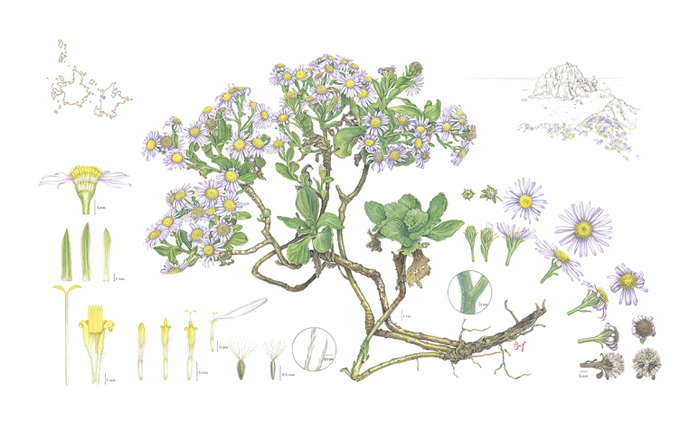
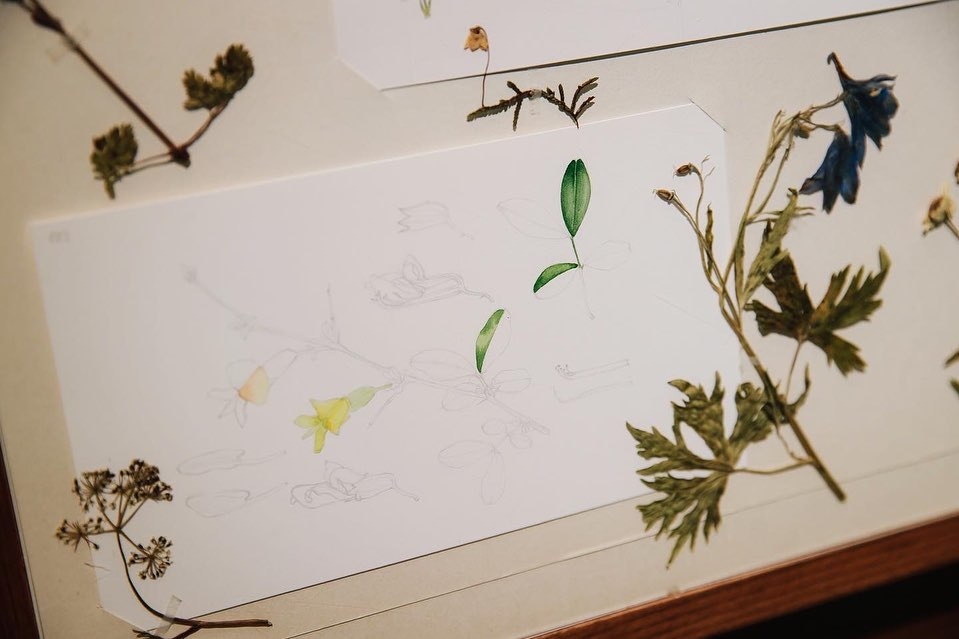
Botanical illustration is grounded in scientific research. Artists study academic research on a plant, examine specimens and analyze its structure in detail before translating that knowledge into a drawing. Imagine how Homo sapiens might be described by an extraterrestrial observer.
Some might wonder why drawings are necessary when photographs and laboratory samples are available. But each has its limitations.
“Pressed plant specimens are dried and flattened. Because plants consist largely of water, much of their volume disappears in the process. Details shrink, bend or break. Photographs capture information as well, but each image isolates only a single perspective,” explained Shin.
That is where illustration becomes valuable.
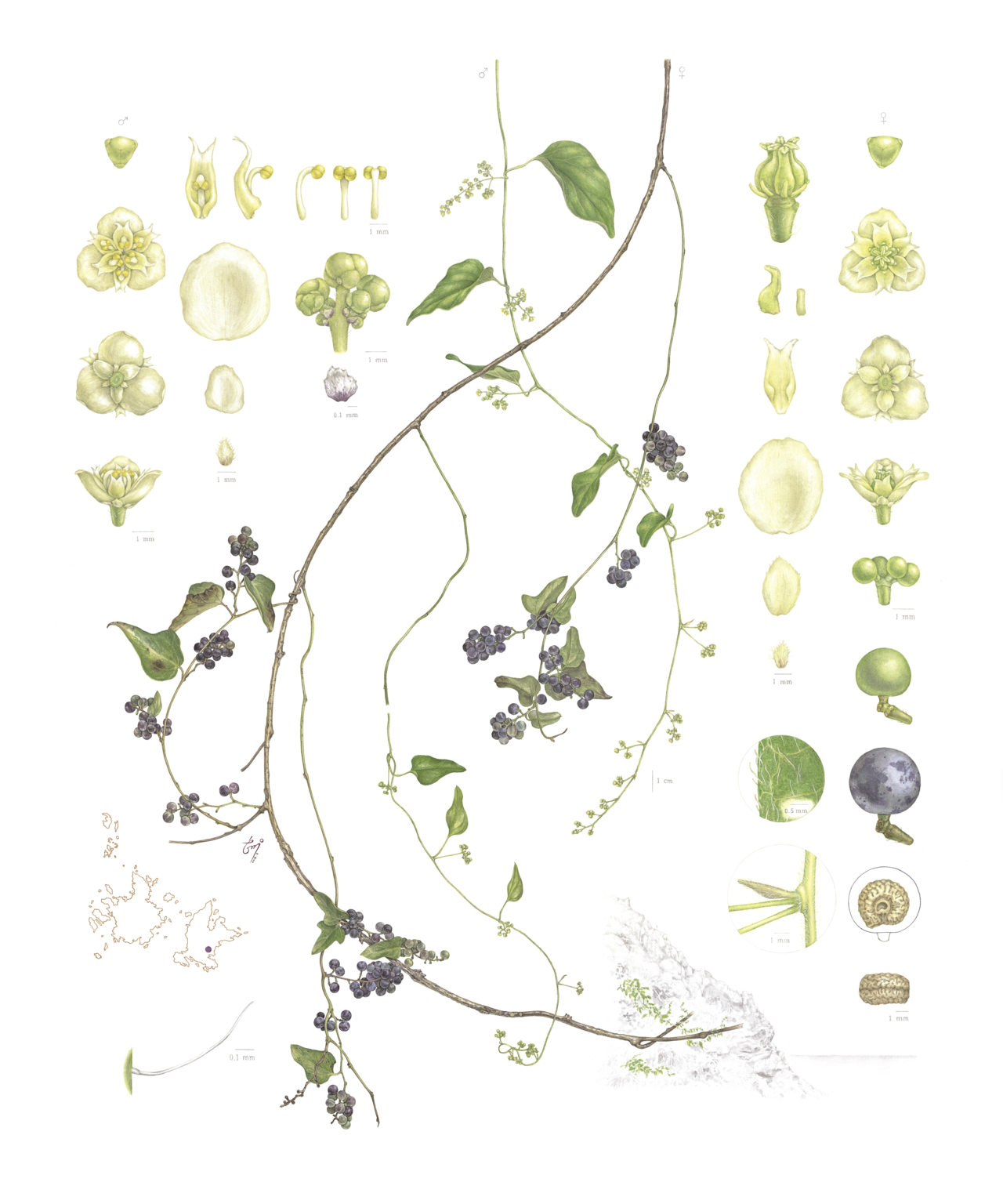
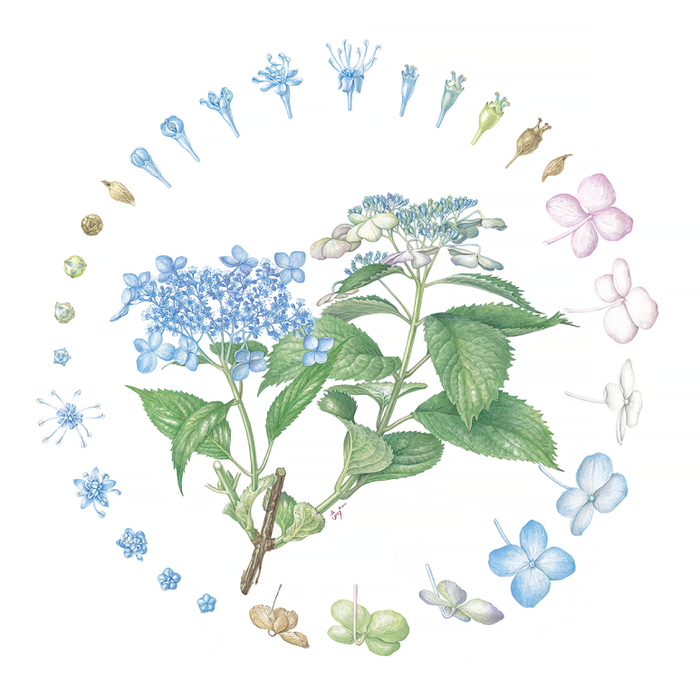
“A drawing can gather all of that information into a single image,” she said. “It captures the most typical form of a plant as accurately as possible. To represent a species, the drawing has to contain all the essential information, so that someone looking at it can understand the plant as clearly as if they were reading a scientific paper.”
Within a single species -- Homo sapiens, for example -- individuals vary widely. Some are tall, others short; eye size and hair color differ. If one were to represent humanity in a single drawing, the artist would have to study many different people and decide which traits best capture the species as a whole. A botanical illustration works in much the same way: distilling variation into a scientifically accurate visual summary of a plant. Such projects often take years to complete, requiring extensive fieldwork and careful study.
Her major projects include detailed illustrations of Lauraceae in Korea, heterotrophic plants in Korea, plants and seeds of Dokdo Island, and an ongoing series documenting the seeds and cones of Korean pine species.
“Future scientists will look at these images. So I try to study as much literature as possible and make sure no important information is missing.”
Capturing nature’s beauty
Becoming a botanist, Shin said, felt inevitable. She grew up in the countryside, surrounded by hills, fields and rivers. Her parents, noticing her fascination with plants, gave her a children’s field guide.
“Plants were the most beautiful things to me,” she said. “I always wanted to know more about them. So I studied them and observed them. And as I learned, I began to want to share what I discovered with others.”
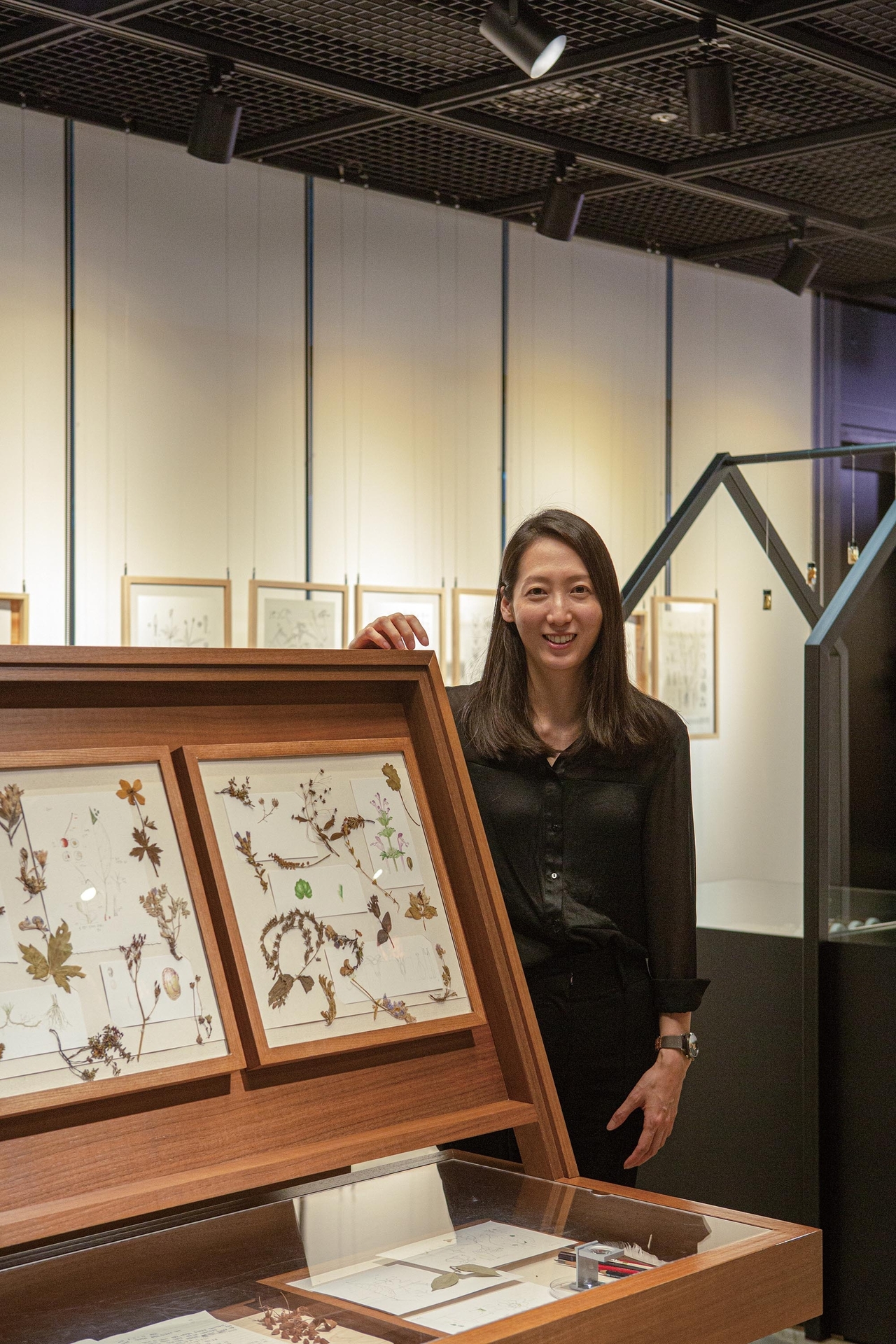
Shin had always loved to draw as well. In college, she majored in biology while also studying fashion design, continuing her art training along the way. A professor who spotted her sketching fashion illustrations in the laboratory suggested she try botanical illustration -- a field that would allow her to bring together the two things she loved most.
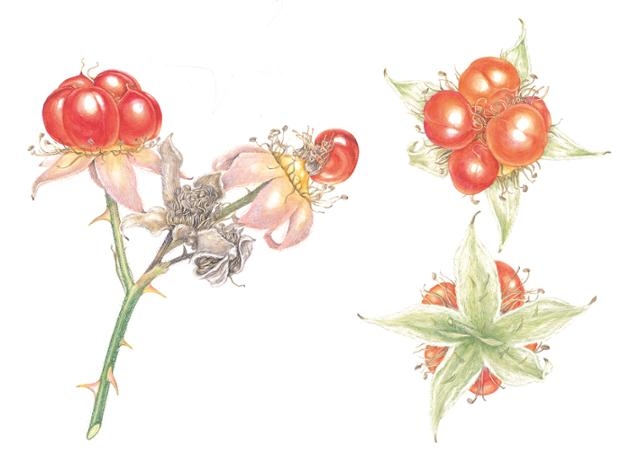
For some time, Shin said, she didn’t quite understand when people called her drawings beautiful. Given the painstaking research behind them, she had expected viewers to admire them for being “scientific.”
“Instead, whenever I held an exhibition, people would come up and say the drawings were pretty. At first, I felt a little disappointed.”
Then one day during an exhibition, she looked out the window and noticed the trees and flowers outside. People paused to admire them, saying, “Wow, they’re beautiful,” and then turned to the drawings on the wall and said the same thing.
“That was when it clicked. I realized, of course, that nature is beautiful. And I’m simply drawing something that is already beautiful.”
Lessons from plants
Plants also embody a kind of peaceful living that Shin admires. Unlike animals, they do not hunt or consume other creatures. Instead, plants create their own energy through photosynthesis, serving as the primary producers that sustain life on Earth.
“Sometimes I wish people could live as peacefully as plants. But humans are animals. Even if we choose vegetarian diets, we still consume other living things.”
Her scientific work has also shaped how she thinks about environmental loss.
“Studying plants and biology is ultimately about conservation. We study which species exist, where they live and how they are distributed so we can better understand how to protect them,” said Shin.
“We see firsthand how serious the damage from environmental problems can be. Scientists estimate that about 150 species of living things disappear every 24 hours. Because there are so many plants, it can be easy to think the loss of a single species is not a big deal. But imagine if Homo sapiens disappeared. If all humans vanished from the Earth, that would be an enormous event. In that sense, the loss of even one species is something just as significant.”
Such reflections have led her to think more deeply about humanity’s place on the planet.
“I’ve come to think that I shouldn’t take up too much of this Earth. I’m just another living being who will be here for a while and then disappear. A foxtail grass lives its whole life without harming the Earth. When I think about that, I find myself reflecting on my own life -- how much I possess and how much waste I leave behind.”
Lately, Shin’s attention has turned to so-called weeds. The country house and land she bought with her parents about a year ago are overgrown with them.
“But the word ‘weed’ itself is very human-centered. We call plants weeds simply because they aren’t useful to us or because they grow where we don’t want them,” said Shin.
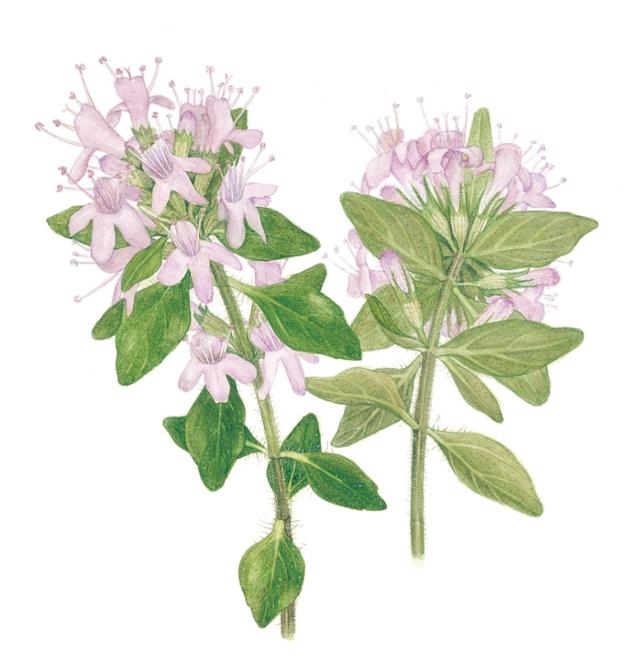
“I think of plants and myself as beings that each occupy our own place on Earth. As someone who studies plants and draws them, I feel a deep affection for them. There aren’t many people who both study plants and illustrate them, so I hope to keep sharing the world of plants as I see it through my drawings.”
hwangdh@heraldcorp.com