Lee orders introduction of fuel price ceiling, urges swift execution of 100 trillion won market stabilization package
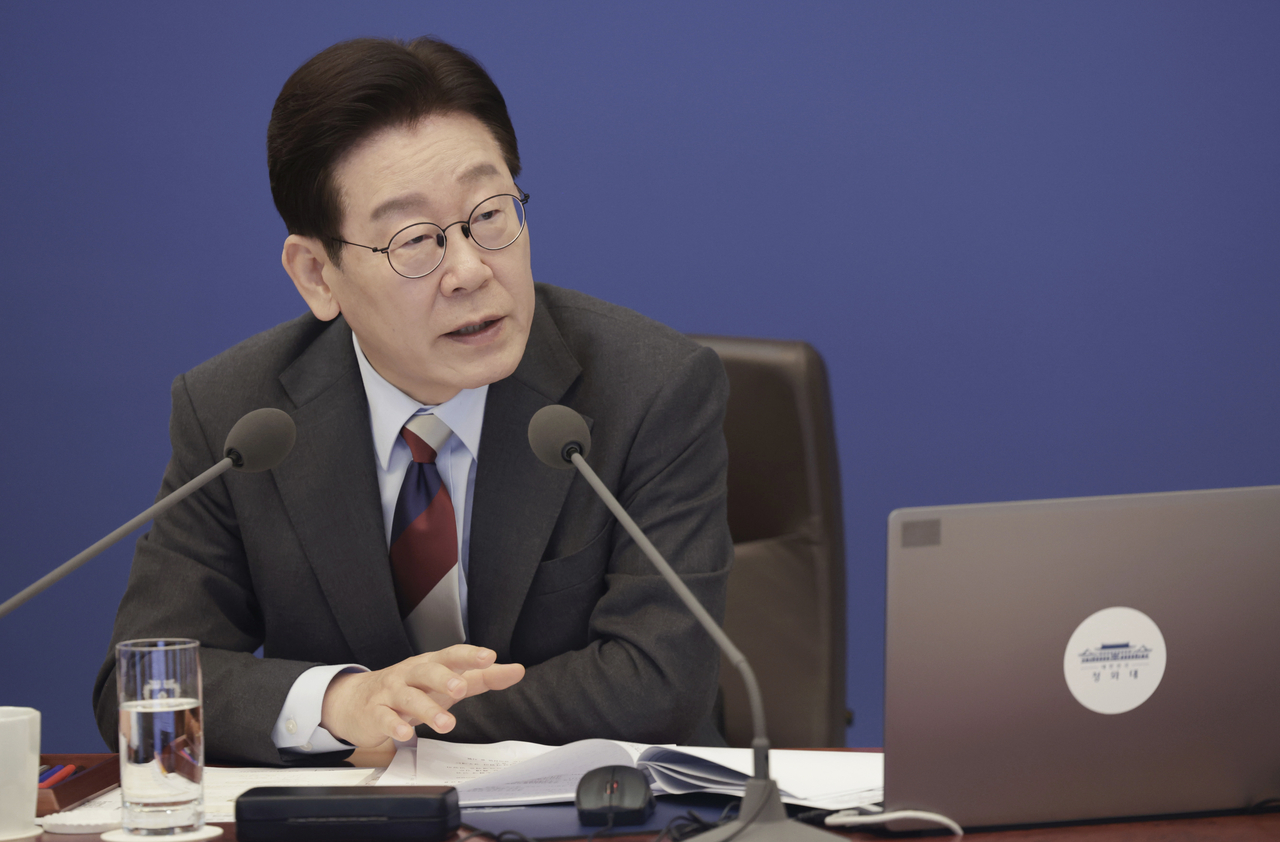
President Lee Jae Myung ordered the mobilization of all available means, including military aircraft, for the safe evacuation of South Korean nationals from war-affected Middle Eastern countries in case of contingencies.
Lee convened an extraordinary Cabinet meeting Thursday morning to discuss the government’s response measures to the ongoing war in the Middle East after returning the previous night from his four-day state visit to Singapore and the Philippines.
"While minimizing damage to the economy, industry and people’s livelihoods is important, the most urgent priority above all is the safety of the public," Lee said during the live-broadcast meeting.
Lee ordered related authorities to "prepare meticulous emergency evacuation measures in double and triple layers in preparation for any contingency."
He instructed officials to "establish and implement a swift and safe evacuation plan based on cooperation with friendly countries if necessary," directing thorough identification, without omission, of Korean nationals currently staying in the affected areas — including expatriate employees, business travelers, students studying abroad and tourists.
"Please mobilize all possible means, including military aircraft, chartered planes and land transportation," Lee said. "In addition, please make every effort to ensure the safety of our vessels and seafarers currently in Middle Eastern waters."
A total of 4,935 South Koreans were staying in 14 Middle Eastern countries on short-term visits, while the total number of South Korean nationals in those countries stood at 18,472 as of press time, Foreign Minister Cho Hyun said. No casualties among South Korean nationals in the countries have been confirmed.
"We are currently holding discussions on plans to deploy chartered aircraft and military transport aircraft through the Embassy in the United Arab Emirates, the Consulate General in Dubai and the Embassy in Oman," Cho said.
Defense Minister Ahn Gyu-back responded that "the ministry is operating a 24-hour crisis response system."
"The ministry is strengthening its readiness so that military transport aircraft can be dispatched immediately if support is requested for the evacuation of South Korean nationals," Ahn said.
Ahn also said the personnel and equipment of Korean troops deployed in the Middle East region remain secure. South Korea’s deployed units currently include the Dongmyeong Unit in Lebanon, the Akh Unit in the United Arab Emirates, and the Cheonghae Unit conducting vessel escort operations in waters off the Gulf of Aden near Somalia.
"The overseas deployed units are strengthening their readiness (to defend) the units' force protection facilities while establishing safety measures within their respective areas of operation.”
Minister of Finance and Economy Koo Yun-cheol reported that there are currently 38 South Korean vessels in the Strait of Hormuz and nearby waters, including 26 inside the Strait of Hormuz. No damage to Korean vessels has been reported so far.
Koo explained that 2,592 construction workers from 45 South Korean companies are working at 289 project sites across the Middle East. Some workers have evacuated, while construction is expected to resume in areas deemed safe.
'Zero tolerance for profiteering amid market turmoil'
Speaking at the Cabinet meeting, Lee also underscored that "we must actively respond to the widening volatility in financial markets such as stocks and exchange rates."
"The government should accelerate policy efforts to stabilize the capital market and improve its fundamentals, and appropriately and swiftly execute and manage the 100 trillion won market stabilization program prepared to preemptively block capital market instability," Lee said.
The Financial Services Commission said Wednesday it has completed preparations to immediately activate a 100 trillion won-plus-alpha ($68.3 billion) financial package, as volatility builds amid the widening Middle East conflict.
“Please move quickly to provide prompt and broad policy financial support for companies with high dependence on Middle East exports and sectors such as marine transportation, which are directly affected by this situation," Lee said.
Lee also warned, "At times like this, fake news tends to run rampant, and criminal acts such as market manipulation should also be thoroughly blocked."
"In particular, forces that seek to profit by inciting confusion in the national economy must be held strictly accountable under a principle of zero tolerance."
Lee directed the Cabinet to come up with emergency measures to stabilize supplies of crude oil, gas and naphtha — as well as swift efforts to diversify energy import sources over the mid to long term.
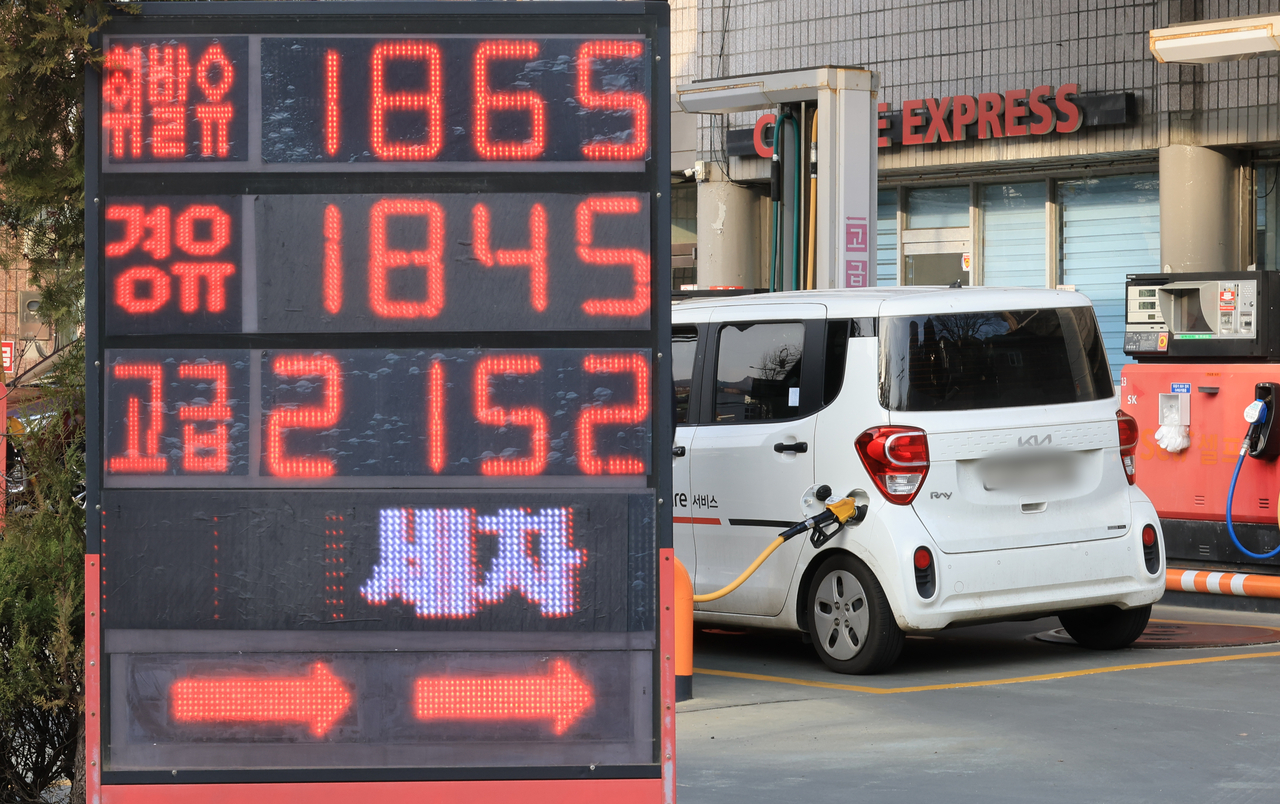
Lee singled out the sharp rise in gasoline and diesel prices at gas stations despite the absence of any supply disruption, calling the situation “exceptional” and ordering the introduction of a price ceiling for fuel.
“Applying a uniform cap nationwide could create other problems, so designate realistic maximum prices quickly by region and by fuel type,” Lee said. “Fuel price gouging appears difficult to regulate under the current system, so please promptly review the framework and establish the necessary mechanisms.”
dagyumji@heraldcorp.com