Trump announces new 10 percent global tariffs after court setback
The US Supreme Court ruled Friday that President Donald Trump’s sweeping “reciprocal tariffs” imposed on nearly all trading partners, including South Korea, were unlawful, injecting fresh uncertainty into global trade and existing agreements tied to the duties.
In a 6-3 decision, the high court ruled that the 1977 International Emergency Economic Powers Act, which Trump used to levy tariffs on imports, does not grant the president authority to impose such measures, upholding earlier decisions by lower courts that had also deemed them illegal.
“IEEPA does not authorize the President to impose tariffs,” Chief Justice John Roberts wrote in the ruling, joining two other conservatives and three liberals in the majority.
“The president asserts the extraordinary power to unilaterally impose tariffs of unlimited amount, duration, and scope. In light of the breadth, history, and constitutional context of that asserted authority, he must identify clear congressional authorization to exercise it,” Robert said.
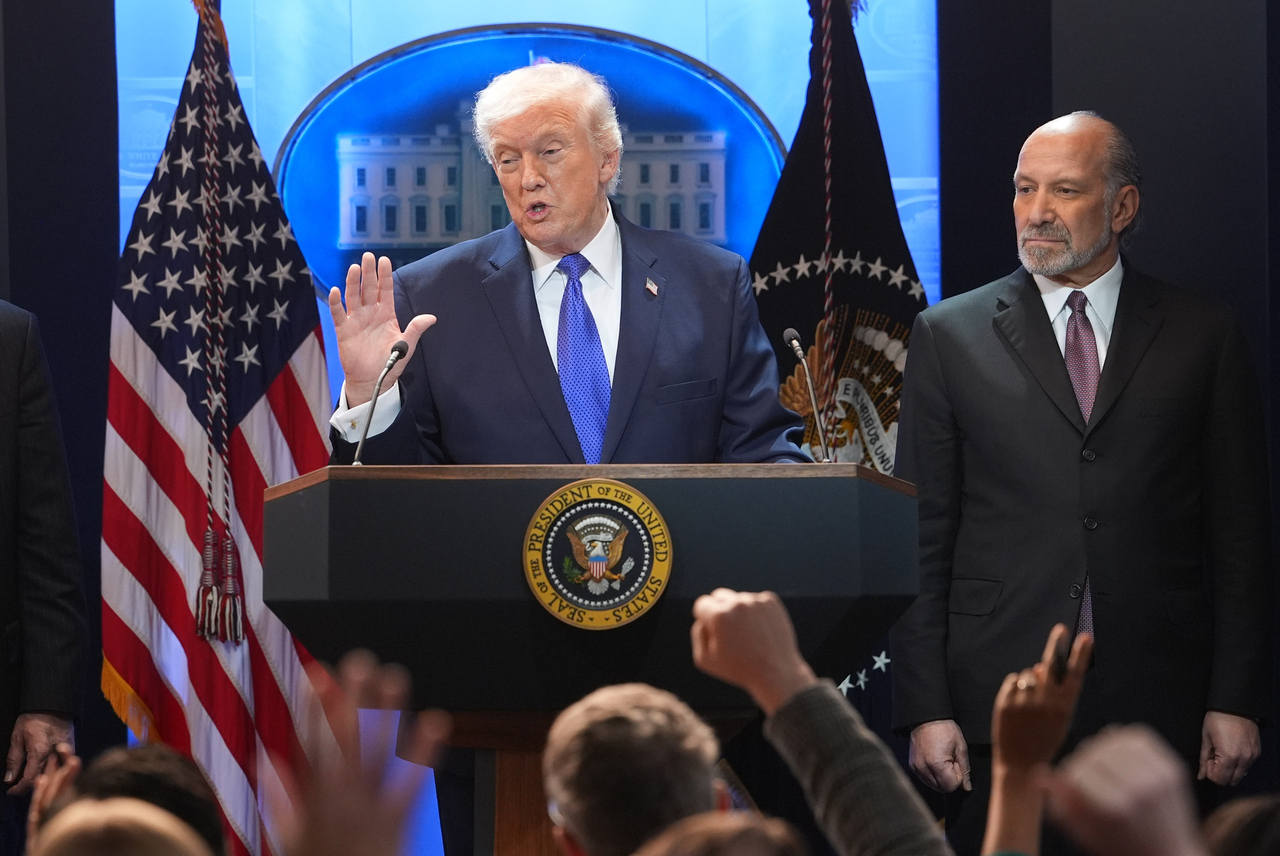
The ruling drew a fierce response from Trump, who announced he would impose an additional 10 percent global tariff on top of existing duties, at a White House press briefing. The new levies, set to take effect within three days, will remain in place for up to 150 days and are intended to replace some of the duties struck down by the court.
Trump said the fresh duties would be imposed under a different law -- Section 122 of the Trade Act of 1974 -- a statute that has never previously been invoked. It grants the president authority to levy tariffs of up to 15 percent for up to 150 days on any country in response to “large and serious” balance of payment issues.
Friday's ruling effectively dismantled the legal foundation for the reciprocal tariffs Trump pursued after declaring a national emergency over the US trade deficit in April last year. The measures included a baseline 10 percent tariff applied to nearly all imports worldwide, as well as additional country-specific reciprocal tariffs.
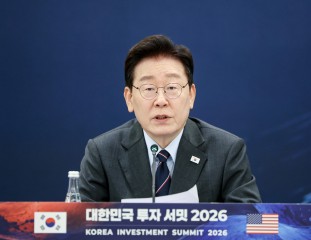
South Korean goods were subject to a 15 percent reciprocal tariffs, reduced from the previous 25 percent, after two countries reached a bilateral agreement after series of negotiations. Under the deal reached late last year, Seoul pledged to invest $350 billion in the US, in return for the tariff reduction.
With the reciprocal tariffs now ruled illegal, the decision casts doubt on the trade agreement reached between Washington and Seoul. The deal could face renewed scrutiny, raising the possibility of renegotiations or diplomatic tensions and confusion among businesses.
South Korea's presidential office Cheong Wa Dae said it will review response in the direction that best serves the national interests, following the court ruling.
At the press conference, Trump called the court's decision "deeply disappointing” and slammed the justices who ruled against him. In addition to the new 10 percent tariff, he said his administration would pursue alternative legal measures to maintain his tariff policy.
"We have alternatives," Trump said of his other options for duties, saying perhaps the country could collect “more money” as a result.
"The good news is that there are methods, practices, statutes and authorities, as recognized by the entire court and also is recognized by Congress, which they referred to, that are even stronger than the IEEPA tariffs available to me as the president of the United States," he said.
Trump has already relied on other statutes to levy tariffs, including Section 232 of the Trade Expansion Act, which he invoked to slap 50 percent tariffs on steel and aluminum, which are not affected by the latest Supreme Court ruling.
Trump said he would turn to other legal authorities, including Section 301 of the 1974 Trade Act -- which Trump frequently used during his first term -- as well as Section 338 of the 1930 Tariff Act.
In the lead-up to the ruling, the Trump administration had warned it could be forced to unwind trade deals with other countries and reimburse importers for substantial sums already collected, though the court on Friday did not immediately order the refunds.
“They take months and months to write an opinion, and they don’t even discuss that,” Trump said referring to refunds. "We’ll end up being in court the next five years."
The US government could be required to refund more than $175 billion to importers, according to estimates from the Penn-Wharton Budget Model cited by Reuters.
Victor Cha, Korea Chair at the Center for Strategic and International Studies, put the estimated refund at up to $150 billion in tariffs collected from more than 300,000 companies. "Korean companies may be able to reclaim all duties they have paid since February 2025," he said in a newsletter published last month.
Cha said that Korean companies most affected by the ruling include automakers such as Hyundai Motor, Kia and auto parts manufacturers, as well as electronics firms like Samsung Electronics and SK Group, pharmaceutical companies including Celltrion and chemicals and industrial manufacturers such as LG, Lotte, Kumho Petroleum and Hanwha Solutions.
"If Trump seeks to maintain tariffs through other means, this will introduce even greater uncertainty on the heels of a hard-fought agreement that provided a degree of stability in the alliance for the Lee Jae Myung government," said Cha, noting Lee could face domestic pressure to walk away from the deal, though doing so would risk jeopardizing key gains such as shipbuilding and nuclear submarine cooperation.
sahn@heraldcorp.com
![[Graphic News] Average parental age of S. Koreans rises](https://wimg.heraldcorp.com/news/cms/2026/09/27/news-p.v1.20260927.0bcbf944ca9043c4a6ad4401fcfae25c_T1.gif?type=h&h=800)