Efforts continue to repatriate artifacts removed illegally or under unjust conditions
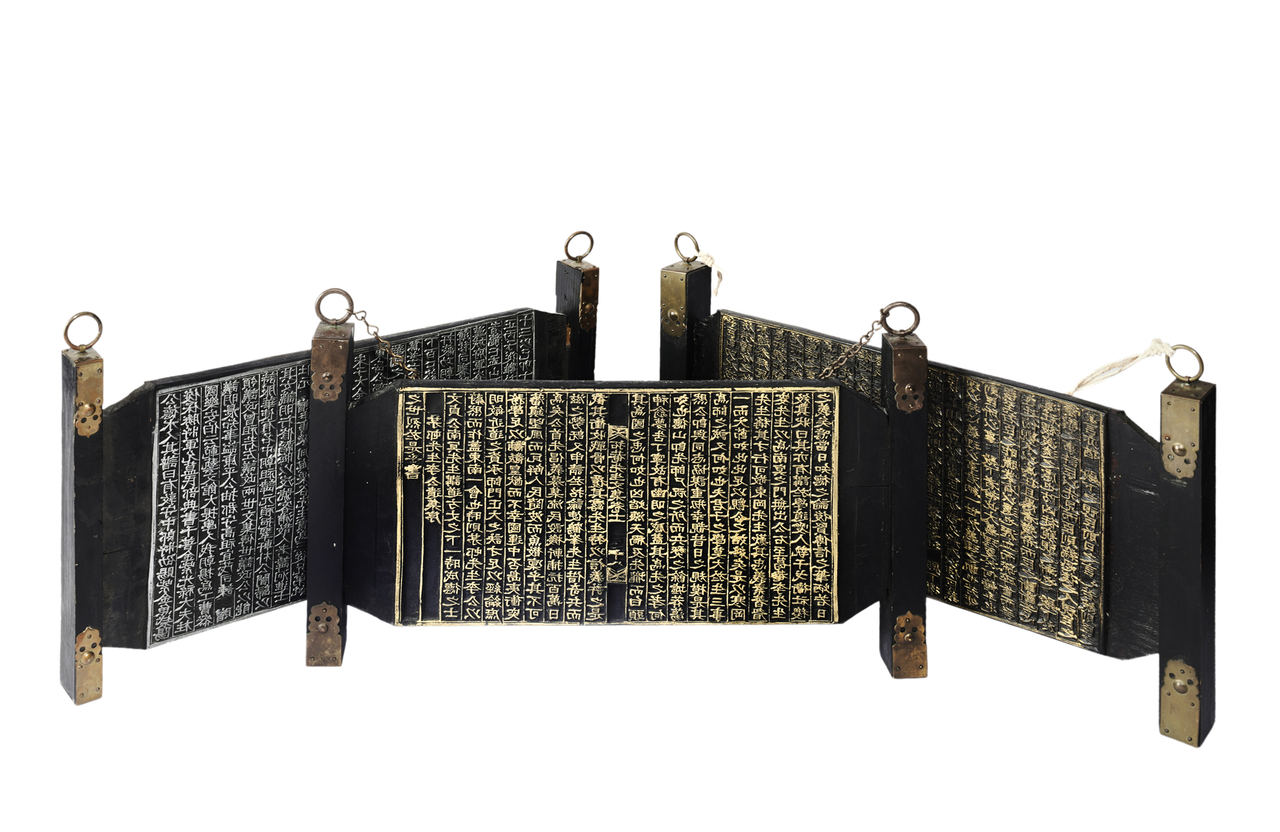
More than 250,000 Korean cultural heritage items are currently overseas, with Japan accounting for the largest share of 43 percent, government data showed Wednesday, reflecting a global dispersal shaped by war, colonial rule, collecting and cultural exchange.
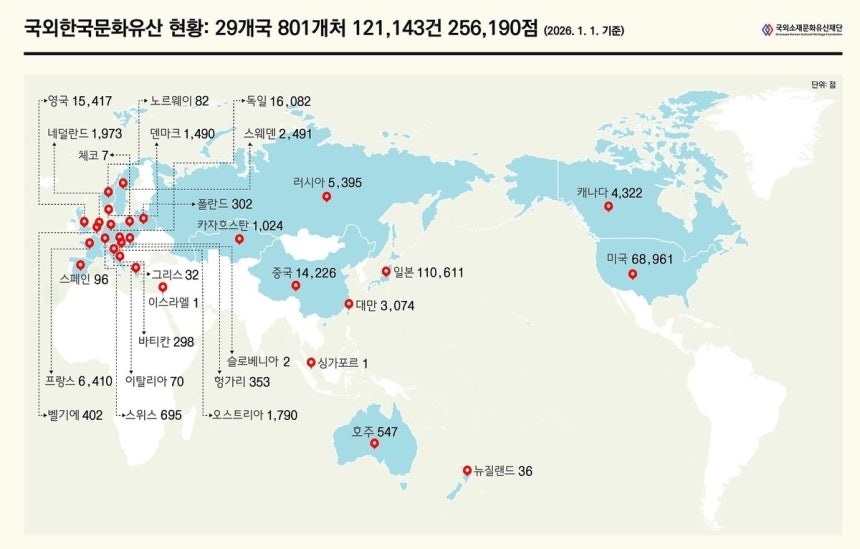
As of Jan. 1, a total of 121,143 catalogued records comprising 256,190 artifacts have been identified overseas, according to the Korea Heritage Service and the Overseas Korean Cultural Heritage Foundation.
The figures are based on surveys conducted at 801 museums, galleries and institutions across 29 countries, including Japan, the US and Germany.
Japan holds the largest share of Korean cultural heritage, accounting for 110,611 items, or about 43.2 percent of all confirmed overseas holdings. Many are housed in major institutions such as the Tokyo National Museum, while others remain in private collections.
The US holds the second-largest share with 68,961 items, followed by Germany with 16,082 and the UK with 15,417.
The total number marks an increase of 8,472 items compared with January last year, when 247,718 artifacts were recorded abroad.
Officials said the steady rise does not necessarily indicate new outflows of cultural property but rather improved documentation and research.
When the foundation was established in 2012, an initial survey identified about 152,915 artifacts overseas as of early 2013. The total has gradually grown each year, surpassing 200,000 items in 2021 as more institutions disclose collection data, often through online archives.
Given that records and acquisition histories are not always fully disclosed, authorities and scholars believe the actual number of Korean cultural objects abroad may be significantly higher.
Korean cultural heritage reached foreign collections through a wide range of historical circumstances.
Many items were lost through theft or looting during periods of foreign intervention in the late 19th century and Japan’s colonial rule (1910-1945). Others, however, left Korea through legal purchases, private collecting, donations or diplomatic gifts.
Authorities have focused repatriation efforts primarily on items believed to have been removed illegally or under unjust conditions.
Recent returns highlight ongoing recovery efforts. Last year, a royal signboard from Gyeongbokgung’s Seonwonjeon Hall was repatriated from Japan with support from Riot Games. Buddhist manuscripts from the Goryeo Kingdom (918-1392) and Buddhist paintings from the early Joseon era (1392-1910) also returned to Korea.
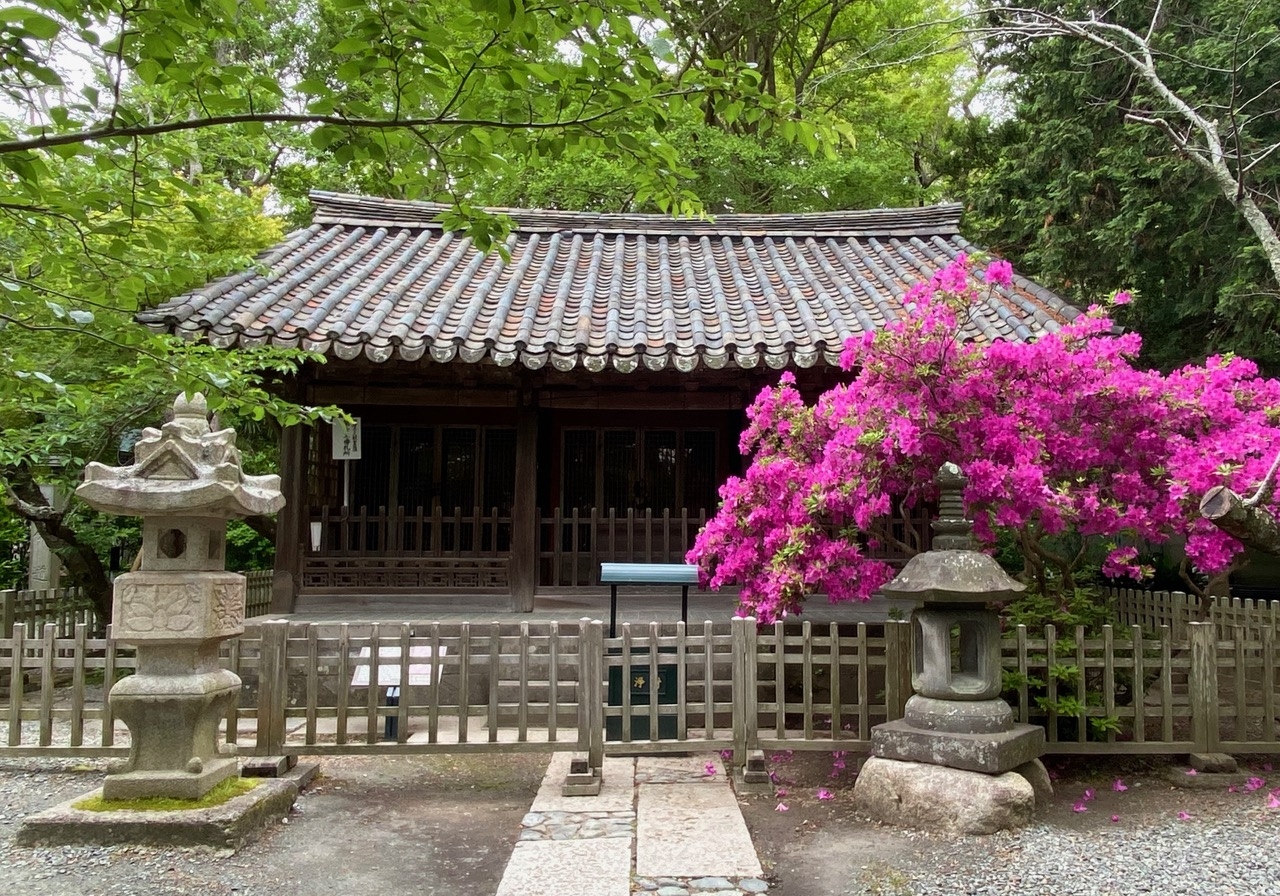
In a rare large case, Gwanwoldang, a historic structure taken to Japan during the colonial era, was dismantled and returned in its entirety after years of negotiations. The shrine has been restored and reinstalled in Paju, Gyeonggi Province.
As of January, 1,299 repatriation cases involving 2,855 artifacts have been completed through the foundation. Donations accounted for the vast majority, 96.2 percent, while 3.8 percent were recovered through purchase or negotiated acquisition.
gypark@heraldcorp.com