When the Renaissance blossomed in Italy, it did so with decisive backing from the Medici family, whose patronage sustained artists and reshaped European culture. Centuries later, a quieter but no less consequential form of patronage is helping Korean arts endure — and, in some cases, thrive — on the global stage.
Herald Business examines the figures sometimes referred to as Korea’s “modern-day Medicis”: business leaders, entertainers and private citizens whose financial and moral support underpins the country’s performing arts ecosystem. — Ed.
A '3 percent miracle'
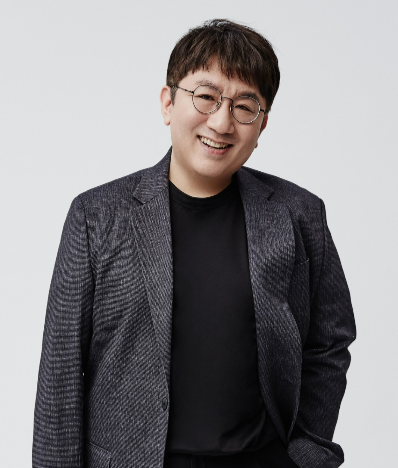
Open the National Ballet of Korea’s season program, and the list of patrons reads like a cross-section of Korean influence. Actor Kim Soo-ro has supported the company since 2020, while Bang Si-hyuk, chairman of entertainment giant Hybe, has been a patron for three consecutive years.
Other prominent supporters include actress Lee Young-ae, who donated 30 million won ($20,600) to the KBS Symphony Orchestra, and Hong Ra-hee, former director of the Leeum Museum of Art, who contributed 500 million won to the Seoul Arts Center.
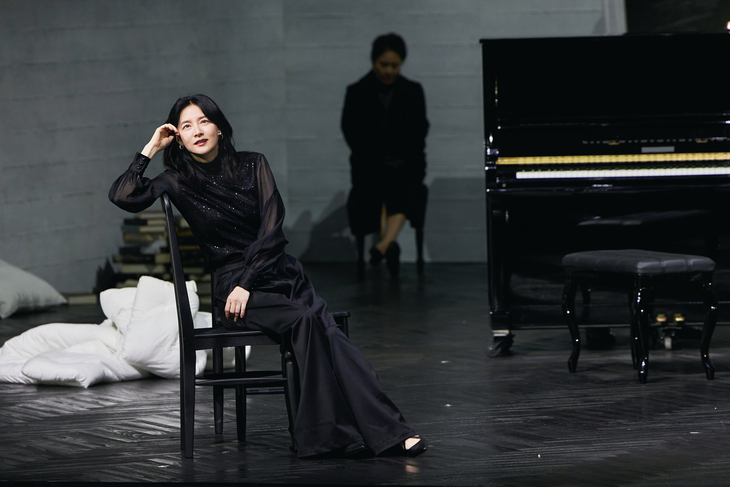
Together, such contributions make up what arts insiders call Korea’s “3 percent miracle.”
“Private sponsorship typically accounts for just 1 to 3 percent of funding for performing arts organizations,” said one industry insider. “Given the lack of extraordinary incentives, the fact that private donations exist at all is almost miraculous.”
According to the Yearbook of Professional Arts Organizations published by the Arts Management Support Center, donations accounted for 3.2 percent of arts organizations’ funding in 2019, falling sharply to 1.3 percent by 2022. By comparison, self-generated income stands at roughly 18 percent, while public funding covers nearly 80 percent — underscoring the sector’s heavy reliance on government support.
The contrast with the United States is stark. American arts organizations derive approximately 60 percent of funding from ticket sales, around 30 percent from private donations, and less than 10 percent from public sources.
“Government support is decreasing every year, which makes operations difficult,” said Melissa Ngan, CEO of the American Composers Orchestra, during a visit to Korea in November. “Fortunately, private donations are increasing, giving us much-needed breathing room.”
Beyond charity: Taste, identity and inspiration
The modest scale of arts donations in Korea also reflects public giving habits. While nearly 60 percent of Koreans participate in some form of charitable giving, most donations are directed toward social welfare or disaster relief. Cultural and artistic contributions remain marginal and are often framed as corporate social responsibility rather than personal engagement.
For those who do support the arts, insiders say the motivation goes beyond noblesse oblige.
Korea’s leading patrons often use the arts to express personal taste, seek creative inspiration, or cultivate long-term value that cannot be quantified financially.
At the Seoul Arts Center’s Hangaram Design Museum, a recent photo exhibition by the National Ballet of Korea — "Still in Motion" — offered a visible testament to this engagement. More than 80 patrons were acknowledged at the entrance. The eight-day exhibition, which reinterpreted seven signature ballets through the work of six photographers, drew over 4,000 visitors, a record for a free exhibition.
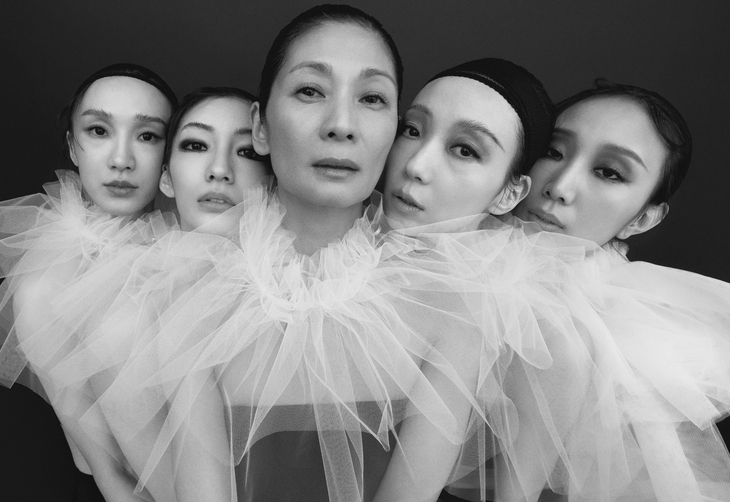
“Documenting the company’s history and present cannot be done with public funds alone,” a National Ballet official said. Most patrons, the official added, attend nearly every performance, forming a committed audience deeply familiar with the company’s artistic evolution.
Song Byung-joon, chairman of mobile gaming company Com2us and head of the National Ballet’s patrons’ committee, drew parallels between his industry and ballet.
“Games are a form of comprehensive art, combining story, visuals, music and direction,” he said. “Ballet conveys narrative and emotion through the human body — the purest artistic language. While the genres differ, their essence is the same.”
From first encounter to lifelong commitment

For some patrons, support begins with curiosity and evolves into devotion. Few embody this transformation more fully than the late Lee Woon-hyung, chairman of SeAH Group and founding head of the National Opera’s patrons’ committee.
Initially unfamiliar with opera, Lee became one of its most ardent advocates. He personally purchased tickets for employees, encouraged group attendance, and often went directly from overseas business trips to performances.
“Chairman Lee’s affection for the National Opera was extraordinary,” recalled Lee Seung-jin, vice president of the National Opera. “He laid the groundwork for private patronage at a time when such support was rare.”
Lee’s legacy continues through the SeAH Lee Woon-hyung Cultural Foundation, which supports the National Opera and the Seoul Philharmonic Orchestra and produces rarely staged operas offered to the public free of charge — projects that would be commercially unviable without private backing.
Networks, not just donations
Arts patronage in Korea also functions as a social and professional network. Officials at national arts organizations note that patrons’ committees bring together senior executives, entrepreneurs, and cultural figures, creating spaces where social capital and cultural capital intersect.
“Among younger business leaders, it’s increasingly common to invite clients to a ballet or opera rather than a formal dinner,” said one official. “The setting conveys exclusivity and refinement.”
While premium tickets and early reservations are offered, many patrons remain involved long after such benefits lose their novelty. “People may join for networking,” another official said, “but they stay because they genuinely fall in love with the art.”
From corporate titans to micro donors
Support for the arts is not limited to wealthy elites. Actors, professors, doctors and even rival artists often serve as patrons of national institutions, viewing it as a responsibility to sustain the broader ecosystem.
Actor Kim Soo-ro, a patron of the National Theater of Korea, put it succinctly: “National institutions are the backbone of Korean arts. Supporting them ensures the health of the entire ecosystem.”
In some cases, patrons contribute expertise as well as funding. Medical professionals affiliated with the National Ballet, for example, monitor dancers’ physical condition, offering advice that extends beyond financial support.
Equally vital are “micro donors” — ordinary citizens who give small amounts out of genuine affection for ballet, opera or classical music. Though modest individually, their collective impact is significant.
“In a small organization like ours, donations from people who truly love music give us the strength to continue,” said Jo Shin-ae of the National Symphony Orchestra.
Arts officials note that during the pandemic, many Western arts organizations survived not only through large benefactors but through thousands of small donations — the equivalent of a cup of coffee — that together provided a lifeline.
“Donations without special benefits,” one domestic arts official said, “may be the most active form of cultural consumption — and a long-term investment in the health of the arts.”
(shee@heraldcorp.com)
This is a Herald Business article translated into English using AI and edited by The Korea Herald staff. For the original article, visit www.biz.heraldcorp.com
khnews@heraldcorp.com


![[Graphic News] S. Korea ranks 9th in noodle consumption](https://wimg.heraldcorp.com/news/cms/2026/09/29/news-p.v1.20260929.e3945338add94d57ab3f00f8e6781416_T1.gif?type=h&h=800)