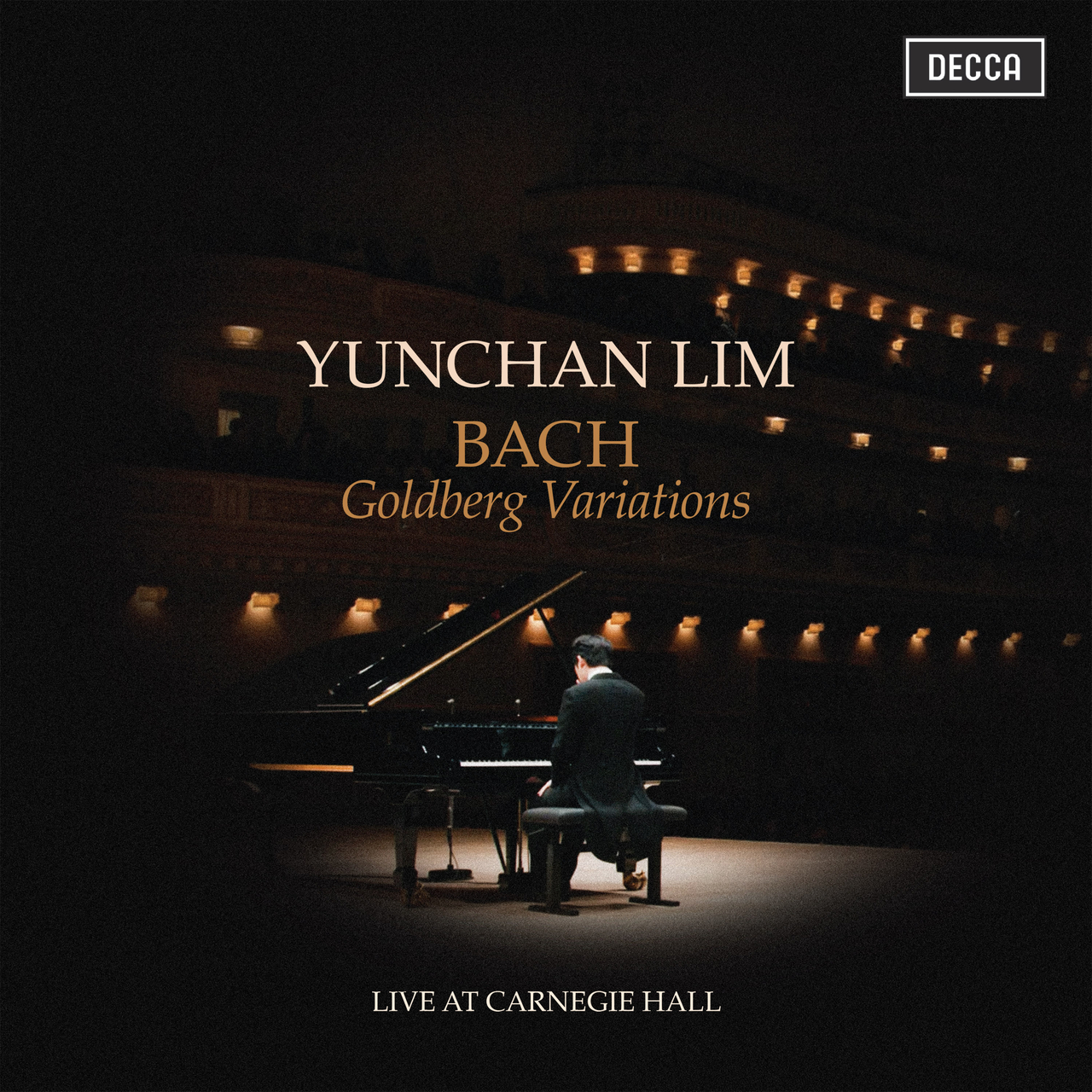
The 21-year-old's fourth Decca album Bach’s Goldberg Variations is a dream-come-true while his recital in dream might signal his next reinvention

For pianist Lim Yunchan, Bach’s Goldberg Variations have lived close to his heart since childhood.
He first encountered the work at the age of eight, after discovering a box set of Bach recordings by Glenn Gould. “When I first listened to it, I was amazed by its grandeur and beauty, and it has remained close to my heart ever since. I’ve dreamt of releasing this piece as a live album from Carnegie Hall,” Lim, who became the youngest person ever to win gold at the Van Cliburn International Piano Competition in 2022, said.
That long-held connection culminated in a live recording at Carnegie Hall on April 25, 2025. Released Friday by Decca, the album marks Lim’s fourth release on the label. The venue carries a quiet historical echo: Nearly 70 years earlier, at age 22, Gould recorded the Goldberg Variations in a studio just a few blocks from the hall.
As for when he felt the time was right to finally record the work himself, Lim, who turns 22 years old in March, describes it simply. “It felt like the time had come,” he said in a recent written interview.
The album captures a state of total immersion. Lim recalls little of the atmosphere or any specific episodes surrounding the performance, remembering instead only the music itself.
Despite this fugue-like state on stage, Lim has a very clear definition of what the music represents to him. Describing the Goldberg Variations as nothing less than "a human life's journey," he explains below how he navigates the tension between classical discipline and his own artistic wildness.
Q. You’ve described the Goldberg Variations as “the journey of a human life.” How did your interpretation take shape between traditional Bach discipline and the freedom you seek as a musician?
Lim: I think the Goldberg Variations are a work in which near-mathematical perfection and deep emotions coexist, and in which the greatest possible freedom exists within absolute order.
Sometimes, when I encounter interpretations that treat Bach as something that must be played without pedal, or that focus almost exclusively on clearly delineating each voice — approaches that turn the music into a kind of museum piece, treating it as preserved rather than alive — I personally feel a sense of regret.
In the end, it seems to me that all great things exist precisely because opposing elements are able to coexist.
Q. The Goldberg Variations are often said to change meaning as a performer grows. What does the work represent to you at this point in your life, and is there a musical attitude you hope to preserve?
Lim: To me, this piece is the most human, full of mischief and humor, while simultaneously drawing out emotions from the deepest parts of the heart. In that sense, I generally prefer not to interpret the Goldberg Variations as endlessly serious or solemn.
Q. Your approach to the Goldberg Variations seems to change from performance to performance. How do you arrive at the Goldberg of a given day?
Lim: Much like waking up every morning with a different kind of music in mind, I find 'that day's Goldberg' through the process of practicing, searching, sculpting and resculpting every single day.
Q. After the final variation, when the music returns to the opening Aria da capo, how does that moment feel compared with the beginning of the performance?
Lim: Rather than something being different in a specific way, I think it may be similar to what the late climber Marc-Andre Leclerc felt each time he crossed a new mountain.
If, moment by moment, you take risks, express yourself in the boldest possible way without fear, and unfold this piece to the very end in the purest way, then in the final moment, the only thought that remains is that life itself is a gift.

Q. You recently spoke about wanting to 'completely change’ the music you’ve done so far. How is this process of breaking away from your past self unfolding now, and why is it necessary for you?
Lim: To be honest, absolutely everything I had played up to that point started to feel unbearable. I disliked it so much that I even thought about wanting to disappear. Even though I search for new music every day, practice every day, think every day and make an effort every day, I still play so poorly that I can’t stand it.
Now, I’m trying to think a little more comfortably, while at the same time trying to live with a bit more ‘soul’ in what I do.
Q. Away from intense practice and the stage, what moments in everyday life feel most grounding to you these days?
Lim: I enjoy evenings when I have dinner with friends or teachers and talk endlessly — not only about music, but also about sports, art and society.
Recently, I’ve been reading Mozart’s letters, then works by Rimbaud, Baudelaire and Holderlin, as well as novels by Han Kang and books by the poet Gi Hyeong-do, whom I admire most. Lately, I’ve settled into reading the Bible.
The Recital in Dream
When asked about future repertoire he wishes to challenge, Lim admitted there were "too many to write down." However, he shared a glimpse into his subconscious — a program he recently performed in a dream.
"I had a dream a few days ago where I gave a recital," he recalled. "In the first half, I played Schoenberg’s Three Piano Pieces, Op. 11 and Bach’s Partita No. 6, BWV 830. In the second half, I performed Beethoven’s Diabelli Variations, Op. 120."
For a pianist who strives to "kill yesterday's music," perhaps this dream setlist is a prophecy of the innovations to come.
gypark@heraldcorp.com