Seoul designers show experimentation, wearability now share same runway
From reconstructed military tailoring to intimate, pajama-soft layers, Seoul Fashion Week’s fall-winter 2026 season has balanced conceptual experimentation with everyday wearability — a signal that Korean designers are refining both their global voice and their connection to local consumers.
Being held Feb. 3-8 at Dongdaemun Design Plaza, the six-day event features 15 brands, each offering a distinct aesthetic, while collectively sketching the evolving identity of K-fashion.
The week opened with Munn on Tuesday. Led by designer Han Hyun-min, the brand has been known for precise tailoring and an experimental edge since its London Fashion Week debut in 2019.
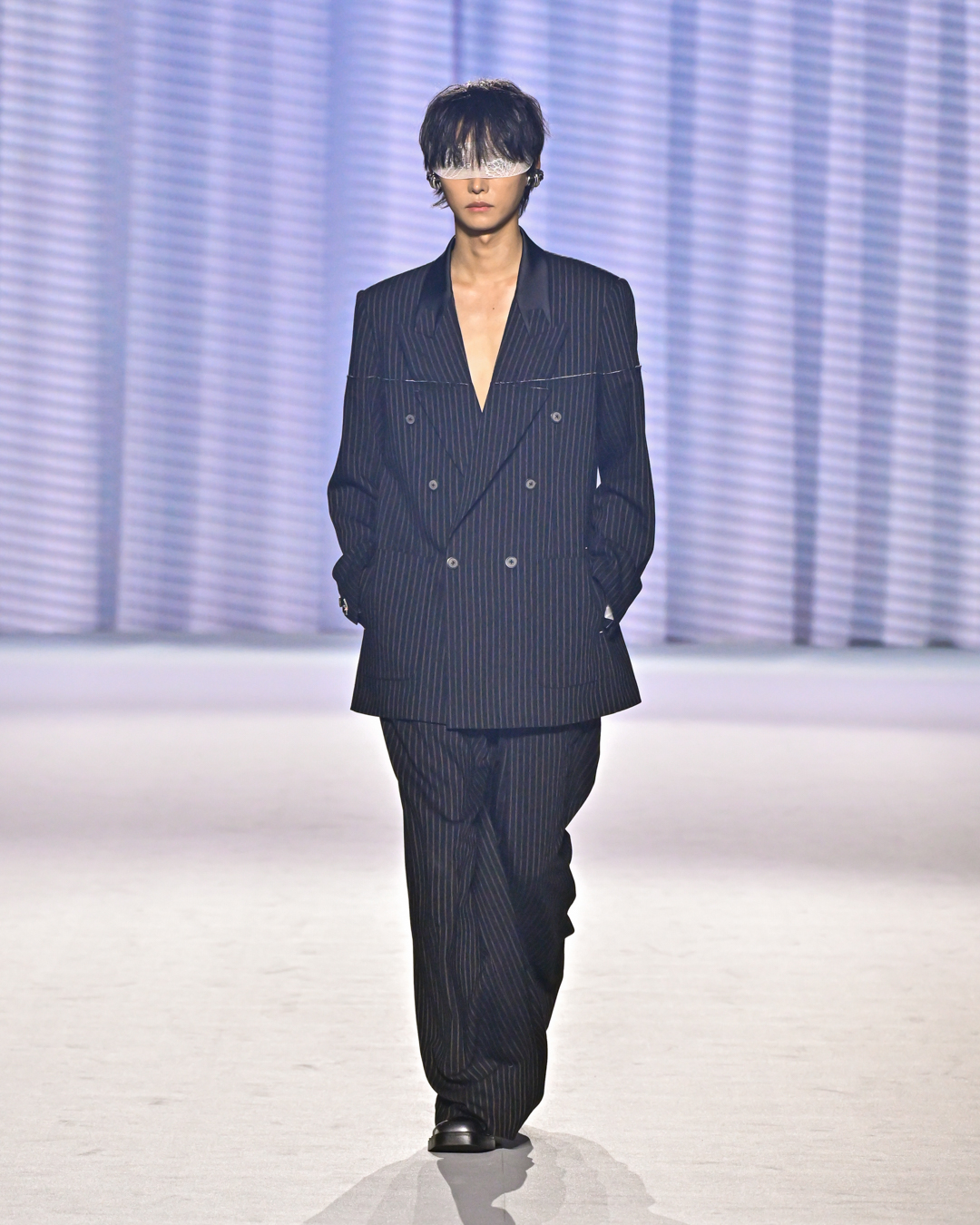
Grounded in the idea of “defamiliarization,” the fall-winter 2026 collection reinterpreted archetypal military garments through a softer, more fluid lens.
Classic field jackets and outerwear were reconstructed into feminine bodysuits with articulated waists, while sharp, angular sleeves dissolved into rounded shoulders. Horizontal seams were disrupted with gathering and draping, creating silhouettes that looked wrapped rather than worn.
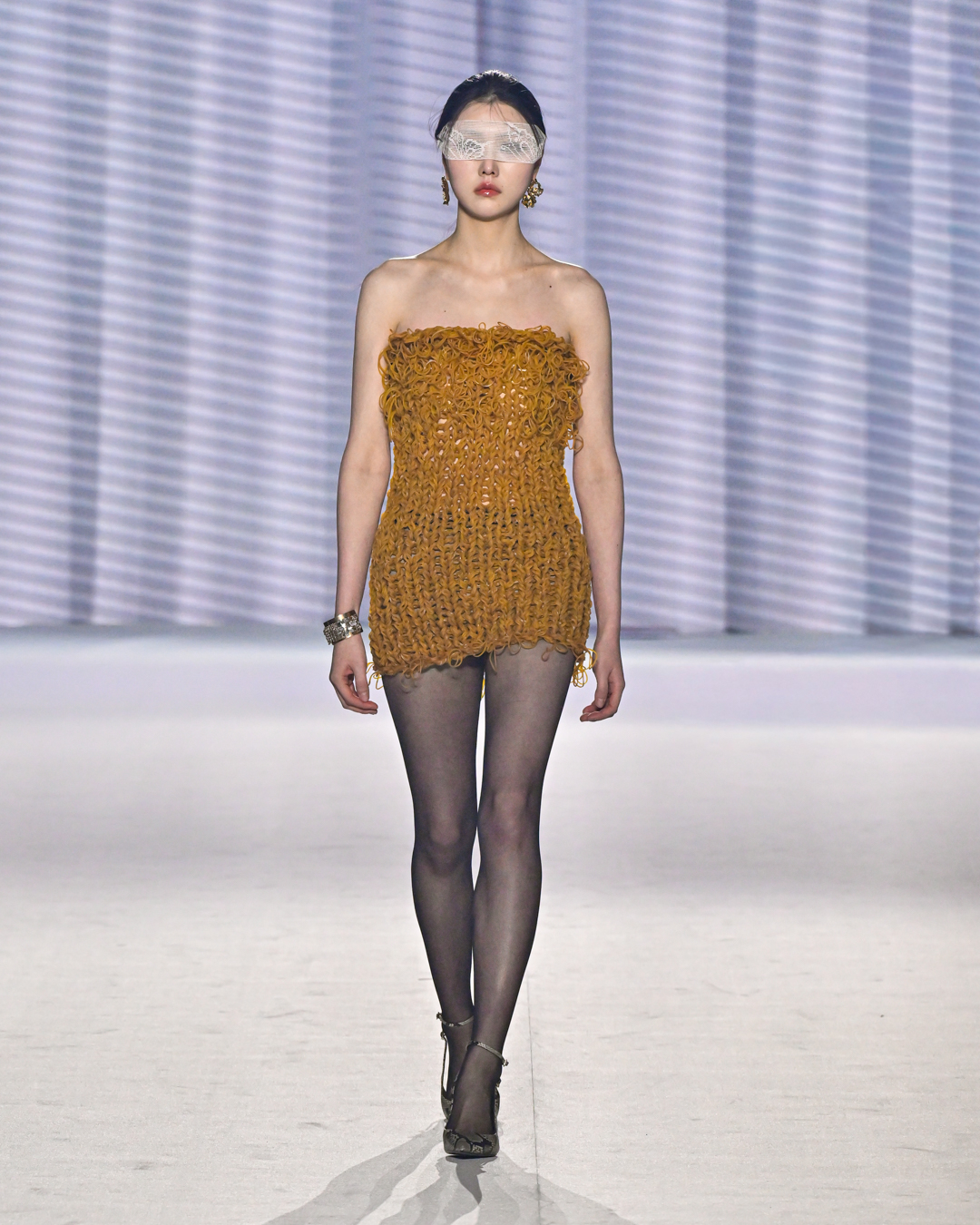
Material innovation was equally striking. Sweaters were knit from recycled paper, dresses cut from discarded banners and bustiers handwoven from elastic bands, reinforcing the label’s interest in unconventional and sustainable construction.
Visually, the show leaned dark and tactile: black, brown and beige tones, oversized proportions, power shoulders and skirts and jackets swollen with twists and frills. Models walked with lace veils obscuring their eyes, bold silver earrings and cuffs glinting under the lights. A dress fashioned from yellow rubber bands and a shredded black vinyl bag dragged along the runway added a raw, subversive finish.
The result felt both structured and vulnerable — a study in contrasts.
If Munn explored structure, MMAM, designed by Park Hyun, turned inward.
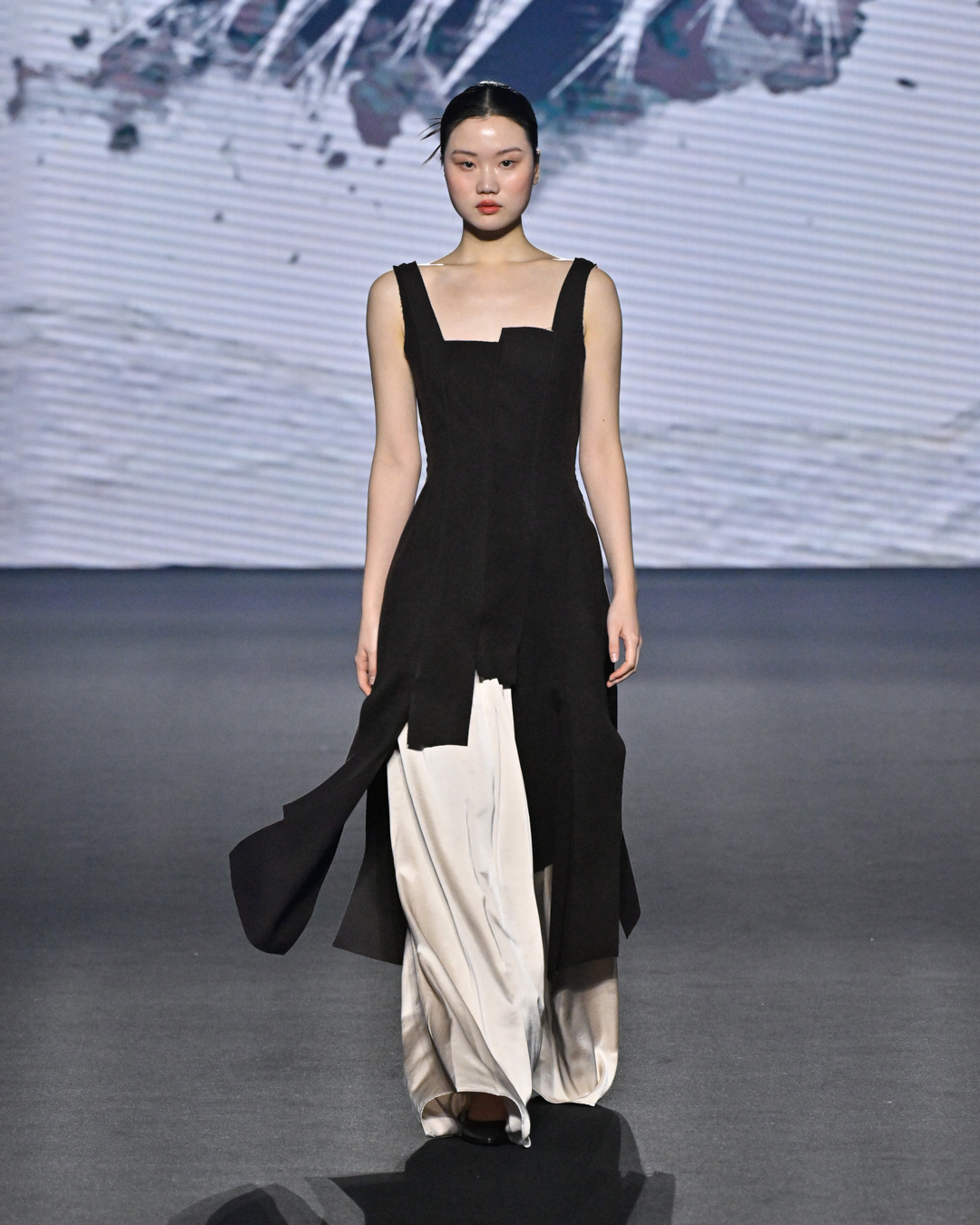
Titled “Emerging Layers,” the collection examined the fleeting afterimages of the unconscious — emotions and memories that surface unexpectedly through movement. At first glance, the garments appeared restrained and minimal. But as models walked, linings and inner fabrics slipped through cutouts and openings, quietly revealing what lay beneath.
A palette of beige, ivory, khaki, gray and brown anchored the lineup. Unbalanced trench coats, softly rippled textures, tucked volumes and satin two-pieces suggested comfort without sacrificing polish. Pajamalike materials were styled with tailored coats, creating looks that could transition effortlessly from home to street.
“In 2024, we showed in New York and in 2025 we showed in Paris, so the collections were more experimental and focused on introducing K-fashion globally,” Park told The Korea Herald on Wednesday. “For fall-winter 2026, we centered Seoul Fashion Week and worked hard to present items that our local customers can actually wear and truly enjoy as MMAM.”
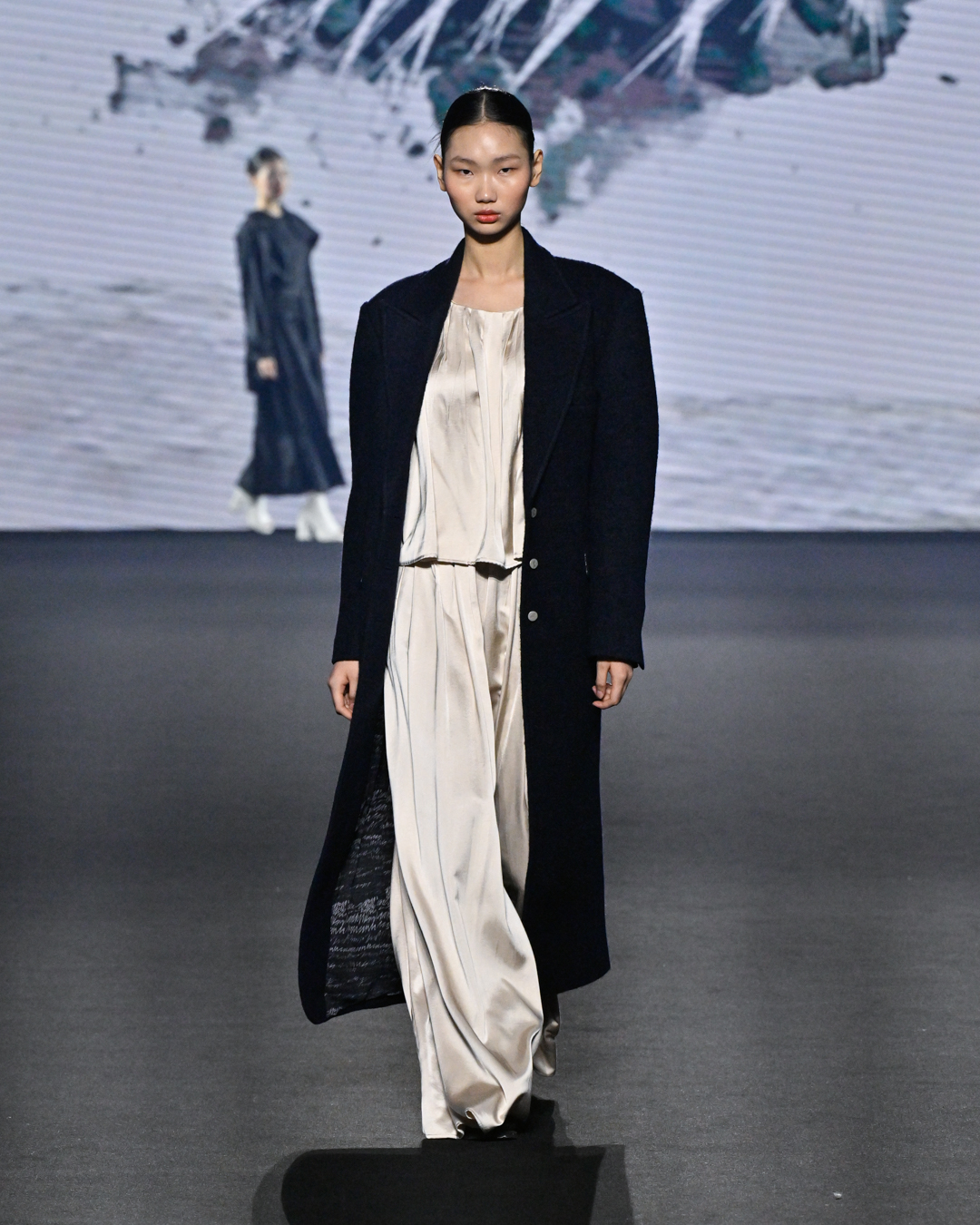
She added, “This season, we naturally layered the inner and outer aspects of a person. For example, we brought silk slip materials — usually worn as innerwear — to the outside and combined them into the outfit. People spend more time at home now, so we used pajamalike fabrics that are comfortable enough to sleep in, but that you can simply throw on a coat over and wear out.”
The effect was quiet but emotionally resonant — clothes that moved with the body and revealed themselves gradually.
Beyond the runway, the Seoul Fashion Forum, held alongside Seoul Fashion Week, addressed the industry’s global trajectory.
Jorn Zempel, president of Loewe Korea, pointed to brands such as Gentle Monster and Adererror as examples of Korea’s storytelling-led retail innovation.
“K-fashion is no longer an emerging story,” he said. “It is poised to be the next global chapter in Korea’s ever-growing creative influence; brands that don’t just dress the world, but connect with it.”
Across the week, that message rang clear. From conceptual reconstruction to pragmatic elegance, Seoul’s designers showed that experimentation and wearability are no longer opposites — they now share the same runway.
yoohong@heraldcorp.com