Production push highlights short-term confidence, long-term questions
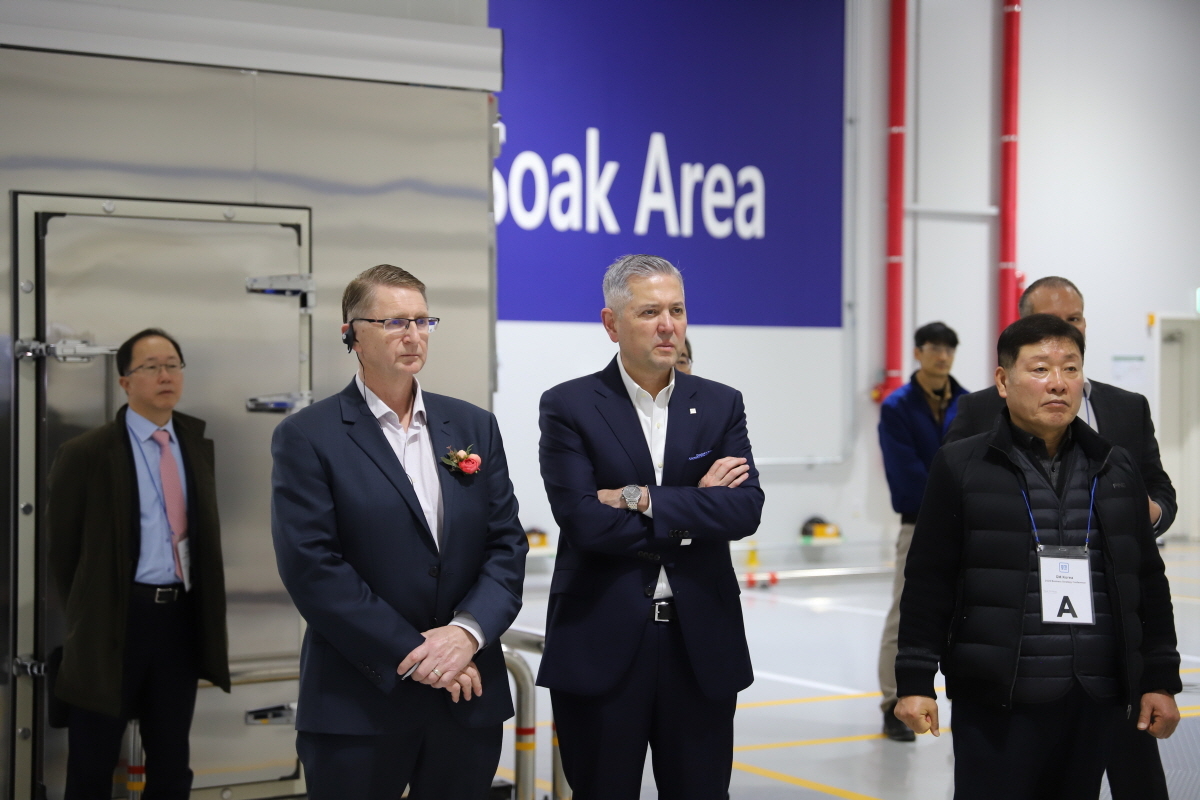
GM Korea has raised its production target for this year to around 500,000 vehicles, signaling renewed commitment to its Korean operations despite the resurfacing of exit speculation fueled by higher US tariffs.
According to industry sources on Tuesday, GM Korea is targeting production of about 500,000 vehicles in 2026, up 8.5 percent from last year's 460,826 units. If achieved, it would be a return above the 500,000-unit threshold for the first time since marking 519,385 units in 2017.
The Korean unit plans to operate its two domestic plants, in Incheon's Bupyeong and Changwon in South Gyeongsang Province, at full capacity to reach 500,000 vehicles — a level considered the maximum achievable output.
Industry watchers say GM Korea's decision to ramp up production reflects its assessment that demand for US-bound models remains robust, even as US tariff pressures intensify again.
Last year, the Chevrolet Trax Crossover topped Korea's auto exports, with 296,658 vehicles shipped overseas, surpassing all models from Hyundai Motor Co. and Kia. The Chevrolet Trailblazer ranked fifth, with exports totaling 150,568 units.
These two compact SUVs were also the core pillars of GM Korea's exports to the US, accounting for the majority of its US-bound shipments during the period.
GM Korea's expansion push aligns with GM's Michigan headquarters, which reportedly asked the Korean unit to produce the full 500,000.
During the automaker's second-quarter earnings call on July 22 last year, Mary Barra, chair and CEO of GM, said the company has no plans to scale back shipments from Korea, describing the country as "a very efficient base" for producing high-quality vehicles.
GM Korea plans to push forward its mid- to long-term strategies aimed at reinforcing its presence in the Korean market. In December last year, the company unveiled plans to invest $300 million in product upgrades and securing production beyond 2028. On Jan. 27, the Korean unit showcased three new models from its SUV and pickup brand GMC: the Acadia, Canyon and Hummer electric vehicle.
Experts say that while GM Korea's planned production target is notable, the company must take on a larger role by moving beyond gas-powered vehicles toward hybrids and electrified models.
"GM Korea has so far been able to absorb a 15 percent tariff burden thanks to solid operating margins, and it clearly builds competitive vehicles," said Kim Pil-su, a professor of automotive engineering at Daelim University. "The problem is sustainability. Its export lineup relies heavily on just two gasoline models — the Trax Crossover and Trailblazer — neither of which is a hybrid or an electric vehicle."
Kim added that GM's investment is expected to primarily cover its operating costs in Korea, not new-model development. To play a more central, long-term role, Kim said, "GM Korea must move beyond serving as a contract manufacturing base and adopt a model closer to Renault Korea's, where future-oriented vehicles — ranging from CUVs (crossovers) to SUVs and hybrids — are developed and produced domestically."
GM Korea's output has rebounded in recent years, but remains volatile. Production peaked in 2017 before falling to 444,816 in 2018 and 409,830 units in 2019. It plunged during the pandemic to a low of 223,623 vehicles produced in 2021. Output recovered to 464,648 units in 2023.
Exit speculation resurfaced recently after US President Donald Trump said on social media that he intends to raise tariffs on Korean imports, including automobiles, back to 25 percent, citing stalled legislative approval of an earlier trade deal. GM Korea is particularly exposed, as 83.8 percent of its production last year — 418,792 vehicles — was shipped to the US.
For now, the higher production target suggests GM is doubling down on Korea. Whether that commitment translates into deeper localization and electrification, analysts say, will determine the unit's long-term future.
hyejin2@heraldcorp.com