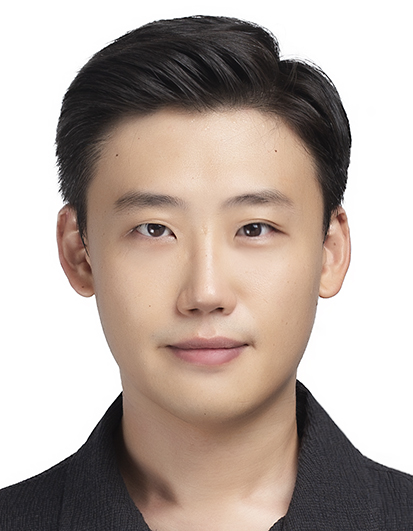
Prime Minister Kim Min-seok vowed to root out illegal political activities by religious groups, at a news conference held in his official residence in Seoul on Monday.
Kim, who assumed the office in July, said dealing with religious interference would be one of his primary goals in upholding constitutional values.
Saying that he would do his part to ensure that the Lee Jae Myung administration's core tasks were carried out, he added that he would give particular attention to "stamp out any interference with politics by heretical sects such as Shincheonji."
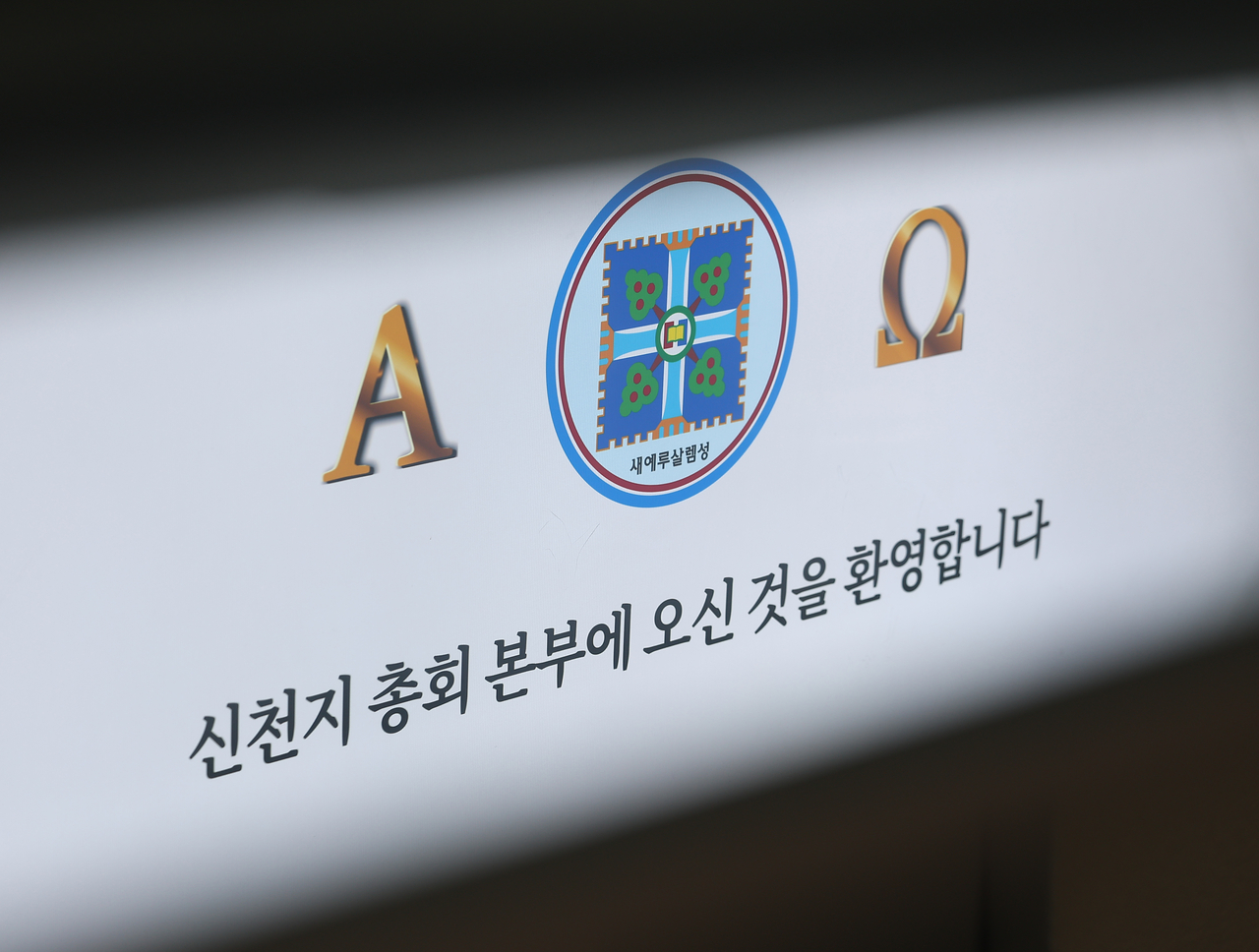
Shincheonji Church of Jesus is a religious group, led by Lee Man-hee, who has been accused of instructing his followers to join the conservative People Power Party, which some allege as a violation of the Political Parties Act.
The liberal administration's targets include Shincheonji or the Unification Church.
"The collusion between the political establishment and cults seeking private gains, which can hardly be called religious groups, must be eradicated," Kim said. "I think all ministries must work to identify and screen out instances of cults interfering with policy or profiting from it."
Kim's remarks followed a meeting with US Vice President JD Vance two weeks earlier in Washington. Kim was the first prime minister to lead a South Korean delegation to the United States in more than four decades.
Kim said in January he sought Vance's understanding over what could become thorny issues in Seoul-Washington ties, including the liberal administration's alleged religious suppression over ties with its conservative opposition.
According to Kim, Vance apparently pointed to the detention of South Korean pastor Son Hyun-bo, who had been detained for six months awaiting trial and was released Friday after he was sentenced to a suspended six-month prison term for violating election rules.
Son was found guilty of mobilizing followers to vote for specific candidates in two elections last year, including the June presidential election that Lee Jae Myung won. A court arrest warrant was issued in September against Son, who also led right-leaning campaigns to oppose disgraced former President Yoon Suk Yeol's removal from office.
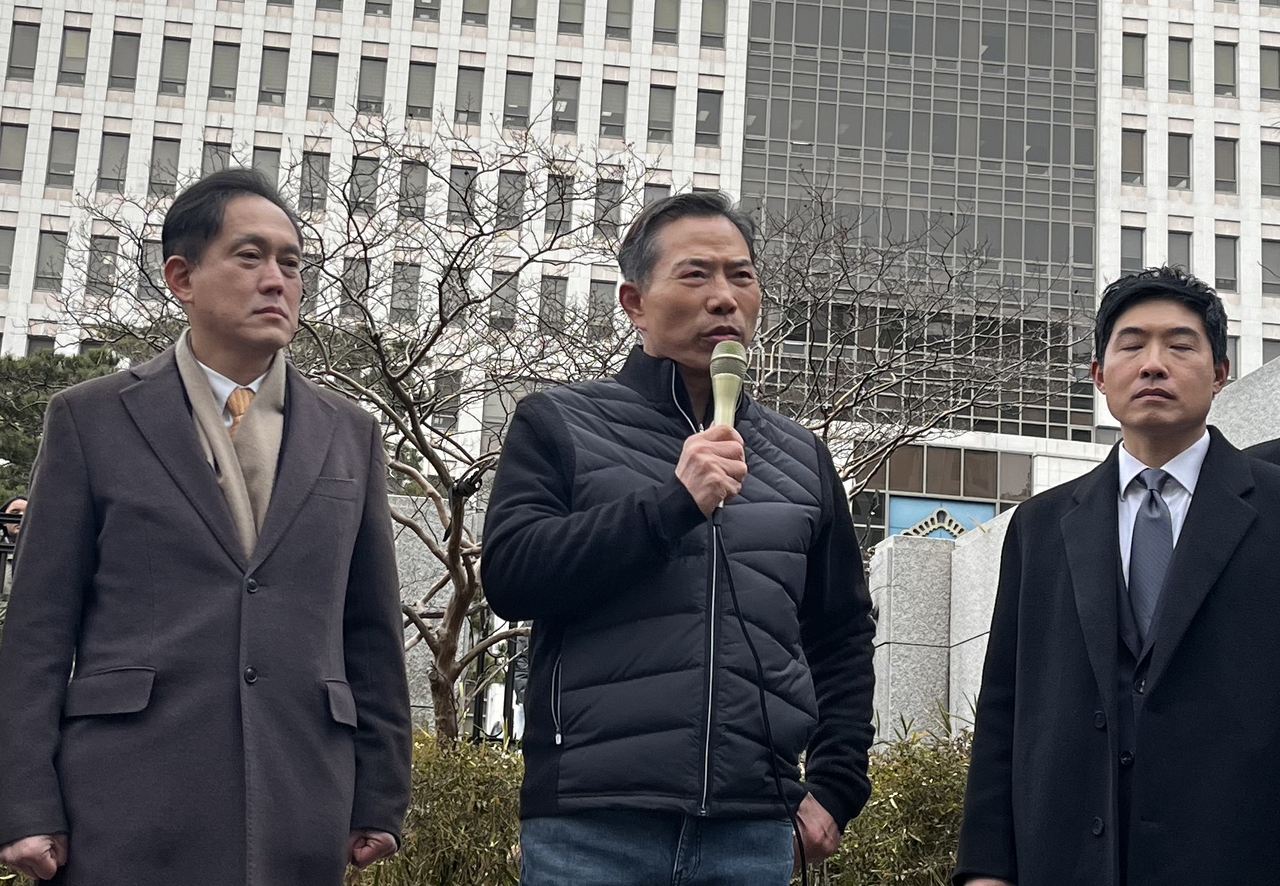
Prime Minister Kim in January told South Korean correspondents in Washington that he explained to Vance that South Korea "strictly separates church from politics," and its investigations into various religious sects stem from their alleged collusion with a political party.
Meeting with Vance, Kim said he compared his administration's move to a Japanese court's order to dissolve the Unification Church in 2025 following a petition concerning the 2022 assassination of former Japanese Prime Minister Shinzo Abe.
Kim relayed that Vance expressed his respect for South Korea's system and that the matter should be managed delicately to avoid misunderstandings.
Saying that it was a court that made the decision to detain Son before the verdict, not the administration, the prime minister said Monday it was "hard to sympathize with" Son's comment that politics and religion cannot be separable, adding he and other religious leaders reached a consensus over the crackdown on cults to overcome the political crisis posed by Yoon.
Kim also rejected speculation Monday that issues surrounding e-commerce platform Coupang were behind US President Donald Trump's tariff comment.
Commenting on the recent media coverage speculating that Vance had warned Kim of South Korea's crackdown on US tech firms, Kim said such coverage was "far from reality."
Earlier in January, Vance "expressed his understanding" to Kim as he denied discriminatory treatment toward Coupang, regarding South Korea's investigation over a data leak at the company that is believed to have affected over 33 million users.
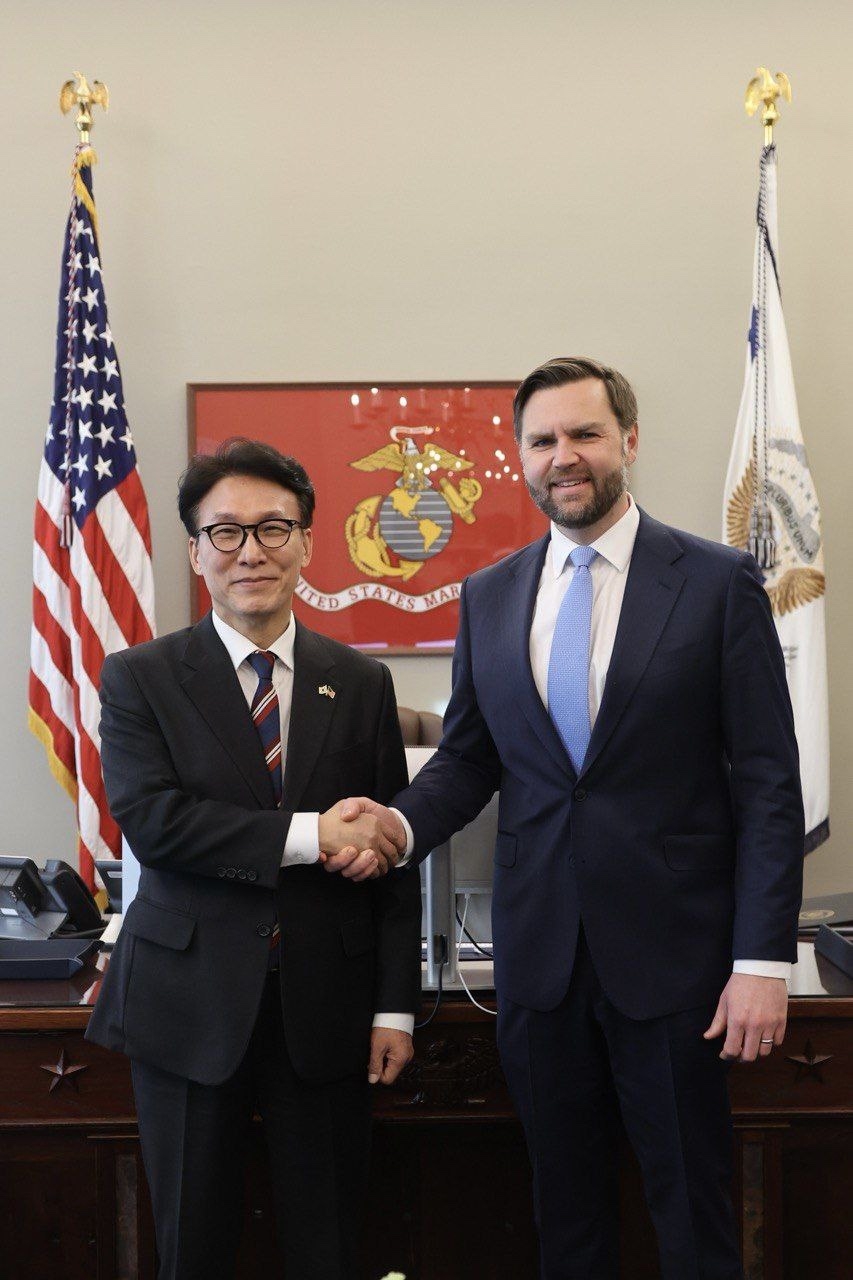
Meanwhile, the South Korean prime minister hailed his establishment of a "hotline" with Vance — a week before hinted at raising the 15 percent tariff on a bulk of South Korean goods imported to the US to 25 percent — as a key outcome of his diplomatic actions Monday.
Earlier in January, Kim had said his meeting with Vance allowed him to set up a hotline between the two, amid ongoing bilateral discussions concerning the overarching trade and security deal between Seoul and Washington. Kim also said Vance had pointed to "bureaucratic delays" both in Seoul and Washington, which Kim viewed as a "proactive" response.
Rejecting claims that the hotline has failed to serve its purpose with regard to Trump's social media post on rising tariffs, Kim said that Seoul and Washington have communicated closely on the matter.
"Trump's message was unexpected and appeared to have been made without the knowledge of most US officials," Kim said.
consnow@heraldcorp.com