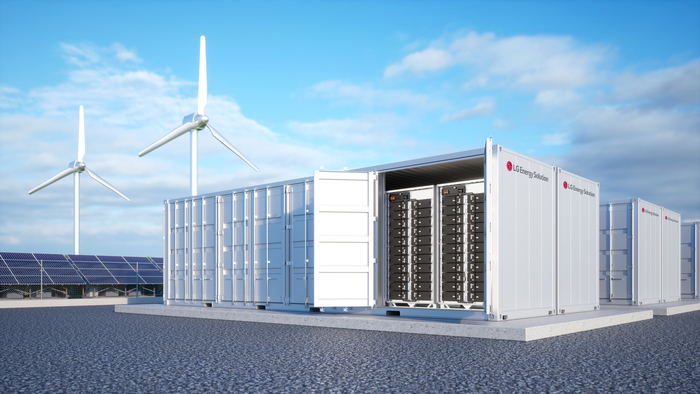
LG Energy Solution is betting on rapid growth in the North American energy storage system market to offset a slowdown in electric vehicle demand, as expanding investments in AI data centers and supportive US energy policies reshape the battery landscape.
During an earnings call Thursday, the company said global ESS installations are expected to grow more than 40 percent in 2026 from the previous year, with North America emerging as a key driver. Backed by continued tax credits for clean energy investments, ESS batteries are projected to account for up to half of the total battery market in the region, according to the company.
“Driven by large investments in AI data centers by global tech companies, ESS demand in North America is accelerating rapidly,” Chief Financial Officer Lee Chang-sil said. “We see ESS becoming a core pillar of our growth and profitability going forward.”
LG Energy Solution said it plans to secure more than 50 gigawatt-hours of annual ESS production capacity in North America, leveraging its two plants in Michigan and joint venture facilities with Stellantis and Honda. The company aims to exceed its record-high 90 gigawatt-hours of ESS orders achieved in 2025, supported by a broad product lineup covering uninterruptible power supply, battery backup units and grid-scale applications.
To support the expansion, the company has established a dedicated North America ESS operations team overseeing the entire value chain, from product development and production ramp-up to customer delivery.
The ESS push comes as the company faces near-term pressure from the EV market. LG Energy Solution reported an operating loss of 122 billion won ($85.4 million) in the fourth quarter of 2025. This marked its first quarterly loss in a year, as US automakers continued to cut battery inventories following the expiration of EV purchase subsidies in late September. North American production subsidies totaled 332.8 billion won during the quarter; excluding those credits, the operating loss would have widened further.
Despite the EV slowdown, ESS battery sales in North America more than doubled during the quarter, partially cushioning the impact of weaker demand for high-margin automotive pouch batteries.
Beyond ESS, the company also highlighted emerging opportunities in robotics, supplying cylindrical batteries to more than six major clients and positioning itself as a preferred partner for humanoid and four-legged robot applications across the US, Korea and China.
For 2026, LG Energy Solution targets mid-teens to around 20 percent revenue growth and a mid-single-digit operating margin, while planning to cut capital expenditures by more than 40 percent, signaling a more selective investment strategy focused on ESS and other high-growth segments.
hyejin2@heraldcorp.com